
Robot Hand Challenge: Why Robotics Firms Can't Get a Grip

Robotics companies face their biggest challenge yet: creating affordable, durable robotic hands. Discover why this crucial technology remains elusive.
In the rapidly evolving world of robotics, where machines can navigate complex terrains, perform intricate surgeries, and even engage in conversations, one seemingly simple task continues to elude engineers: developing robotic hands that are both durable and affordable. This fundamental challenge has become a defining obstacle for the entire robotics industry, preventing widespread adoption of humanoid robots in everyday applications.
The human hand represents one of nature's most sophisticated engineering marvels, containing 27 bones, 29 joints, and over 30 muscles working in perfect harmony. Replicating this biological masterpiece in mechanical form has proven to be extraordinarily complex. Robotics firms worldwide are investing millions of dollars in research and development, yet the perfect robotic hand remains tantalizingly out of reach.
The complexity of human dexterity cannot be overstated. Our hands can delicately pick up an egg without breaking it, then moments later grip a heavy tool with enough force to complete demanding tasks. This incredible range of motion, combined with sophisticated tactile feedback systems, makes the human hand an engineering challenge that has stumped even the most advanced robotics companies for decades.
Current robotic hand technology faces multiple interconnected challenges that compound the difficulty of creating practical solutions. Manufacturing costs remain prohibitively high, with advanced prosthetic hands costing upwards of $50,000 to $100,000. These astronomical prices stem from the precision engineering required, the use of expensive materials, and the limited production volumes that prevent economies of scale.
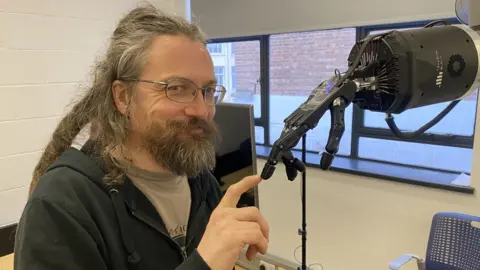
Durability represents another significant hurdle in robotic hand development. Unlike human hands that can self-heal and adapt to wear, mechanical hands must withstand constant use without the benefit of biological repair mechanisms. The intricate servo motors, sensors, and mechanical linkages that enable dexterity are inherently fragile and prone to failure under real-world conditions.
Leading robotics companies like Boston Dynamics, Shadow Robot Company, and Prosthetic technologies have each approached the challenge from different angles. Boston Dynamics focuses on creating robust, simplified grippers for their commercial robots, while Shadow Robot Company develops highly sophisticated research platforms that cost hundreds of thousands of dollars. Meanwhile, prosthetic companies attempt to balance functionality with affordability for medical applications.
The artificial hand market is projected to reach $3.9 billion by 2027, driven by increasing demand from both medical and industrial sectors. However, the gap between current capabilities and market needs remains substantial. Industrial applications require hands that can operate continuously for thousands of hours without maintenance, while medical prosthetics need to be lightweight, responsive, and affordable for patients.
Software challenges compound the hardware difficulties in robotic hand engineering. Creating control algorithms that can manage dozens of actuators simultaneously while processing sensory feedback in real-time requires enormous computational power. The artificial intelligence systems needed to interpret tactile information and adjust grip strength dynamically are still in their infancy, requiring years of additional development.
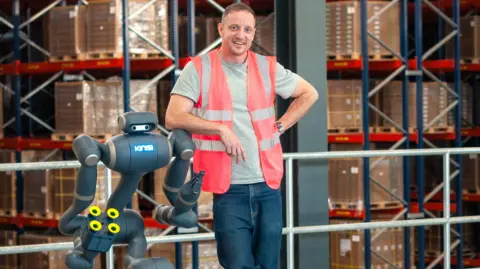
Material science plays a crucial role in the ongoing struggle to create practical robotic hands. Engineers must balance competing requirements: materials must be strong enough to withstand repeated use, flexible enough to enable natural movement, and lightweight enough not to burden the robotic system. Advanced composites, titanium alloys, and cutting-edge polymers show promise but add significantly to manufacturing costs.
The power consumption of advanced robotic hands presents yet another obstacle. Human hands operate on minimal energy, drawing power from our body's efficient biological systems. Robotic alternatives require substantial electrical power to operate multiple motors and sensors, limiting battery life and adding weight to portable robotic systems.
Sensory feedback systems remain primitive compared to human touch sensitivity. While researchers have developed artificial skin with pressure sensors, the resolution and responsiveness pale in comparison to human nerve endings. This limitation forces robotic hands to rely heavily on visual feedback and predetermined grip patterns rather than adaptive touch responses.
Manufacturing scalability continues to challenge even the most successful robotics companies. Hand assembly of complex robotic hands by skilled technicians keeps production volumes low and costs high. Automated manufacturing processes for such intricate devices remain largely theoretical, as the precision required exceeds current mass production capabilities.
Research institutions worldwide are exploring alternative approaches to traditional robotic hand design. Some focus on bio-inspired solutions that mimic muscle and tendon structures, while others investigate entirely new paradigms using soft robotics and smart materials. These experimental approaches show promise but remain years away from commercial viability.
The medical prosthetics sector drives much of the innovation in robotic hand technology, as the need for functional artificial limbs creates a ready market despite high costs. Advanced myoelectric prosthetics can interpret muscle signals from residual limbs, offering users intuitive control over artificial hands. However, even these cutting-edge devices struggle with reliability and require frequent maintenance.
Investment in robotic hand research continues to grow, with venture capital firms and government agencies recognizing the transformative potential of solving this challenge. The Department of Defense, NASA, and the National Institutes of Health have funded numerous research projects aimed at advancing the state of the art in artificial hand technology.
Future developments in robotic hands may come from unexpected directions. Advances in 3D printing technology could eventually enable custom manufacturing of robotic hands tailored to specific applications. Machine learning algorithms might solve the control complexity by learning from millions of manipulation tasks, while new materials could provide the durability and flexibility currently missing from mechanical designs.
The implications of successfully developing affordable, durable robotic hands extend far beyond the robotics industry. Manufacturing automation could advance dramatically, enabling robots to perform assembly tasks currently requiring human dexterity. Space exploration would benefit from robotic systems capable of complex manipulation tasks in hostile environments where human presence is impossible.
Despite decades of research and billions of dollars in investment, the robotics industry continues to grapple with the fundamental challenges of creating practical artificial hands. The complexity of human dexterity, combined with the demanding requirements of real-world applications, ensures that this challenge will continue to push the boundaries of engineering innovation for years to come.
Source: BBC News


