
NASA Delays Critical Moon Mission Over Rocket Problems

NASA postpones ambitious lunar mission to the Moon's far side after discovering critical technical issues with the rocket system during pre-flight inspections.
NASA has announced a significant delay to its highly anticipated lunar mission that was designed to explore the mysterious far side of the Moon. The postponement comes after engineers discovered critical technical problems with the rocket system during routine pre-flight inspections, according to a senior NASA official who spoke about the developments on Tuesday.
The moon exploration mission represents one of NASA's most ambitious undertakings in recent years, designed to advance our understanding of the Moon's composition and geological history. The spacecraft was intended to conduct extensive scientific research on the lunar far side, an area that remains largely unexplored due to its permanent orientation away from Earth.
Technical teams at NASA's Kennedy Space Center have been working around the clock to identify and resolve the rocket issues that prompted the delay. The problems were first detected during comprehensive systems checks that are standard protocol before any major space launch. Officials emphasized that safety remains the top priority, and no mission will proceed until all technical concerns are fully addressed.
The delayed mission was part of NASA's broader strategy to establish a sustained human presence on the Moon and eventually serve as a stepping stone for future Mars exploration. The space agency has invested billions of dollars in developing the technology necessary for these deep space missions, making the current setback particularly significant for the program's timeline.
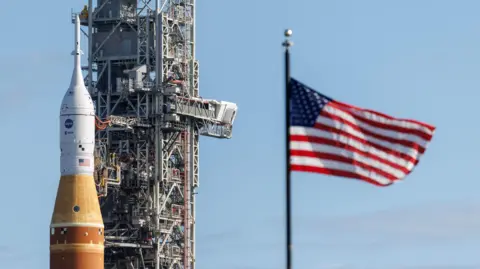
Engineering experts explain that the rocket problems discovered during inspections could potentially compromise mission safety if left unresolved. The specific nature of the technical issues has not been fully disclosed, but sources close to the program suggest they involve critical propulsion systems that are essential for the journey to lunar orbit and back.
This postponement affects not only the immediate scientific objectives but also NASA's long-term lunar exploration timeline. The Moon mission delay could have cascading effects on subsequent planned missions, including crewed lunar landings scheduled for later in the decade. Scientists and researchers who have spent years preparing experiments for this particular mission now face an indefinite waiting period.
The far side of the Moon, often incorrectly called the "dark side," presents unique challenges for space missions due to communication difficulties. Unlike the near side that faces Earth, the far side requires relay satellites to maintain contact with mission control, adding complexity to an already challenging endeavor.
NASA's commitment to space exploration remains unwavering despite this setback. Agency leadership has stressed that thorough testing and safety protocols are essential for mission success. The additional time will allow engineers to not only fix the identified problems but also conduct more comprehensive testing to prevent future issues.
The international scientific community has been eagerly awaiting the results of this lunar exploration mission. Researchers from various countries have contributed instruments and experiments designed to unlock secrets about the Moon's formation and evolution. The delay, while disappointing, ensures that these valuable scientific instruments will have the best possible chance of reaching their destination safely.
Previous NASA missions have demonstrated the importance of rigorous testing and quality control. The space agency's reputation for excellence stems from its willingness to delay missions when safety concerns arise, rather than rushing to meet arbitrary deadlines. This approach has prevented numerous potential disasters and maintained public confidence in the space program.
The rocket technology involved in this mission represents some of the most advanced propulsion systems ever developed. The complexity of these systems requires extensive testing and validation before they can be trusted with multi-billion dollar scientific payloads. Engineers are using this delay period to implement additional safeguards and backup systems.
Industry analysts suggest that while the delay is unfortunate, it reflects NASA's commitment to mission success over schedule adherence. The space mission timeline has always been subject to technical challenges, and experienced space program veterans understand that delays are often necessary for ultimate success.
The economic implications of the delay extend beyond NASA itself, affecting numerous contractors and suppliers involved in the mission. However, most industry partners have expressed support for NASA's cautious approach, recognizing that a failed mission would be far more costly than a delayed one.
Educational institutions and science museums across the country had planned special programs and exhibits timed to coincide with the original launch date. These organizations are now working to adjust their schedules and maintain public interest in the mission despite the uncertainty surrounding the new launch timeline.
NASA officials have promised to provide regular updates on the progress of repairs and testing. The agency's transparency regarding the mission delay demonstrates its commitment to maintaining public trust and support for the space program. Regular briefings will keep stakeholders informed about technical progress and revised scheduling estimates.
The ultimate success of this lunar mission could pave the way for even more ambitious projects, including permanent lunar bases and eventual human missions to Mars. While the current delay is frustrating, it represents a necessary step in ensuring that humanity's return to deep space exploration proceeds safely and successfully.
Source: BBC News


