
Lakeside City Reels From War Atrocities

Witnesses describe horrific violence after rebel forces and Rwandan troops captured Uvira, DR Congo. Investigation reveals widespread atrocities in December offensive.
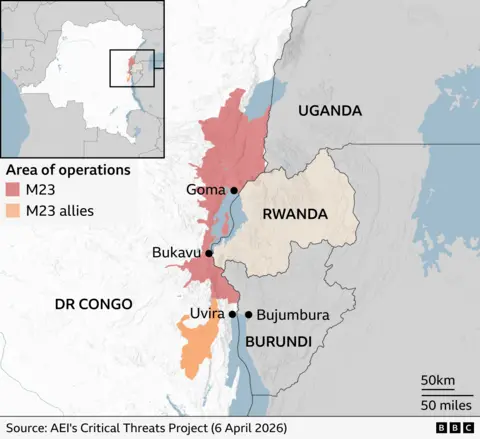
The once-peaceful lakeside city of Uvira in the Democratic Republic of Congo has been transformed into a landscape of trauma and devastation following its capture by rebel fighters and Rwandan troops in December. Residents who remained in the city during the offensive describe scenes of unimaginable violence, with accounts of executions, arbitrary killings, and systematic brutality that have left the community profoundly scarred. The rapid military advance that led to the seizure of this strategic location on the shores of Lake Kivu has become synonymous with documented human rights violations and alleged war crimes that demand urgent international scrutiny.
Survivors of the offensive recounting their experiences paint a harrowing picture of life during and after the conflict. One resident, speaking on condition of anonymity for fear of reprisal, described witnessing the execution of a neighbor in an act of cold-blooded violence. "They shot my neighbour in the head," the witness stated, their voice trembling as they recalled the moment of senseless brutality. Such testimonies have become increasingly common as investigators and humanitarian organizations gather evidence from those who witnessed the violence firsthand, creating a growing body of documented accounts that paint a picture of systematic atrocities rather than isolated incidents.
The capture of Uvira represents a significant tactical victory in the ongoing conflict that has destabilized the eastern Democratic Republic of Congo for years. However, the human cost of this military advance has proven devastating for the civilian population who either remained trapped in the city or fled in desperation. Human rights organizations have begun compiling testimonies and evidence of alleged atrocities, with investigators working to document potential war crimes committed during and after the military operation.
The involvement of Rwandan troops in the Uvira offensive has drawn particular international attention, as it represents an escalation of regional involvement in the conflict. Rwanda's military presence in the Democratic Republic of Congo has been a contentious issue for years, with Kigali repeatedly denying formal involvement while evidence suggests military coordination and support for various armed groups. The capture of Uvira by forces including Rwandan soldiers raises questions about the extent of Rwanda's military engagement and potential responsibility for actions committed by allied forces under its operational influence.
Civilian testimonies collected by humanitarian workers describe a pattern of violence that suggests coordinated targeting of specific individuals and communities. Beyond the documented executions, witnesses report forced disappearances, sexual violence used as a weapon of war, and the systematic looting of civilian property. These accounts align with international humanitarian law definitions of war crimes and crimes against humanity, prompting calls for formal investigation by the International Criminal Court and other bodies mandated to prosecute such violations.
The psychological impact on Uvira's population cannot be overstated, as the community grapples with collective trauma and the loss of loved ones. Mental health workers and humanitarian organizations have noted widespread symptoms of post-traumatic stress disorder among survivors, compounded by the ongoing uncertainty about the security situation and the future prospects for the region. The city that was once known for its vibrant lakeside commerce and cultural significance has been reduced to a place where residents live in fear and communities are fractured by suspicion and grief.
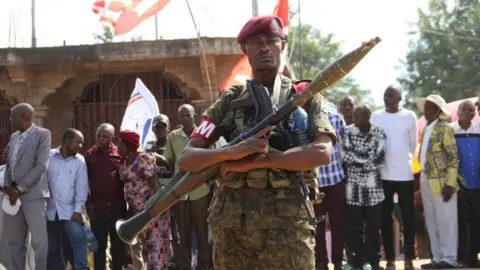
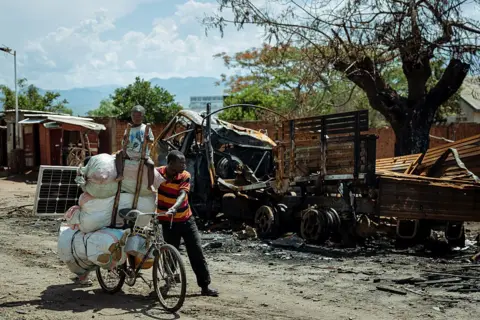
Investigations into the atrocities in Uvira have been hampered by ongoing security concerns, limited access for international monitors, and the deliberate obstruction of evidence collection by various armed actors. Despite these challenges, organizations including Amnesty International, Human Rights Watch, and United Nations investigators have managed to gather testimonies and photographic evidence of destroyed homes, mass graves, and areas where executions appear to have taken place. These investigations are laying the groundwork for potential future prosecutions, though accountability mechanisms remain weak in the region.
The role of M23 rebel group and associated militias in the violence remains a central point of investigation, with evidence suggesting these forces worked in coordination with Rwandan military units. The M23, which has links to Rwanda and claims to represent Congolese Tutsi interests, has been implicated in numerous atrocities over the course of its insurgency. The December capture of Uvira represents one of the group's most significant military achievements in recent years, but the human cost has been substantial and potentially historic in scope.
Regional geopolitical dynamics have complicated international response to the Uvira situation. Rwanda's strategic importance to Western powers, combined with the complexity of the multi-layered conflict in the Democratic Republic of Congo, has created diplomatic tensions around appropriate accountability measures. Some nations have called for international intervention and investigation, while others have been reluctant to criticize Rwanda directly, citing broader strategic interests in the region.
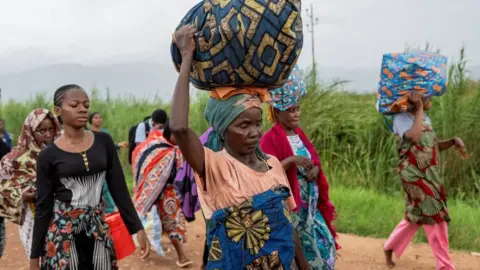
The displacement crisis resulting from the Uvira offensive has added another layer of complexity to an already dire humanitarian situation. Tens of thousands of civilians have fled the city, seeking refuge in neighboring communities or in formal refugee camps where they survive in overcrowded conditions with limited access to basic services. The flight of such large populations has overwhelmed local resources and created secondary crises in areas receiving displaced persons.
Documentation efforts by international investigators continue despite significant obstacles, with teams working to preserve evidence and gather testimonies from survivors before memories fade or witnesses are intimidated into silence. Legal experts have noted that cases of mass atrocities require meticulous documentation to withstand the scrutiny of international courts, making the current evidence-gathering phase crucial for any future accountability process. The challenge of building cases in conflict zones, where witnesses fear reprisal and evidence is scattered, remains one of the most significant obstacles to justice.
The international community's response to allegations of atrocities in Uvira has been mixed, with statements of concern from various governments and organizations, but limited concrete action toward accountability. The UN Security Council has discussed the situation, though diplomatic divisions have prevented stronger unified responses. Meanwhile, the situation on the ground remains volatile, with ongoing security threats preventing the return of displaced civilians and the normalization of daily life in the city.
Looking forward, the challenge for Uvira will be not only reconstruction and rehabilitation of physical infrastructure but also the healing of deep communal wounds and the pursuit of meaningful justice. Truth and reconciliation processes, though often controversial, may offer pathways toward recovery that purely retributive justice cannot achieve. However, such processes require sustained commitment from both local and international actors, as well as genuine political will to address the root causes of the conflict that have made Uvira and the broader region vulnerable to such devastating violence.
Source: BBC News


