
Brett Ratner's China Trip: Trump's Latest Political Stunt

Director Brett Ratner joins Trump on Air Force One to China. Explore what this controversial move reveals about Trump's diplomatic strategy and political messaging.
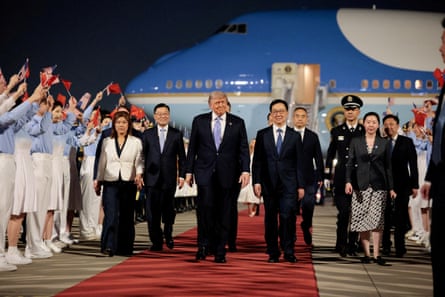
The reappearance of Brett Ratner on the international political stage marks yet another unconventional moment in the Trump administration's approach to diplomacy and public relations. The film director, who directed the popular Rush Hour franchise, has resurfaced this week in a capacity that few would have predicted given his fall from grace in Hollywood. His inclusion on Air Force One for the president's high-stakes summit with Chinese leader Xi Jinping represents a calculated political gesture that reveals much about Trump's leadership style and his willingness to rehabilitate controversial figures.
Brett Ratner's journey from celebrated Hollywood director to pariah and his subsequent political rehabilitation tells a broader story about power dynamics in the Trump era. Ratner, who faced numerous allegations of sexual misconduct—charges he has consistently denied—was dropped by major studios following the #MeToo movement's exposure of widespread misconduct in the entertainment industry. His cancellation from Hollywood appeared final when Warner Bros severed ties with him in 2017, seemingly ending any prospects for his professional resurrection in the film world.
The selection of Ratner as a diplomatic companion for such an important international engagement demonstrates Trump's distinctive approach to political messaging. Rather than choosing seasoned diplomats or business leaders with established international credentials, the president has opted for someone whose primary qualification appears to be his connection to popular culture and his alignment with Trump's personal tastes. This decision reflects a pattern within the Trump administration where unconventional choices often supersede traditional protocols.

Trump's inner circle has long been characterized by individuals who arrived with questionable pasts or controversial records. The inclusion of figures like Pete Hegseth, who faced serious allegations that required explanation during his confirmation process, and Robert F. Kennedy Jr., whose vaccine skepticism has proven deeply divisive, demonstrates that a sketchy background is no longer a disqualifying factor for presidential appointments or diplomatic missions. Instead, these appointments appear to be selections made with full awareness of their controversial nature, suggesting an intentional strategy rather than an oversight.
The gesture of bringing Ratner aboard for the China trip serves multiple purposes within Trump's political communication strategy. First, it signals that cancellation culture, in Trump's view, is reversible and that those who have fallen from favor can be rehabilitated through proximity to presidential power. Second, it demonstrates Trump's willingness to stand by individuals regardless of their past controversies, positioning himself as someone willing to defy what he perceives as excessive political correctness. Third, and perhaps most cynically, it provides an interesting news cycle distraction from other pressing diplomatic or domestic issues.

The choice also reflects Trump's well-documented affection for Hollywood and entertainment figures. Trump himself has spent decades cultivating relationships within the entertainment industry before his political career, and his personal taste in films clearly influenced his media consumption habits. The fact that Ratner directed films Trump enjoyed, particularly the Rush Hour franchise, likely played a significant role in the decision to include him on this diplomatic mission. This blending of entertainment preferences with serious foreign policy engagement represents a distinctive feature of Trump-era politics.
From a purely diplomatic standpoint, the inclusion of Ratner on such a high-profile mission is unconventional and potentially problematic. China relations require sophisticated negotiation and careful messaging, typically handled by experienced diplomats and foreign policy experts. Bringing along a director with a history of serious allegations, regardless of his denials, introduces an unpredictable element into what should be carefully choreographed discussions about trade, technology, and geopolitical strategy. The Chinese government likely views such decisions with bewilderment or amusement, as it operates under completely different protocols regarding personnel selection for diplomatic missions.
The broader pattern of bringing controversial figures into Trump's orbit raises questions about the standards and values that guide presidential decision-making. Throughout his political career, Trump has demonstrated a consistent willingness to overlook past misdeeds when individuals offer something he values—whether that's loyalty, entertainment value, business acumen, or simple celebrity status. This approach stands in stark contrast to the traditional emphasis on character and integrity that previous administrations attempted to maintain, at least publicly.
Ratner's presence on this diplomatic mission also serves as a reminder of how Trump uses his platform and proximity to power as a form of vindication for those he favors. By bringing Ratner back into the spotlight through association with a presidential diplomatic mission, Trump effectively signals to others in similar positions that cancellation need not be permanent. This sends a complex message about accountability and consequences in the era of Trump's political influence.
The reaction from various quarters to this news reveals the deep political and cultural divisions that characterize contemporary America. Those who view Trump as a disruptor of an overly politically correct culture have praised his willingness to rehabilitate Ratner and challenge what they see as unfair cancellation. Others, particularly those who take seriously the allegations against Ratner and their implications for workplace safety and accountability, view his rehabilitation with alarm. These contrasting perspectives reflect fundamentally different values regarding power, responsibility, and consequences.
Looking at the bigger picture, Ratner's inclusion in the China delegation exemplifies how Trump's political strategy often prioritizes spectacle and messaging over traditional governance considerations. The story generates headlines, provokes discussion, and keeps the news cycle focused on Trump's actions and decisions. Whether the substance of the diplomatic mission with China suffers from this approach remains an open question, but the immediate effect is to create a talking point that dominates media coverage and generates the kind of discussion Trump often seems to enjoy provoking.
The incident also underscores the extent to which Trump's administration operates on different rules and assumptions than its predecessors. Where previous presidents might have faced significant pressure to explain or justify such a decision, Trump appears relatively unbothered by the inevitable criticism. This confidence in his ability to act without significant political consequence—whether justified or not—reflects his understanding of his political base and his conviction that traditional gatekeepers no longer control the narrative the way they once did.
As the China summit unfolds, the presence of Brett Ratner aboard Air Force One will likely continue to generate commentary and controversy. Whether his involvement produces any meaningful contribution to the diplomatic discussions or serves purely as a symbol of Trump's distinctive approach to governance remains to be seen. What seems clear is that his presence represents yet another moment in which Trump demonstrates his willingness to defy conventional expectations and operate according to his own unconventional rules, bringing back figures the broader culture thought it had moved beyond.
Source: The Guardian


