
Zelenskyy's Ex-Chief of Staff Named in Major Corruption Probe

Ukrainian anti-corruption agencies have named Andriy Yermak as a suspect in a major investigation involving alleged money laundering of $10.5 million.
Ukrainian anti-corruption authorities have formally named Volodymyr Zelenskyy's influential former chief of staff as a suspect in a significant corruption investigation, marking a critical development that threatens to create additional strain on the president's administration during an already turbulent period of military conflict with Russia. The announcement represents a major escalation in the high-profile probe that has consumed Ukraine's political establishment and raised serious concerns about governance during wartime.
Andriy Yermak, who served as Zelenskyy's powerful right-hand man and wielded considerable influence over presidential decision-making, faces allegations of participating in a criminal organization involved in money laundering activities. According to Ukrainian anti-graft agencies, the investigation centers on the laundering of approximately $10.5 million through a housing development project, though Yermak has categorically denied any ownership stake in the controversial venture.
The probe itself erupted into public consciousness last year, when sweeping corruption allegations triggered widespread outrage among Ukrainian citizens and led directly to Yermak's resignation from his senior advisory position. This comprehensive investigation has reverberated throughout Kyiv's political circles, exposing systemic vulnerabilities in oversight mechanisms and raising questions about accountability at the highest levels of government.
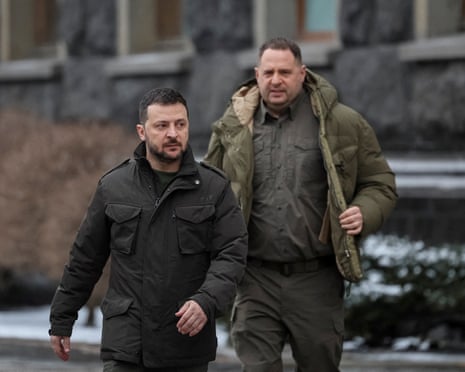
The timing of these allegations proves particularly sensitive, as Ukraine continues to wage an existential struggle against Russian military aggression while simultaneously attempting to maintain democratic institutions and rule of law. Zelenskyy's administration faces the delicate challenge of navigating international scrutiny regarding governance standards while prioritizing military operations and national survival. The convergence of these pressures creates a complex political environment that threatens to undermine public confidence in institutional leadership.
Yermak's prominent role within Zelenskyy's inner circle made him one of the most influential political figures in Ukraine prior to his departure. His responsibilities encompassed advising the president on strategic matters, diplomatic negotiations, and key policy decisions. The allegation that such a high-ranking official participated in illicit financial schemes represents a significant blow to the administration's credibility and invites uncomfortable questions about oversight and internal controls within the presidential office.
The specific allegations involve claims that Yermak was part of an organized criminal network engaged in sophisticated money laundering operations. The $10.5 million in question allegedly moved through the housing project, a sector that has historically attracted corrupt actors seeking to obscure the origin and movement of illicit funds. Yermak's categorical denials of ownership in the property development represent his opening gambit in what appears likely to become a protracted legal battle.
Ukrainian anti-graft agencies, which have increasingly asserted independence from political pressures, have built what they characterize as substantial evidence supporting the corruption allegations. These institutions, established partly to satisfy Western donors and international observers, have demonstrated willingness to pursue cases involving senior officials despite potential political fallout. The decision to formally name Yermak as a suspect suggests investigators believe they have developed credible grounds for the accusation.
The broader investigation that ensnared Yermak reportedly examines an extensive network of corruption allegations spanning multiple government sectors and involving numerous individuals of varying political prominence. This comprehensive approach reflects international pressure on Ukraine to demonstrate commitment to anti-corruption efforts, particularly as the nation seeks continued military and financial support from Western allies. The United States and European Union have made clear that institutional reform and elimination of corruption remain prerequisites for sustained assistance.
Zelenskyy himself has not yet publicly commented extensively on the allegations against his former confidant, though his administration has indicated it respects the independence of anti-corruption agencies and trusts in the investigative process. This measured response attempts to balance support for the president's loyal associate against the perception that he stands above accountability. The delicate political positioning reflects the president's broader challenge of maintaining institutional legitimacy while preserving relationships within his political inner circle.
International observers have expressed concern that the timing and nature of these allegations could undermine Ukraine's political stability at a critical moment. Some analysts suggest that sustained corruption investigations involving top officials might weaken public confidence in governmental institutions during a period when national unity proves essential. Others argue that demonstrating willingness to prosecute even high-ranking suspects reinforces Ukraine's commitment to the rule of law and democratic accountability.
The housing project at the center of the investigation has itself become subject to regulatory scrutiny and asset seizures by authorities. Investigators reportedly executed searches related to the property development and gathered documentation supporting the money laundering allegations. The operational details remain partially obscured by ongoing investigative secrecy, though anti-corruption agencies have indicated that evidence accumulation continues.
Yermak's legal team has begun mounting a defense against the allegations, asserting the former official's innocence and challenging the characterization of his alleged involvement in any criminal enterprise. Defense counsel has suggested that politically motivated elements may be influencing the investigation, a claim that echoes longstanding tensions between various Ukrainian power centers. However, anti-corruption agencies have pushed back against such assertions, maintaining their institutional independence and investigative integrity.
The case has already prompted broader discussions within Ukraine about the necessity for stronger protective mechanisms against corruption within government circles. Civil society organizations have called for enhanced transparency requirements, strengthened asset declaration procedures, and more robust independent oversight bodies. These institutional reform proposals reflect widespread recognition that vulnerabilities in governance structures require systematic correction rather than episodic prosecution.
As the investigation proceeds through Ukraine's judicial system, the case will likely remain subject to intense scrutiny from international observers, diplomatic missions, and the Ukrainian public. The ultimate outcome carries implications extending far beyond the individual defendant, potentially shaping perceptions of Ukraine's governmental integrity during a period when international confidence remains critical. Whether the prosecution succeeds or fails, the investigation has already accomplished a significant reckoning within Ukraine's political establishment.


