
Vast Space Expands Beyond Stations Into Satellite Manufacturing

Vast Space pivots from space stations to high-power satellites after successful demonstration mission. CEO Max Haot explains diversification strategy.
Vast Space, the Long Beach-based aerospace company, has announced an ambitious expansion of its business operations that extends far beyond its original vision of constructing private space stations. Following the triumphant completion of a critical demonstration mission in early November, the company revealed plans to enter the lucrative market of high-powered satellite manufacturing, marking a significant diversification move in its corporate strategy.
The demonstration spacecraft, which served as a vital proof-of-concept for Vast's Haven-1 space station initiative, successfully validated dozens of essential test objectives during its operational period. Over the course of approximately three months, the vehicle underwent rigorous testing protocols that evaluated critical systems including power generation and management, advanced propulsion mechanisms, precision tracking capabilities, and numerous other technologies deemed essential for the development and long-term operation of the company's ambitious Haven-1 station project.
The remarkable success of this mission has evidently provided Vast Space with the confidence and technical foundation necessary to expand its service offerings significantly. Rather than remaining singularly focused on its original space station development objectives, the company now intends to leverage its demonstrated spaceflight capabilities and engineering expertise to establish itself as a manufacturer of premium satellite buses for various commercial and institutional clients.
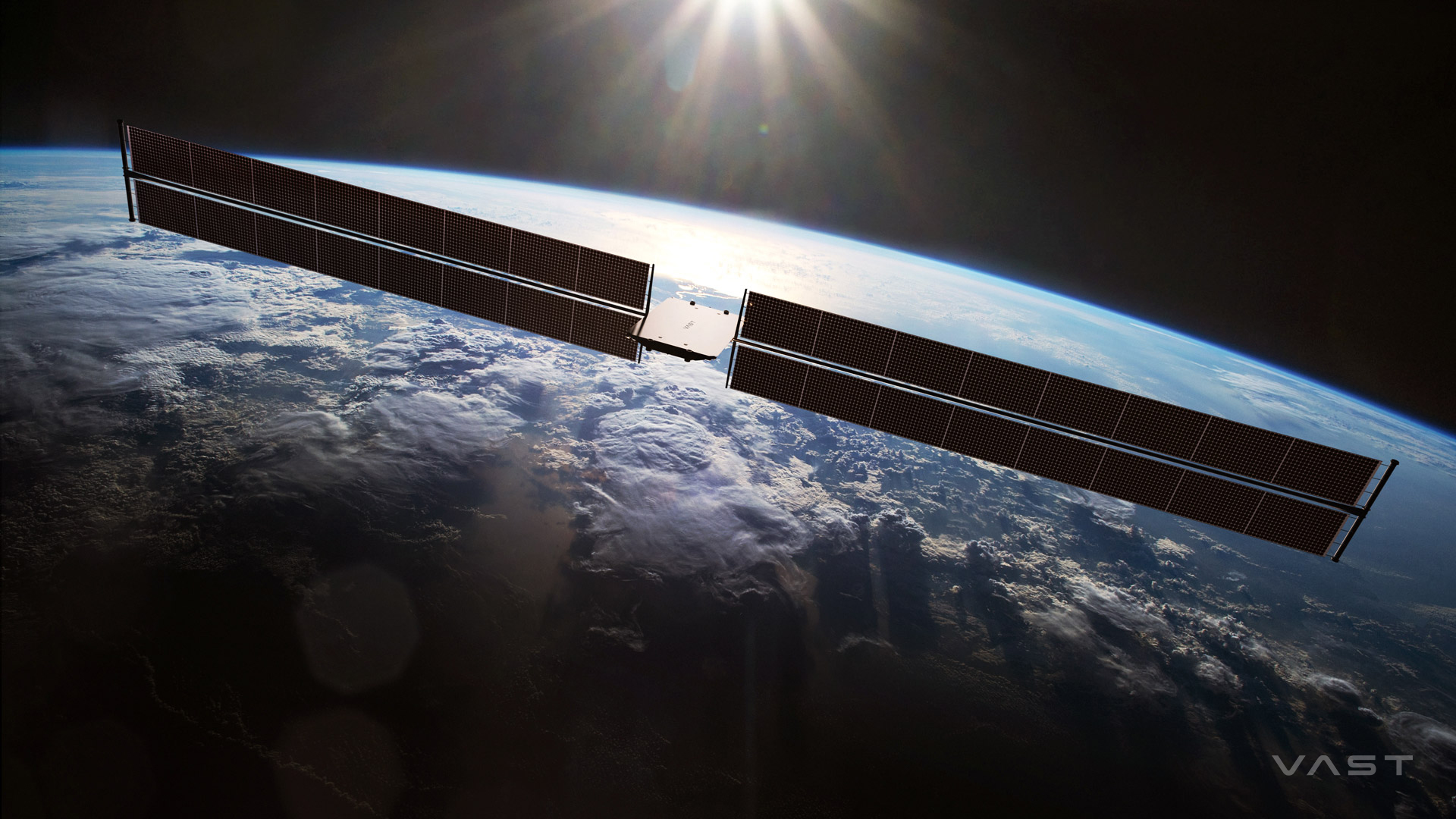
During a recent interview, Max Haot, who serves as Chief Executive Officer of Vast Space, articulated the strategic rationale behind this pivotal business decision. "Every single successful space company is diversified in its products," Haot explained, underscoring the fundamental principle that guides the company's long-term planning. "So for us it really was a question of when, not if." This statement reflects the CEO's conviction that business diversification within the aerospace sector is not merely advantageous but absolutely essential for sustained growth and competitive advantage in an increasingly dynamic commercial space industry.
The decision to enter satellite manufacturing represents a natural extension of the technological capabilities that Vast Space has developed through its space station construction program. The infrastructure, expertise, and engineering prowess required to build reliable space stations translates readily into the production of sophisticated satellite systems capable of supporting demanding commercial applications. This strategic alignment between the company's existing competencies and its new market focus positions Vast favorably for rapid scaling and market penetration.
The commercial satellite market has experienced significant growth in recent years, driven by increasing demand for communications infrastructure, Earth observation capabilities, and specialized scientific payloads. By offering high-power satellite buses, Vast Space can tap into this expanding market segment while simultaneously building the operational experience and manufacturing efficiency that will ultimately benefit its primary Haven-1 space station initiative.

The Haven-1 space station remains the cornerstone of Vast Space's long-term vision for transforming humanity's presence in orbit. As a privately operated space station, Haven-1 is designed to provide unique capabilities for microgravity research, manufacturing, and commercial activities that existing orbital facilities cannot accommodate. The station will offer researchers and commercial entities unprecedented access to the space environment, enabling innovations across biotechnology, materials science, and other critical fields.
Vast Space's expansion into satellite manufacturing should not be interpreted as a dilution of focus on its core space station mission. Rather, it demonstrates the company's confidence in its underlying technology platform and its recognition that aerospace businesses must cultivate multiple revenue streams to achieve financial sustainability and market resilience. The satellite business provides an excellent opportunity to generate steady revenue while simultaneously advancing the technological maturity of systems that will ultimately serve the Haven-1 station.
The successful demonstration mission completed earlier this year served as a crucial validation point for Vast's engineering team. By executing dozens of test objectives without significant issues, the mission proved that the company possesses the technical depth and operational discipline required to manage complex space missions successfully. This track record will undoubtedly enhance Vast's credibility with potential satellite customers seeking reliable providers of advanced space hardware.
The competitive landscape for commercial space services continues to intensify, with numerous companies vying for market share in different segments of the rapidly expanding space economy. Vast Space's strategic decision to diversify aligns with broader industry trends, as companies like SpaceX and Axiom Space have similarly pursued multiple business lines to maximize their market impact and financial performance. By offering both space station capabilities and satellite services, Vast positions itself as a comprehensive provider of commercial space infrastructure.
Looking ahead, Vast Space's entry into satellite manufacturing will likely attract significant attention from aerospace industry analysts and potential customers seeking advanced, reliable satellite platforms. The company's engineering credentials, demonstrated through its successful demonstration mission, combined with its proximity to Southern California's robust aerospace ecosystem, position it well to capture meaningful market share in this competitive segment. The satellite bus market represents an excellent complement to Vast's existing business, creating opportunities for synergistic development and cross-platform utilization of advanced technologies.
As Vast Space continues executing its ambitious agenda, the company's success in these parallel initiatives will likely influence how other emerging space companies approach business strategy and market positioning. The demonstration that a single company can effectively pursue both space station development and satellite manufacturing simultaneously could reshape expectations about what commercial space enterprises should attempt to accomplish. In this way, Vast Space's diversification strategy may ultimately contribute to the overall maturation and sophistication of the commercial space sector.
Source: Ars Technica


.jpg&w=3840&q=75)