
US Economy Grows Yet Job Market Struggles - What's Wrong?

Despite economic growth, hiring rates plummet and job openings vanish. Experts warn of a persistent tough job market ahead for American workers.
The United States finds itself in an economic paradox that's puzzling analysts and frustrating job seekers across the nation. While economic growth indicators continue to paint a picture of expansion and prosperity, the employment landscape tells a starkly different story. Hiring rates are experiencing a notable decline, and job openings that once seemed abundant are becoming increasingly scarce, creating a disconnect between macroeconomic success and individual employment opportunities.
This phenomenon has sparked intense debate among economists, policymakers, and workforce experts who are grappling with understanding why traditional economic models aren't translating into job creation as expected. The US job market appears to be operating under new rules, where corporate profits soar and GDP figures remain robust, yet American workers find themselves facing an increasingly challenging employment environment.
Labor market data reveals a concerning trend that contradicts conventional economic wisdom. Typically, periods of economic growth correspond with increased hiring activity and expanded job opportunities. However, current statistics show that hiring rates have been steadily declining over recent months, even as companies report strong financial performance and consumer spending remains relatively stable.
The disconnect becomes even more apparent when examining job posting trends across major employment platforms. Job openings that were plentiful just months ago have dried up in many sectors, leaving qualified candidates competing for fewer positions. This scarcity has created a buyer's market for employers, who can now afford to be increasingly selective in their hiring processes.

Several factors contribute to this unusual economic scenario. Technological advancement and automation continue to reshape entire industries, eliminating traditional roles while creating demand for specialized skills that many workers don't yet possess. Companies are also becoming more efficient with their existing workforce, utilizing productivity tools and streamlined processes to accomplish more with fewer employees.
Corporate cost-cutting measures, implemented during economic uncertainty, have become entrenched in business operations. Many organizations discovered they could maintain or even increase output with reduced headcount, leading to a reluctance to return to previous staffing levels despite improved financial conditions. This employment paradox reflects a fundamental shift in how businesses approach human resources and operational efficiency.
The rise of artificial intelligence and machine learning technologies has accelerated job displacement in sectors ranging from customer service to data analysis. While these innovations drive economic growth and productivity gains, they simultaneously reduce demand for human workers in many traditional roles. The pace of technological change often outstrips workers' ability to retrain and adapt to new requirements.
Geographic disparities further complicate the employment picture. While certain metropolitan areas continue to experience job growth, particularly in technology and finance sectors, many regions face stagnant or declining employment opportunities. This uneven distribution of job creation contributes to the overall perception of a difficult job market, even as national economic indicators suggest prosperity.
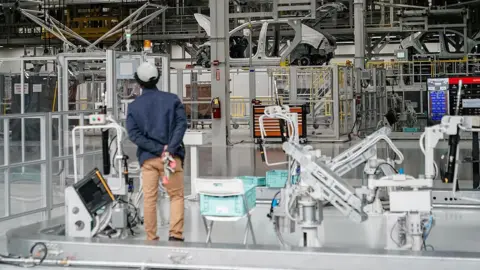
Industry-specific analysis reveals varying levels of hiring activity across different sectors. Healthcare, renewable energy, and certain technology fields continue to show demand for workers, but these opportunities often require specialized education or training that many job seekers lack. Meanwhile, traditional industries like retail, manufacturing, and administrative services have seen significant reductions in available positions.
The gig economy and remote work trends have also influenced traditional employment patterns. Many companies now prefer to engage independent contractors or remote workers rather than hiring full-time employees, reducing the number of permanent positions available in the market. This shift toward flexible work arrangements, while offering some opportunities, doesn't provide the job security and benefits that many workers seek.
Educational institutions and workforce development programs are struggling to keep pace with rapidly changing skill requirements. The skills gap between what employers need and what job seekers possess continues to widen, creating a situation where unemployment persists alongside unfilled specialized positions. This mismatch contributes to the perception that jobs are scarce, even when certain opportunities exist.
Economic experts express growing concern that current employment challenges may represent a structural shift rather than a temporary adjustment. Traditional economic recovery patterns assumed that growth would naturally translate into job creation, but emerging evidence suggests this relationship may have fundamentally changed in the modern economy.

Policy implications of this employment paradox are significant and far-reaching. Government agencies tasked with measuring economic health may need to reconsider how they evaluate prosperity if traditional metrics no longer accurately reflect the experience of average workers. The disconnect between economic growth and employment opportunities challenges fundamental assumptions about how markets function and what constitutes economic success.
Monetary policy decisions become more complex when employment indicators diverge from other economic measures. Federal Reserve officials must balance inflation concerns with employment goals, but determining appropriate policy responses becomes challenging when economic growth doesn't correlate with job creation as historically expected.
Social and political ramifications of persistent employment challenges extend beyond economic considerations. When workers can't find adequate employment despite apparent economic prosperity, social tensions can rise and political stability may be affected. The promise of shared economic benefits becomes hollow if growth doesn't translate into opportunities for ordinary citizens.
Looking ahead, economists and policy experts are exploring potential solutions to address this employment conundrum. Proposals range from enhanced workforce training programs to policies that incentivize job creation and discourage excessive automation. However, implementing effective solutions requires first understanding the full scope and underlying causes of current job market challenges.

The path forward likely requires coordinated efforts from multiple stakeholders, including government agencies, educational institutions, employers, and workforce development organizations. Addressing the skills gap through targeted training programs, creating incentives for job creation, and developing new metrics for measuring economic success that include employment quality may all play crucial roles in resolving this paradox.
As the situation continues to evolve, monitoring employment trends alongside traditional economic indicators becomes increasingly important for understanding the true health of the American economy. The current disconnect serves as a reminder that economic prosperity means little if it doesn't translate into opportunities and security for the workforce that drives that very prosperity.
Source: BBC News


