
US Ambassador's Biblical Claims Spark Middle East Fury

Mike Huckabee's controversial statements about Israel's Biblical rights to Middle Eastern territories draw sharp condemnation from Arab and Muslim nations.
The appointment of Mike Huckabee as the United States Ambassador to Israel has ignited a diplomatic firestorm across the Middle East, with Arab and Muslim nations expressing outrage over his controversial statements regarding Israel's territorial claims. The former Arkansas governor and presidential candidate has long been known for his unwavering support of Israeli policies, but his recent comments suggesting that Israel's Biblical rights extend far beyond its current borders have drawn unprecedented criticism from regional powers.
Huckabee's inflammatory remarks, made during various public appearances and interviews, suggest that Israel would be justified in claiming vast portions of Middle Eastern territory based on Biblical grounds and ancient religious texts. These statements have been interpreted by many as endorsing Israeli expansionism and dismissing the legitimate claims of Palestinian and other Arab populations who have inhabited these lands for generations.
The diplomatic backlash has been swift and comprehensive, with multiple Arab and Muslim nations issuing formal condemnations through their foreign ministries. Saudi Arabia, through its Ministry of Foreign Affairs, described Huckabee's comments as "deeply troubling and contrary to international law," while emphasizing that territorial disputes must be resolved through diplomatic channels rather than religious interpretations. The kingdom's statement highlighted concerns that such rhetoric could inflame tensions in an already volatile region.
Egypt's government has also voiced strong opposition to the ambassador's stance, with Foreign Minister Sameh Shoukry calling the comments "a dangerous precedent that undermines decades of peace efforts." Egyptian officials argue that Huckabee's position contradicts the principles of the Camp David Accords and other foundational peace agreements that have helped maintain stability between Egypt and Israel since the late 1970s.
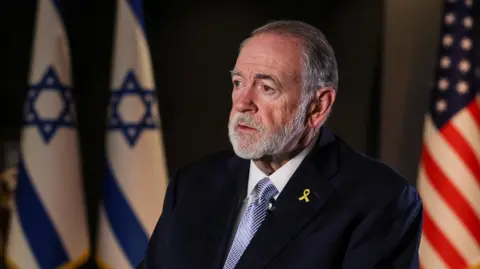
The Palestinian Authority has been particularly vocal in its criticism, with President Mahmoud Abbas describing Huckabee's appointment and subsequent statements as "a clear indication of the Biden administration's bias toward Israeli occupation." Palestinian officials argue that such rhetoric legitimizes settlement expansion in the West Bank and undermines any prospects for a two-state solution to the Israeli-Palestinian conflict.
Jordan, which maintains a delicate peace treaty with Israel while hosting a large Palestinian refugee population, has expressed grave concerns about the implications of Huckabee's statements. King Abdullah II, speaking through royal court officials, emphasized that international law and UN resolutions must form the basis for any territorial arrangements, not religious interpretations of ancient texts.
The controversy extends beyond immediate neighbors, with countries across the broader Muslim world weighing in on the diplomatic crisis. Turkey's President Recep Tayyip Erdogan has characterized Huckabee's comments as "an assault on Muslim and Arab dignity," while calling for the international community to reject what he terms "colonial thinking disguised as religious conviction."
Iran, despite its complex relationship with Arab nations, has found common ground in condemning the ambassador's position. Iranian Foreign Ministry spokesman Nasser Kanaani described the statements as "further evidence of American complicity in Zionist expansionism," using language that resonates with the Islamic Republic's longstanding opposition to Israeli policies.
The diplomatic fallout has raised questions about the effectiveness of American mediation in Middle Eastern conflicts. Regional analysts argue that Huckabee's position as ambassador could severely compromise the United States' ability to serve as an honest broker in peace negotiations. Dr. Marwan Muasher, former Jordanian foreign minister and current vice president at the Carnegie Endowment for International Peace, warned that such statements "make it virtually impossible for Arab leaders to engage constructively with American diplomatic initiatives."
Religious scholars from across the Islamic world have also entered the debate, challenging Huckabee's interpretation of Biblical texts and their relevance to modern territorial disputes. Al-Azhar University in Cairo, one of Sunni Islam's most prestigious institutions, issued a statement emphasizing that "historical religious texts cannot supersede the rights of current inhabitants or established international law."
The controversy has highlighted the complex intersection of religion and politics in Middle Eastern diplomacy. While Israel's connection to the land is deeply rooted in Jewish history and religious tradition, Palestinian and Arab claims are based on centuries of continuous habitation and their own religious and cultural ties to the region. The competing narratives have been at the heart of the conflict for decades, with previous American administrations attempting to balance these competing claims.
European Union officials have also expressed concern about the ambassador's statements, with EU foreign policy chief Josep Borrell calling for "respect for international law and existing agreements" in any discussions about territorial arrangements in the Middle East. The European position emphasizes the importance of diplomatic solutions over religious or historical justifications for territorial claims.
The timing of this controversy is particularly sensitive, coming at a moment when regional tensions remain elevated following recent conflicts in Gaza and ongoing disputes over Israeli settlement activities in the West Bank. Many observers worry that Huckabee's statements could provide justification for further settlement expansion or other actions that might destabilize the fragile status quo.
Israeli officials have been notably cautious in their response to the controversy, with some government ministers privately expressing concern that the ambassador's statements might complicate their own diplomatic relationships with neighboring countries. While Israeli Prime Minister Benjamin Netanyahu has not directly addressed Huckabee's specific comments, his office has emphasized Israel's commitment to existing peace agreements with Egypt and Jordan.
The international community's response has been largely critical, with the United Nations Secretary-General António Guterres reaffirming that "territorial disputes must be resolved in accordance with international law, Security Council resolutions, and through peaceful negotiations." UN officials have emphasized that religious or historical claims cannot override the principles of international law that govern territorial sovereignty.
As the diplomatic crisis continues to unfold, questions remain about how the Biden administration will address the concerns raised by America's Middle Eastern allies and partners. The controversy threatens to complicate American diplomatic efforts in the region at a time when stability and cooperation are essential for addressing ongoing challenges ranging from Iranian influence to economic development initiatives.
Source: BBC News


