
Unleash the Power of Gemma 4: Google's Open AI Models Take a Leap Forward

Google introduces the latest Gemma 4 open-weight AI models, offering more freedom and improved performance for developers. Discover the key features and licensing updates.
Google's Gemini AI models have undergone remarkable advancements over the past year, but their usage has been confined to the company's own terms. The newly introduced Gemma 4 open-weight models, however, provide developers with greater freedom and flexibility.
The previous iteration, Gemma 3, which debuted over a year ago, has become somewhat outdated. Today, developers can start working with the latest Gemma 4, which comes in four distinct sizes, each optimized for local usage. Additionally, Google has recognized the frustrations of developers with AI licensing, leading the company to abandon its custom Gemma license in favor of the more open Apache 2.0 license.
The key focus of Gemma 4 is its adaptability to local machines. The two larger variants, the 26B Mixture of Experts and the 31B Dense models, are designed to run unquantized in bfloat16 format on a single 80GB Nvidia H100 GPU. While this specialized hardware carries a hefty price tag of around $20,000, it still represents a local processing solution.
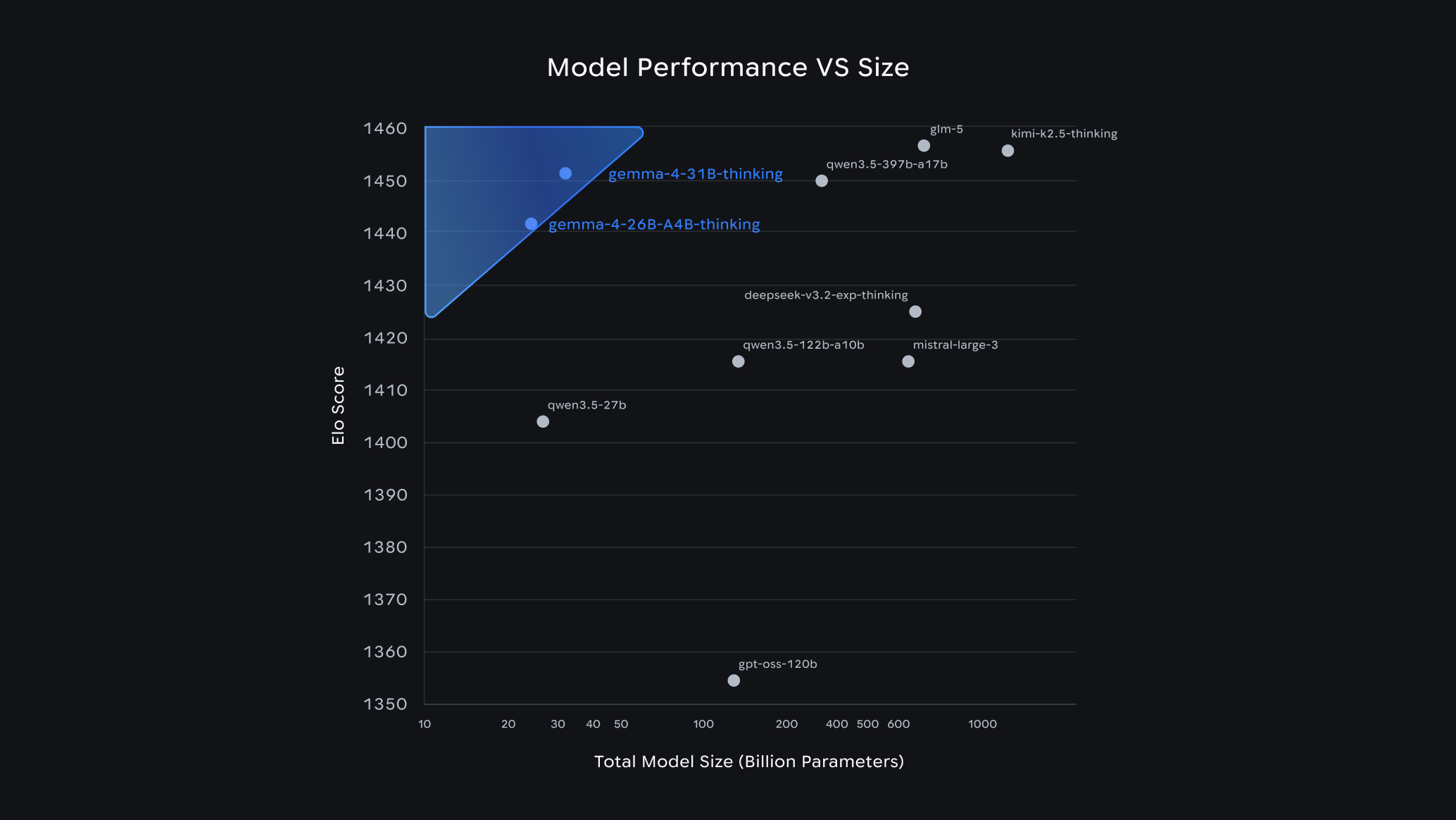
Additionally, Google has made strides in reducing the latency of the Gemma models, allowing developers to truly leverage the power of local processing. The 26B Mixture of Experts model, for instance, activates only 3.8 billion of its 26 billion parameters during inference, resulting in significantly higher tokens-per-second performance compared to similarly sized models.
The 31B Dense model, on the other hand, represents a more comprehensive approach, offering a larger parameter count without sacrificing efficiency. This balance between size and performance aims to cater to a wider range of use cases and developer preferences.

The shift to the Apache 2.0 license is a significant move by Google, as it addresses the long-standing concerns of developers regarding AI licensing. This open-source approach allows for greater flexibility and broader adoption of the Gemma models, empowering developers to explore and integrate them into their projects with fewer restrictions.
The introduction of Gemma 4 and the accompanying licensing update demonstrate Google's commitment to advancing the field of AI and fostering a more open and collaborative ecosystem. As developers delve into the capabilities of these new models, the potential for innovative applications and breakthroughs in various industries is sure to expand.
Source: Ars Technica


