
UK Signs Major Drone Defense Deal with EU Nations

Britain partners with four European Union allies on ambitious drone defense initiative, drawing strategic insights from Ukraine's wartime manufacturing success.
The United Kingdom has officially entered into a groundbreaking drone defense agreement with four European Union member states, marking a significant milestone in post-Brexit military cooperation. This strategic partnership represents one of the most substantial defense collaborations between Britain and EU nations since the UK's departure from the European Union. The initiative aims to revolutionize aerial defense capabilities across participating countries through shared technology, manufacturing expertise, and tactical innovation.
Central to this ambitious program is the decision to model the framework after Ukraine's drone manufacturing success story, which has demonstrated remarkable effectiveness during the ongoing conflict with Russia. Ukrainian forces have showcased how rapidly deployed, cost-effective drone technology can fundamentally alter battlefield dynamics and provide asymmetric advantages against conventional military forces. The participating nations recognize that Ukraine's approach to decentralized production, rapid prototyping, and battlefield-tested designs offers invaluable lessons for modern defense strategies.
The European drone defense coalition includes carefully selected EU member states that bring complementary technological capabilities and manufacturing infrastructure to the partnership. While specific details about the participating countries remain classified for security reasons, sources close to the negotiations indicate that the alliance encompasses nations with established aerospace industries, advanced electronics sectors, and proven track records in defense innovation. This strategic selection ensures that each partner contributes unique strengths while benefiting from shared knowledge and resources.
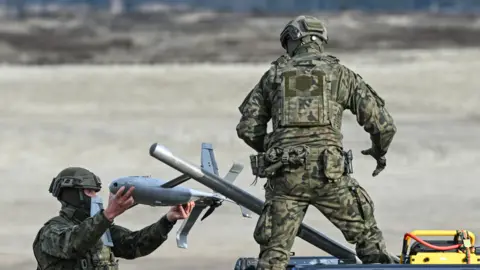
Financial analysts estimate that the UK-EU drone initiative will involve substantial investment commitments from all participating nations, with projected spending reaching hundreds of millions of pounds over the initial five-year implementation phase. The economic implications extend beyond immediate defense spending, as the program is expected to stimulate technological innovation, create high-skilled employment opportunities, and strengthen the defense industrial base across partner countries. Industry experts predict that civilian applications of the developed technologies will generate additional economic benefits through commercial spin-offs.
The technical specifications of the planned drone systems reflect lessons learned from Ukraine's operational experience, emphasizing affordability, reliability, and rapid deployment capabilities. Unlike traditional military procurement programs that often prioritize sophisticated features over practical effectiveness, this initiative focuses on producing battlefield-proven drone technology that can be manufactured quickly and maintained easily. The design philosophy prioritizes swarm capabilities, electronic warfare resistance, and modular payloads that can be adapted for various mission requirements.
Intelligence sharing represents a crucial component of the agreement, with participating nations committing to exchange critical information about drone threats, countermeasures, and emerging technologies. This collaborative approach addresses the rapidly evolving nature of unmanned aerial vehicle technology and the corresponding defensive measures required to maintain security. The intelligence-sharing framework includes provisions for joint training exercises, technical workshops, and regular strategic assessments to ensure all partners remain current with technological developments.
Manufacturing arrangements under the multinational defense partnership will establish distributed production capabilities across multiple countries, reducing vulnerability to supply chain disruptions while maximizing each nation's industrial strengths. This approach mirrors Ukraine's successful strategy of maintaining drone production despite ongoing military pressure through geographic distribution of manufacturing facilities. The production model emphasizes resilience, with backup facilities and alternative supply chains built into the system architecture from the beginning.
Training and operational integration present significant challenges that the partnership aims to address through standardized procedures and joint exercises. Military personnel from all participating nations will receive cross-training on system operation, maintenance, and tactical deployment to ensure seamless cooperation during potential conflicts or humanitarian crises. The training curriculum draws extensively from Ukrainian military experience, incorporating real-world lessons about effective drone deployment, coordination with conventional forces, and adaptation to enemy countermeasures.
The timeline for implementation reflects the urgency that participating governments place on enhancing their aerial defense capabilities in response to evolving security threats. Initial prototype development is scheduled to begin within months, with limited production runs planned for the following year to enable field testing and refinement. Full-scale production and deployment are targeted for completion within three years, representing an accelerated timeline compared to traditional defense procurement programs.
Strategic analysts view this agreement as evidence of pragmatic security cooperation transcending political differences between the UK and EU following Brexit. The partnership demonstrates that shared security interests can facilitate collaboration despite broader political tensions and trade disagreements. This precedent may encourage similar cooperative arrangements in other defense sectors, potentially strengthening overall European security architecture through practical partnerships rather than formal institutional frameworks.
The drone defense technology developed through this partnership is expected to address emerging threats from hostile nations and non-state actors who have increasingly incorporated unmanned aerial vehicles into their tactical arsenals. Recent conflicts have demonstrated the vulnerability of traditional air defense systems against small, low-cost drones operating in coordinated swarms. The new initiative specifically targets these capability gaps through innovative detection systems, electronic countermeasures, and kinetic interception methods.
International implications of the partnership extend beyond the immediate participants, as other NATO allies and democratic nations observe the program's development with significant interest. Success could establish a template for broader international cooperation on drone defense, potentially leading to expanded partnerships and technology sharing agreements. The program's emphasis on cost-effectiveness and rapid deployment makes it particularly attractive to smaller nations with limited defense budgets but significant security concerns.
Source: BBC News


