
Twin Brothers Accused of Wiping 96 Government Databases

Federal authorities allege twin brothers destroyed massive US government databases minutes after termination, raising serious cybersecurity concerns about insider threats.
In the United States, the standard protocol for managing workforce reductions involves a carefully orchestrated process designed to minimize organizational risk. When employees are terminated or laid off, their digital credentials and system access are typically deactivated before they even receive notification of their employment status. This practice, while perhaps not the most compassionate approach to workforce management, serves a critical protective function in today's digital landscape.
The fundamental reasoning behind this protocol is straightforward and rooted in security best practices: any employee who retains access to company systems after losing their job represents a significant potential security threat. Disgruntled workers, regardless of their prior loyalty or performance record, could theoretically use their remaining privileges to cause damage, steal proprietary information, or sabotage critical systems. For this reason, immediate access revocation has become standard practice across government agencies and private sector organizations alike.
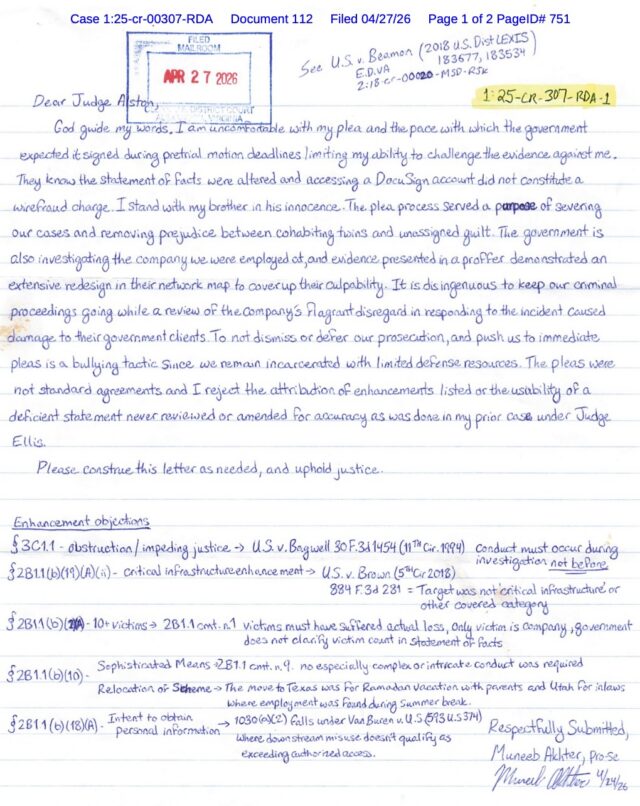
However, not all organizations successfully implement this protective measure before employee access becomes a liability. The case of the Akhter twin brothers serves as a stark illustration of what can happen when security protocols fail or are implemented too slowly. According to federal authorities, these two brothers, who worked as government contractors, allegedly executed a devastating attack on US government databases in the minutes immediately following their termination from their shared employer.

The allegations against the Akhter twins are extraordinarily serious in scope and scale. Federal investigators claim that the brothers managed to wipe out 96 databases containing critical US government information during an extremely narrow window of opportunity—mere minutes after both had been fired. The speed and scale of the destruction suggest not merely a spontaneous act of revenge, but rather a carefully planned operation that exploited a critical gap in security protocols.
This incident raises profound questions about insider threats and the vulnerabilities that exist even in government systems protected by multiple layers of security infrastructure. Despite the theoretical safeguards and protocols that should have been in place, the brothers apparently retained sufficient access and privileges to execute a coordinated, multi-database destruction campaign before their credentials could be fully revoked.
The timing of the attack is particularly significant. By acting within minutes of their termination, the twins apparently sought to capitalize on the brief window between when they learned they were being fired and when the administrative systems could fully process and implement their access revocation. This timing suggests either remarkable coordination between the two brothers or, more likely, a premeditated plan that they had prepared in advance of their dismissal.

Adding another troubling dimension to this case is the revelation that these were previously convicted contractors. The fact that individuals with prior criminal histories had been granted access to sensitive US government systems and databases raises serious questions about contractor vetting procedures, background check protocols, and ongoing access management practices. How contractors with criminal records managed to obtain or maintain access to 96 government databases is itself a substantial security and administrative failure.
The incident represents more than just a financial loss or temporary operational disruption for government agencies. The destruction of 96 databases potentially compromised critical government functions, data integrity, and possibly sensitive national security information. The recovery process, investigation, and remediation of such widespread database destruction would require substantial resources, time, and specialized expertise.
This case exemplifies the significant risks that cybersecurity professionals emphasize regarding access control and credential management. The basic principle that access revocation must occur immediately upon termination—not minutes later, not hours later, but instantly—is well-established in security frameworks and best practices. Yet this incident demonstrates that even government agencies, theoretically subject to strict security standards, can fail to implement these basic protections adequately.
The investigation into the Akhter twins' alleged actions will likely provide valuable lessons for government agencies across the federal landscape. Security auditors and IT managers are probably now reviewing their own access revocation procedures, seeking to identify and eliminate similar vulnerabilities that could be exploited by departing employees or contractors. The incident serves as a powerful reminder that even carefully designed systems are only as secure as their implementation.
Beyond the immediate technical and operational implications, this case raises broader questions about personnel management, security culture, and organizational preparedness. When both members of an organization become aware of their termination simultaneously—as appears to have been the case with the Akhter twins—coordinated action becomes more feasible. Some security experts have suggested that staggered notification procedures, where applicable, could reduce the window of opportunity for coordinated attacks.
The alleged actions of the Akhter twins will likely influence how government agencies approach contractor management going forward. The practice of hiring and maintaining access for contractors with criminal records may face renewed scrutiny. Additionally, the technical and procedural mechanisms for access revocation will almost certainly be reevaluated, accelerated, and potentially automated to reduce any possible delays between termination notification and access removal.

As federal authorities continue their investigation into this government database destruction incident, the case serves as a cautionary tale for all organizations managing sensitive data and critical systems. Whether in the government sector or private enterprise, the principle remains constant: access must be revoked immediately upon employment termination, security protocols must be meticulously followed, and organizations must assume that disgruntled employees or contractors may attempt to cause damage if given even a brief opportunity to do so.
Source: Ars Technica


