
Trump-Xi Summit: Trade, Taiwan & Iran Crisis

Explore the critical issues at stake in Trump's Beijing meeting with Xi Jinping, from tariffs to Middle East tensions and Taiwan's future.
As diplomatic tensions simmer between Washington and Beijing, a high-stakes summit looms on the horizon with profound implications for global stability. The Trump-Xi meeting scheduled for March has become increasingly complex, with multiple geopolitical flashpoints threatening to derail negotiations that could reshape international trade relationships and regional power dynamics for years to come.
On February 20th, a White House official formally announced that US President Donald Trump would travel to Beijing to engage in direct discussions with Chinese leader Xi Jinping. This face-to-face diplomatic encounter represents a critical moment in the deteriorating US-China relationship, with trade policy forming the foundation of anticipated negotiations. The announcement sparked immediate analysis from policy experts and market observers who recognized the significant stakes involved in resolving the protracted US-China trade war that has destabilized global commerce for years.
The diplomatic calendar took a dramatic turn just seven days after the summit announcement. President Trump authorized coordinated military strikes on Iranian targets in partnership with the Israeli government, fundamentally altering the geopolitical landscape and introducing urgent new variables into the Beijing equation. These escalatory military actions in the Middle East immediately triggered alarm bells in Chinese policy circles, as Beijing calculates how the conflict might impact its regional interests and global economic stability.

The consequences of this Middle Eastern intervention have rippled across continents with startling speed. International markets showed immediate volatility as investors grappled with uncertainty about potential supply chain disruptions and energy price fluctuations. Chinese officials, acutely aware of their nation's strategic interests in maintaining stable energy supplies from the Persian Gulf region, grew increasingly concerned about how direct American military engagement with Iran might undermine regional balance and Chinese economic interests.
In response to these escalating tensions, the Trump administration and Chinese government mutually agreed to postpone the scheduled Beijing summit. The delay reflected both parties' recognition that the rapidly changing circumstances required more preparation time and strategic recalibration before productive high-level negotiations could commence. This postponement underscored the complexity of managing multiple crises simultaneously in an interconnected global system.
Taiwan remains among the thorniest issues expected to occupy substantial discussion time during the rescheduled meeting. The self-governing island, claimed by Beijing as a breakaway province, represents an enduring point of contention between Washington and China. American military support for Taiwan and strategic commitments to the island's defense capabilities continue to provoke stern warnings from the Chinese government, which views such assistance as interference in internal affairs.
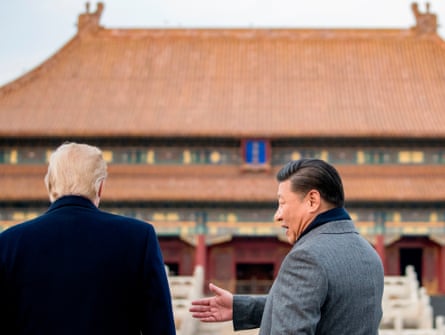
Tariffs and trade policy constitute the original centerpiece of Trump's diplomatic agenda for the summit. The escalating trade war has imposed substantial economic costs on both nations, with American agricultural exports facing Chinese retaliation and technology companies on both sides experiencing market access restrictions. Business leaders across multiple sectors have appealed to both governments to find negotiated solutions that could reduce uncertainty and restore more normal trading patterns.
The Strait of Hormuz has emerged as a critical component of the summit's anticipated agenda, particularly given recent military escalations in the Middle East. This vital waterway, through which approximately one-third of global maritime petroleum trade flows, has become increasingly militarized. Chinese economic interests in maintaining freedom of navigation through this strategically vital passage make it a topic of significant concern for Beijing negotiators.
One particularly thorny question looming over the summit concerns whether Trump will request Chinese assistance in mediating or resolving the escalating Iran conflict. Given China's longstanding diplomatic relationships with Iran and its status as a major purchaser of Iranian oil, Beijing potentially possesses unique leverage and communication channels that could prove valuable to American interests. However, such requests would require Trump to acknowledge China's strategic importance and potentially offer concessions on other negotiating fronts.

The timing of these overlapping crises has created a uniquely complicated diplomatic environment. Policy analysts suggest that the mixture of trade tensions, military escalations, and territorial disputes presents both obstacles and potential opportunities for negotiators. Each side must carefully weigh its immediate security concerns against longer-term economic interests and strategic positioning in an increasingly multipolar world.
Historical precedent suggests that crisis situations can sometimes create unexpected openings for diplomatic breakthroughs, as both parties recognize mutual interests in preventing further escalation. Conversely, the accumulation of grievances and military incidents can harden negotiating positions and make compromise more difficult to achieve. The success of the eventual Trump-Xi summit will likely depend on both leaders' willingness to prioritize pragmatic solutions over ideological positions.
Economic implications of this diplomatic standoff extend throughout global markets and supply chains. Companies in multiple sectors face uncertainty about tariff structures, market access conditions, and regulatory environments that could shift depending on summit outcomes. Investors worldwide are monitoring developments closely, recognizing that a successful negotiation between Washington and Beijing could stabilize markets, while failure could trigger renewed volatility and economic disruption.
As preparations continue for the rescheduled meeting, both governments are engaging in intensive behind-the-scenes diplomacy and strategic analysis. American officials must balance demands from business interests seeking tariff relief against security concerns about Chinese technological competition and military advancement. Similarly, Chinese leadership faces pressure to defend national interests while avoiding further economic damage from prolonged trade conflict.
The eventual summit will test whether traditional diplomatic mechanisms can effectively address the complex array of challenges facing the modern US-China relationship. The outcome will have consequences not only for bilateral relations but for regional stability throughout Asia and the broader Middle East, as well as for the global trading system that depends on functioning relations between the world's two largest economies.
Source: The Guardian


