
Trump's NATO Criticism Pushes Europe Toward Independence

European leaders reconsider security strategy as Trump's rhetoric raises concerns about US commitment to NATO defense guarantees.
As Donald Trump's rhetoric intensifies against NATO allies, European political leaders are increasingly contemplating contingency strategies to address potential security vulnerabilities. The unpredictable nature of the current US administration has catalyzed urgent discussions across European capitals regarding the necessity of developing autonomous defense capabilities, independent of American military support and commitment.
The geopolitical landscape has shifted dramatically in recent months, with Trump's criticism of NATO creating unprecedented uncertainty among transatlantic partners. European nations, long accustomed to relying on American military might and strategic umbrella protection, now find themselves compelled to reassess their security arrangements. This fundamental shift represents one of the most significant realignments in European security architecture since the Cold War, as traditional assumptions about American reliability no longer hold the same weight.
The situation has become particularly acute given Russia's ongoing military operations and the continuing conflict in Ukraine. European leaders are acutely aware that their continent faces genuine security threats from Moscow, and they cannot afford to be caught unprepared should the United States decide to withdraw crucial military enablers or reduce its defensive commitments. The stakes could not be higher, as a security vacuum in Europe might invite Russian aggression or destabilization across the continent.
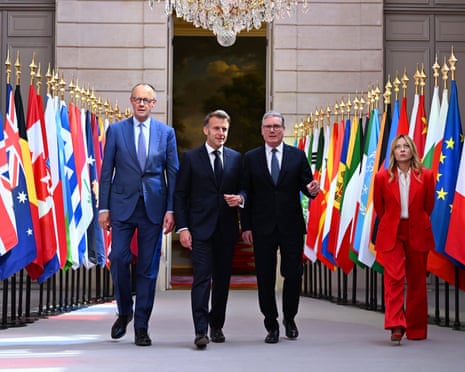
Trump's antagonistic approach toward NATO defense spending requirements and his questioning of American obligations to European members has fundamentally altered European strategic calculations. Over recent years, the American president has repeatedly criticized European nations for what he perceives as inadequate defense budget contributions, threatening to withdraw US military support if demands are not met. These statements have sent shockwaves through European defense establishments, forcing them to confront uncomfortable questions about their military preparedness and independence.
European nations have demonstrated remarkable resilience in managing the Ukraine conflict, increasingly assuming both financial and political responsibility for supporting Kyiv's resistance against Russian aggression. What began as a European crisis has evolved into a defining moment for the continent's security identity. Rather than viewing Ukraine merely as a neighboring problem requiring humanitarian assistance, European strategists now recognize the country as a critical asset for European defense and a crucial buffer against further Russian expansion.
The transformation in European thinking regarding Ukraine reflects a broader strategic awakening. Military analysts across the continent now understand that Ukraine's successful defense against Russian forces directly benefits European security interests. The technological innovations, combat experience, and military lessons emerging from the conflict have become invaluable resources for European defense planning. Additionally, a Ukraine that successfully repels Russian invasion serves as a powerful deterrent against future aggression toward other European nations.

Several European countries have accelerated their military modernization programs in response to the prevailing uncertainty. Nations including Poland, the Baltics, and other frontline states bordering Russia have significantly increased their defense budgets and procurement initiatives. These countries recognize that they may need to shoulder greater responsibility for their own security without the guarantee of American intervention. The shift toward higher defense spending and more sophisticated military capabilities represents a pragmatic acknowledgment of the new security reality.
France and Germany, as the European Union's largest economic and political powers, have emerged as key drivers of European security autonomy discussions. French leadership has long advocated for European strategic autonomy and reduced dependence on American military power. Germany, constrained by historical factors and decades of limited military spending, is now fundamentally reassessing its defense posture. Berlin has committed to substantial increases in military expenditure and is considering the development of advanced weapons systems that would reduce European reliance on American military technology.
The broader implications extend beyond military hardware and spending figures. European leaders are engaging in profound discussions about what European security truly means in an era of potential American disengagement. Questions about unified command structures, integrated defense procurement, and coordinated military responses to Russian aggression are now taking center stage in European policy debates. The concept of a genuinely independent European defense capability, once dismissed as unrealistic or unnecessary, has become a serious strategic objective.
Russia's aggressive posture and demonstrable military capabilities continue to underscore the urgency of European preparations. Moscow has shown willingness to use force to pursue its geopolitical objectives, as evidenced by its invasion of Ukraine and previous interventions in Georgia and Crimea. European nations cannot ignore these realities or assume that Putin's ambitions are limited to Ukraine alone. The potential vulnerability of other European territories, particularly those with significant Russian-speaking populations or historical ties to Moscow, requires serious strategic consideration.
Trump's transactional approach to international relationships has proven deeply unsettling to European allies who expect reliable, predictable partnerships. The American president's suggestion that NATO obligations might be conditional based on individual nations' defense spending has undermined the foundational principle of collective defense that underpins the alliance. This unpredictability has forced European leaders to contemplate scenarios that seemed unthinkable just years ago: a Europe defending itself without guaranteed American military support.
The European Union and individual member states are exploring various institutional and technological pathways toward greater security independence. The EU has enhanced its defense capabilities coordination mechanisms and is investing in joint procurement initiatives designed to strengthen European defense industrial capacity. Simultaneously, individual nations are pursuing bilateral defense partnerships and establishing new military agreements that provide alternative security guarantees beyond traditional NATO structures.
Trump's volatile statements about NATO commitments have paradoxically strengthened the resolve of European leaders to act decisively. Rather than accepting diminished American protection, European nations are channeling the uncertainty into productive strategic planning and capability development. This represents a significant departure from decades of European security passivity, where American military superiority and commitment were taken as permanent fixtures of the international system.
The transition toward European security autonomy will inevitably require substantial financial investments and significant political will to overcome entrenched interests and institutional inertia. However, European leaders increasingly understand that the cost of inaction and continued vulnerability may ultimately prove far greater than the expense of developing independent capabilities. The uncertain durability of American commitment to NATO makes the imperative to act immediately and comprehensively quite clear for European strategists and policymakers.
Looking forward, Europe faces a critical juncture in its security evolution. The continent must simultaneously strengthen immediate defenses while developing long-term strategic capabilities that reduce reliance on American military support. This multifaceted challenge requires unprecedented cooperation among European nations, sustained high defense spending, and the political determination to assume responsibility for continental security. The era of European security dependency appears to be drawing to a close, replaced by a new paradigm of strategic autonomy and collective European defense.
Source: The Guardian


