
Trump's Image Dominates Federal Buildings Amid Criticism

President Trump's giant banner on Justice Department headquarters sparks 'dictator vibes' concerns as his image appears across government facilities.
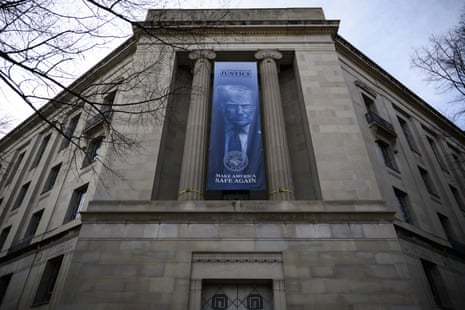
A towering banner featuring President Trump now adorns the Washington headquarters of the Department of Justice, marking another striking example of how the 47th president has systematically placed his image and name throughout America's governmental landscape. The massive display, unveiled this Thursday, has drawn sharp criticism from political observers who describe the visual spectacle as reminiscent of authoritarian regimes. The banner's prominent placement on one of America's most significant federal buildings represents a continuation of Trump's unprecedented approach to presidential branding and self-promotion within government institutions.
Critics have not hesitated to draw comparisons to authoritarian leaders and their tendencies to saturate public spaces with personal imagery. The parallels to North Korea's ubiquitous portraits of its leadership have been particularly striking to many Americans who witness these dramatic changes in their daily environment. Political analysts note that such extensive personal branding within government facilities represents a significant departure from traditional presidential protocols and established norms of federal building management. The visual impact of these displays extends far beyond mere decoration, creating a psychological presence that permeates the everyday experience of federal employees and visiting citizens.
The Justice Department banner joins an expanding collection of Trump imagery across federal properties, creating what some observers describe as an inescapable presidential presence throughout Washington D.C. and beyond. From transportation hubs to government office buildings, the systematic installation of presidential imagery has transformed the visual landscape of American governance. This coordinated effort to establish a visual brand across federal infrastructure represents an unprecedented level of personal promotion within government facilities. The scope and scale of these installations suggest a deliberate strategy to maintain constant visual reminders of presidential authority and presence.
The phenomenon extends well beyond the nation's capital, with Trump's name and image appearing on various federal facilities, street signs, and public monuments across the country. This comprehensive rebranding effort has fundamentally altered how Americans interact with their government buildings and public spaces. Citizens report encountering presidential imagery in locations where such displays were previously uncommon or entirely absent. The psychological impact of this omnipresent branding creates an environment where presidential authority is constantly reinforced through visual cues and symbolic displays.
Political scientists and constitutional experts have expressed growing concern about the implications of extensive presidential branding within government institutions traditionally maintained with political neutrality. The transformation of federal buildings into platforms for personal promotion raises questions about the appropriate boundaries between individual political leadership and institutional governance. These displays challenge long-established precedents regarding the separation between personal political identity and the nonpartisan nature of federal facilities. The debate surrounding these installations reflects broader tensions about presidential power and the traditional limits of executive branch self-promotion.
The "dictator vibes" criticism has gained momentum as more Americans witness the proliferation of presidential imagery in their daily lives. Social media platforms have become filled with photographs and commentary comparing current displays to those found in authoritarian regimes worldwide. Citizens have documented numerous instances where presidential imagery has appeared in previously neutral government spaces, creating a comprehensive visual record of this unprecedented transformation. The public response ranges from support for strong presidential leadership to deep concern about the erosion of democratic norms and institutional independence.
Federal employees working within these transformed buildings report a significant change in workplace atmosphere as presidential imagery becomes an inescapable part of their daily professional environment. Many describe feeling increased pressure to demonstrate loyalty and alignment with presidential priorities while performing their regular duties. The psychological impact of constant visual reminders of presidential authority has created new dynamics within federal workplaces previously characterized by professional neutrality. These changes have implications for the traditional independence of federal agencies and their ability to operate without political interference.
Historical precedent offers little guidance for addressing the current situation, as previous presidents maintained more traditional approaches to government building decoration and branding. Presidential portraits and official imagery have long been standard in government facilities, but the current scale and prominence of personal branding represents a significant departure from established practices. Constitutional scholars debate whether existing regulations and oversight mechanisms are adequate to address this unprecedented situation. The legal and ethical questions surrounding extensive presidential self-promotion within government facilities remain largely unresolved.
International observers have noted the striking visual similarities between America's current governmental landscape and those of authoritarian regimes worldwide. Diplomatic sources report increased attention from foreign governments regarding the transformation of American federal facilities and its implications for democratic governance. The global perception of American democracy has been influenced by these highly visible changes to government buildings and public spaces. International media coverage has frequently highlighted the contrast between traditional American democratic presentation and the current emphasis on personal presidential branding.
The financial costs associated with installing and maintaining extensive presidential imagery across federal properties have raised additional questions about appropriate use of taxpayer resources. Government accountability organizations have begun investigating the expenses related to designing, producing, and installing these numerous displays. The ongoing maintenance and security requirements for these installations represent a continuing drain on federal budgets previously allocated to other priorities. Transparency advocates argue that citizens deserve detailed accounting of all costs associated with presidential branding initiatives across government facilities.
Looking ahead, the long-term implications of this unprecedented presidential branding campaign remain unclear as legal challenges and political opposition continue to develop. Future administrations will inherit a dramatically altered visual landscape of federal facilities and must decide how to address the extensive infrastructure of presidential imagery. The precedent established by current practices may influence how subsequent presidents approach their own relationship with government buildings and public spaces. The resolution of current controversies surrounding presidential imagery will likely shape American political norms and expectations for generations to come.
Source: The Guardian


