
Trump Heads to Beijing With Limited Leverage Against Xi

As Trump arrives in Beijing for summit with Xi Jinping, China holds strategic advantage amid Iran crisis, Taiwan tensions, and failed diplomatic initiatives.
The diplomatic stage is set for a consequential meeting between the United States and China this week, as President Donald Trump prepares to travel to Beijing for a two-day summit with President Xi Jinping. However, this visit arrives at a particularly precarious moment in international relations, with Trump facing mounting pressure from a series of foreign policy setbacks and increasingly dependent on Chinese cooperation to resolve escalating crises across multiple regions and theaters.
Throughout his tenure, Trump has demonstrated a distinctive approach to international diplomacy characterized by unpredictability and dramatic shifts in policy direction. Like a wrecking ball swinging without restraint, his administration has disrupted longstanding alliances, undermined international agreements, and created considerable uncertainty among traditional American partners and adversaries alike. This pattern of erratic decision-making has left numerous geopolitical challenges unresolved, from ongoing tensions in Ukraine and the Middle East to strained relationships with European NATO members, and most recently, controversial territorial ambitions regarding Greenland and escalating conflicts in Lebanon and Iran.
The Beijing summit represents Trump's attempt to secure a significant diplomatic victory following a particularly difficult period of foreign policy failures. His administration has struggled to maintain coherent strategies across different regions, and the lack of consistent long-term planning has resulted in confusion among both allies and adversaries about American intentions. Trump's typical pattern—creating international disruption, claiming victory regardless of actual outcomes, and then expecting others to resolve the resulting chaos—appears poised to repeat itself in this latest international engagement.
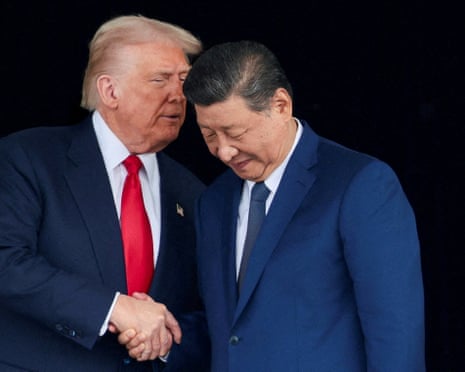
The timing of Trump's Beijing visit could hardly be more consequential, as he arrives seeking critical concessions from China regarding the escalating Iran crisis and the broader Middle Eastern conflict. With military tensions rising and the possibility of renewed all-out conflict looming, Trump desperately needs assurances from Xi Jinping that China will not provide military support or arms supplies to Iran should hostilities intensify. Additionally, the American president is counting on Chinese cooperation to maintain stability in the Strait of Hormuz, one of the world's most critical maritime chokepoints through which a significant portion of global oil supply transits daily.
What makes Trump's negotiating position particularly weak, however, is the simple reality that China holds most of the strategic advantages in this relationship. Xi Jinping has demonstrated remarkable patience and long-term strategic thinking, positioning Beijing to leverage American desperation for concessions that serve Chinese interests far beyond the immediate Middle Eastern context. The Chinese president possesses considerable leverage over Trump, stemming from China's economic influence, its capacity to destabilize global markets, and its critical role in resolving multiple international crises simultaneously.
The China-Taiwan standoff looms as perhaps the most significant underlying issue in these negotiations, though it may not dominate official discussions. Taiwan represents one of the most sensitive geopolitical flashpoints globally, with Beijing viewing the island as an integral part of Chinese territory that must eventually be reunified, while Washington has long maintained a complex diplomatic and security relationship with Taipei. Trump's previous statements and policy positions on Taiwan have ranged from questioning America's security commitments to suggesting flexibility on the island's status, creating considerable anxiety among Taiwan's leadership about whether American security guarantees remain reliable.

Trump's hopes for achieving a high-profile trade agreement with China remain overshadowed by these more immediate security concerns, though commercial negotiations are likely to feature prominently in discussions. The American president has long sought a signature trade deal that would demonstrate his deal-making prowess and appeal to his domestic political base, but such agreements require genuine mutual benefit and sustained commitment to implementation. Chinese negotiators have become increasingly sophisticated in such talks, and Beijing has little incentive to offer Trump the kind of transformative deal he seeks without receiving substantial concessions in return.
The broader context of Trump's recent policy implosions cannot be overlooked when assessing the power dynamics of this summit. His administration's handling of the Ukraine conflict, the Gaza humanitarian crisis, tensions within NATO, and the abrupt pivot toward Greenland have all contributed to a perception of American policy as reactive, inconsistent, and driven by personal whims rather than strategic calculation. This accumulated damage to American credibility and consistency has naturally strengthened Xi's hand in negotiations, as the Chinese president can point to a pattern of American unreliability and policy reversals.
The price that Xi may demand for Chinese cooperation on Iran and other issues could prove significant, and unfortunately for Taiwan, the island may well find itself on that bill. China has long sought international recognition and acceptance of its sovereignty claims over Taiwan, and it may use this moment of American weakness to extract commitments from Trump regarding the level of American military support for the island or the nature of diplomatic recognition. The prospect of Trump trading away Taiwan's security interests in exchange for short-term diplomatic wins represents a genuine concern for those who have long advocated for consistent American support for democratic Taiwan.

Beyond the bilateral issues, the summit also reflects the broader shifting dynamics of international power relations in the early twenty-first century. China's economic strength, technological advancement, and strategic patience have positioned Beijing to increasingly set the terms of engagement in its own neighborhood and beyond. Meanwhile, the United States, under Trump's leadership, appears increasingly willing to abandon longstanding commitments and alliances in pursuit of short-term transactional gains. This fundamental asymmetry in strategic vision gives Xi considerable advantage in any negotiation.
The international community will be watching the Beijing summit closely for signals about the future direction of American foreign policy and the stability of key international relationships. The results of these talks could have implications far beyond the immediate issues of Iran, the Strait of Hormuz, or even US-China relations directly. The handling of Taiwan's security status, the scope of any trade agreements, and the nature of commitments made regarding Iran and the Middle East will all send powerful messages to American allies about the reliability of American security guarantees and the consistency of American policy.
Trump arrives in Beijing knowing that he needs something to show for his diplomatic efforts, some tangible achievement he can present as a victory to domestic audiences. However, Xi Jinping understands perfectly that Trump's desperation creates opportunity for China to extract maximum value from any agreements reached. The asymmetry in negotiating leverage, combined with the Trump administration's demonstrated willingness to sacrifice longer-term strategic interests for immediate political gain, suggests that the final agreements reached may favor Beijing considerably. As the two presidents sit down for their talks, the balance of power in their relationship has shifted decidedly toward the Chinese side.
The coming days will prove revealing about the future trajectory of American foreign policy and the international order more broadly. Whether Trump can secure the concessions he seeks from Xi without surrendering fundamental American interests and commitments remains the critical question. Given the pattern of recent developments and the clear asymmetry in negotiating strength, observers should approach any announced agreements with considerable skepticism about whether they truly serve American national interests or simply represent another transaction that mortgages long-term strategic positioning for short-term political advantage.
Source: The Guardian


