
Trump Embraces Beijing Protocol in Xi Meeting

US President shows unusual deference to Chinese leader Xi Jinping during summit, avoiding Taiwan questions and praising China's pageantry and beauty.
During the opening day of his high-profile summit in Beijing, US President Donald Trump displayed a notably deferential approach toward Chinese leader Xi Jinping, carefully navigating the intricate diplomatic protocols that characterize US-China relations. The president's measured demeanor and deliberate avoidance of contentious topics—most notably Taiwan—have sparked considerable discussion about the nature of power dynamics in contemporary international diplomacy.
Trump's visit to the Chinese capital represents a significant moment in Trump-Xi relations, as the two leaders engage in discussions spanning trade policy, regional security concerns, and emerging technologies. The American president appeared visibly comfortable within the formal ceremonial setting, demonstrating a willingness to embrace the rigid pageantry and elaborate protocols that characterize state visits to Beijing. His assessment that "China is beautiful" suggested a positive tenor for the diplomatic engagement ahead.
The opulent ceremonies and carefully orchestrated events that greeted the American delegation served as a backdrop for substantive policy discussions. Trump's navigation of these formal occasions without controversy or missteps indicated a strategic approach to managing what many observers consider one of the most critical bilateral relationships in global geopolitics. The president's restraint in addressing potentially divisive issues revealed a tactical choice to prioritize relationship-building over confrontational positioning.
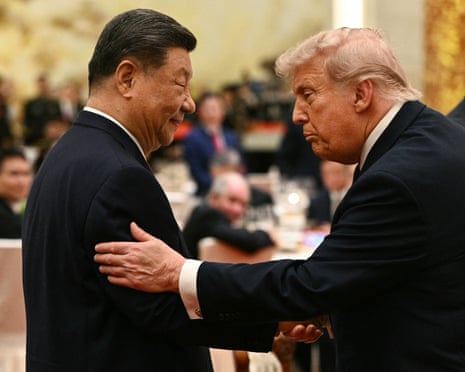
The conspicuous absence of direct commentary on Taiwan during public remarks drew particular attention from international observers and analysts monitoring the summit proceedings. Taiwan remains one of the most sensitive and complex issues in Beijing-Washington relations, with the self-governed island representing a fundamental point of contention between the two powers. Trump's deliberate circumvention of this topic suggested a strategic decision to avoid inflaming tensions or creating diplomatic friction during the early stages of his summit.
Chinese state media and official spokespeople portrayed the American president's comportment as reflecting proper respect for Chinese sovereignty and the established protocols governing high-level diplomatic encounters. The carefully curated narrative emerging from Beijing characterized Trump's demeanor as befitting the gravity of discussions between the world's two largest economies. This portrayal stands in contrast to previous diplomatic moments when the American president has taken more confrontational or unconventional approaches to international negotiations.
The choreography of the summit itself—from arrival ceremonies to state banquets—appeared designed to emphasize Chinese authority and the significance Xi Jinping commands on the global stage. Trump's participation in these elaborate proceedings without deviation or complaint suggested an alignment with Beijing's vision for how the encounter should unfold and be perceived internationally. The president's willingness to embrace these formal structures indicated a departure from his sometimes unpredictable diplomatic style.
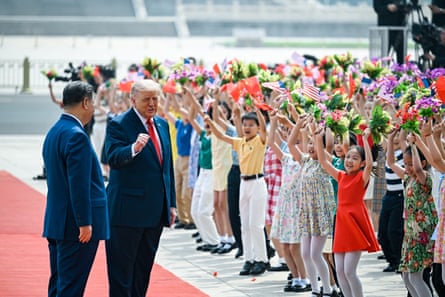
Political analysts have noted the peculiar inversion of conventional power dynamics suggested by Trump's notably restrained posture. Observers have characterized the American president's deference as reflecting a kind of "strongman fantasy," where the appeal of authoritarian leadership styles becomes evident in diplomatic interactions. Trump's evident comfort with hierarchical ceremonial structures and unquestioned authority figures suggests a certain ideological alignment with the governance models practiced by authoritarian regimes.
The substantive agenda for the Trump-Xi summit reportedly encompasses multiple policy domains requiring careful negotiation. Trade relations remain a central concern, with both nations seeking to address economic imbalances and tariff disputes that have characterized recent years. Additionally, discussions regarding artificial intelligence development, military-to-military communications, and regional security matters in Asia were expected to feature prominently in the leaders' formal meetings and working sessions.
Trump's public statements during the first day of the summit emphasized areas of potential cooperation rather than disagreement. This positive framing suggested a negotiating stance focused on finding common ground and establishing frameworks for ongoing dialogue. The president's rhetoric, emphasizing mutual respect and shared interests, contrasted with previous periods of heightened US-China trade tensions and diplomatic friction.
The broader context of American presidential diplomacy reveals Trump's particular attraction to strongman leadership styles and authoritarian governance models. Throughout his political career, Trump has expressed admiration for various autocratic leaders and demonstrated comfort with hierarchical power structures that prioritize centralized executive authority. His evident ease in Beijing's formal diplomatic environment suggests a philosophical affinity with the mechanisms of concentrated power and state pageantry on display during his visit.
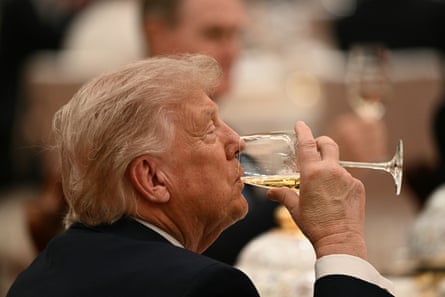
Chinese state apparatus had clearly invested considerable resources in crafting the visual and ceremonial elements of Trump's reception. The precision of the diplomatic protocols, the scale of the security arrangements, and the grandeur of the state events all served to communicate China's status as a major power commanding global respect. Trump's participation in this choreographed display without objection or irreverent commentary indicated his appreciation for these displays of state power and national pride.
The international implications of Trump's Beijing visit extend beyond the bilateral relationship between Washington and Beijing. Other regional powers, particularly in Southeast Asia and the Indo-Pacific region, are carefully monitoring how American foreign policy evolves during this presidential term. The apparent recalibration of US posture toward China suggested by Trump's summit conduct may have significant reverberations for regional security arrangements and alliance structures throughout Asia.

Questions remain regarding the substantive outcomes and agreements that may emerge from the summit's working sessions. Beyond the ceremonial aspects and public statements, the practical negotiations over trade, technology, and security will ultimately determine whether the summit represents a genuine thaw in US-China bilateral relations or merely a temporary diplomatic interlude. The test will come in whether both nations can translate the apparent goodwill evident in Beijing into concrete policy changes benefiting their respective populations.
The summit represents a critical juncture for bilateral relations that have experienced considerable volatility and tension in recent years. Both leaders face substantial domestic constituencies with strong opinions about the appropriate stance toward the other nation. Trump's apparent willingness to embrace Chinese diplomatic preferences and avoid provocative statements suggests a calculation that engagement and cooperation serve American interests better than confrontation during this particular moment in international relations history.
Source: The Guardian

