
Streeting Leaves No 10 After Starmer Meeting

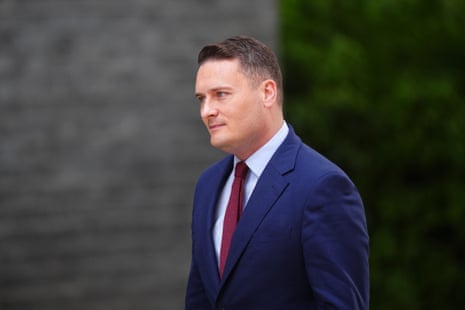
Health Secretary Wes Streeting departs Number 10 following planned talks with PM Keir Starmer amid political tensions and speculation.
The political landscape at Westminster experienced significant movement this morning as Health Secretary Wes Streeting departed Number 10 following a scheduled meeting with Prime Minister Keir Starmer. The departure has intensified scrutiny on the state of the government's internal dynamics, with various observers analyzing what the closed-door discussion may have entailed and what it could mean for the administration's future direction.
In the hours leading up to the meeting, several allies and supporters of the health secretary had made notable public statements calling for the prime minister's resignation. However, Streeting himself has notably refrained from formally initiating or endorsing a leadership challenge against Starmer, a significant restraint that suggests the potential for reconciliation or at least a temporary truce between the two senior figures. This measured approach stands in contrast to the more inflammatory rhetoric emanating from his supporters, creating an interesting dynamic within the broader political narrative.
The timing of these developments coincides with a particularly significant day in the parliamentary calendar. The government faces what many observers consider a pivotal moment as the state opening of parliament is scheduled for 11:15am, bringing the full ceremonial apparatus of Westminster into play. This formal occasion, marked by the arrival of the king and the traditional pageantry associated with the opening of a new legislative session, will provide an important backdrop for assessing the current political climate and the government's apparent stability.
The King's Speech represents a crucial moment in the parliamentary calendar, as it formally outlines the legislative programme that the government intends to pursue over the coming year. This speech serves not merely as a ceremonial function but as a substantive statement of intent regarding the government's priorities and commitments. Political observers and parliamentary commentators will be paying close attention to what the speech reveals about the government's vision and how it might be colored by the current internal tensions.
The broader context surrounding today's events reflects deeper tensions within the Labour government that have been building over recent weeks. Questions about party unity and leadership have become increasingly prominent topics of discussion among MPs, media commentators, and political analysts. The health secretary's position within the government has become something of a focal point for these larger conversations about the direction of the administration and the stability of Starmer's leadership.
The fact that Streeting has resisted calls from his allies to formally challenge the prime minister's position suggests several possible interpretations. Either the health secretary believes that the conversation with Starmer has potential to resolve outstanding issues, or he may be taking a longer-term strategic view regarding his own political positioning and future within the government hierarchy. His restraint in not endorsing a formal leadership challenge is noteworthy given the public statements from his supporters.
The development unfolds during what has already been characterized as a challenging period for the Starmer administration. Various policy challenges, questions about government direction, and the normal friction that emerges within any government of substantial size have created an environment in which internal pressures have become more visible to outside observers. The health secretary's prominence in public discourse reflects both his position within the government and the broader appetite for alternative leadership narratives.
Political analysts have noted that the relationship between prime ministers and their senior cabinet members invariably involves some degree of tension and negotiation. In this case, the very public nature of the discussions about potential challenges suggests that normal channels of communication and internal party management may have become strained. The planned meeting between Starmer and Streeting represents an attempt to address these tensions through direct dialogue at the highest level.
The parliamentary schedule for today presents an interesting juxtaposition of events. While the ceremonial grandeur of the state opening will dominate much of the visual and formal landscape of Westminster, the genuine political substance may well be derived from the conversations taking place behind closed doors and the outcomes of those discussions. Observers will be watching carefully for signals about the government's cohesion and the apparent resolution or continuation of the tensions that have been evident in recent days.
The question of whether today's talks will prove to be more consequential than the state opening ceremony remains genuinely open at this point. In normal circumstances, one might expect the legislative programme outlined in the King's Speech to be the dominant political story of the day. However, the internal government tensions that have manifested themselves through the actions and statements of Streeting's allies have created an alternative narrative that could well prove to be equally significant or even more consequential for the long-term trajectory of the administration.
Senior journalists and political correspondents are positioned to provide detailed analysis of these developments as the day progresses. The careful observation of parliamentary procedure, the reading of body language and official statements, and the cultivation of sources within government and the broader Labour party will all contribute to the understanding of what has transpired during these crucial hours. The way that government spokespeople characterize the outcome of the Starmer-Streeting meeting will provide important clues about the nature of their discussion and any agreements reached.
For the broader Labour party and its supporters, today's events carry significant implications. The party's ability to maintain a coherent message and present a unified front to the electorate depends in part on managing internal tensions and preventing them from spilling over into open conflict. The health secretary's restraint in not formally challenging the prime minister's position may reflect an awareness of this broader imperative, even as his allies publicly voice their concerns about Starmer's leadership.
As events continue to unfold throughout the day, the political community will remain vigilant for any statements, signals, or developments that might provide further insight into the substance of the meeting between the two senior figures. The combination of the formal ceremonial occasion and the underlying political tensions creates a uniquely significant day in the Westminster calendar. Whether the Streeting-Starmer meeting proves to be a turning point in the government's trajectory or merely a temporary pause in ongoing tensions remains to be seen as the day progresses.
Source: The Guardian


