
Streeting Attacks Starmer's Leadership, Calls for EU Rejoin

Ex-health secretary Wes Streeting criticizes Keir Starmer's 'heavy-handed' approach and Labour's lack of policy vision after two years in government.
Wes Streeting, the former health secretary widely expected to announce a leadership bid in the coming weeks, has delivered a forceful critique of Prime Minister Keir Starmer's governing style and the broader direction of the Labour government. In a significant political development, Streeting condemned what he characterized as an overly heavy-handed leadership culture that has constrained innovative policy development within government circles.
The outspoken MP's comments represent a notable escalation in internal Labour tensions, coming at a time when the party continues to grapple with challenges following its election victory. Streeting, who has served in the cabinet throughout Labour's entire tenure in government, voiced his frustration with the administration's approach to governance and strategic planning. His remarks suggest growing frustration among senior party figures about the current direction and decision-making processes within Number 10.
In his critique, Streeting articulated concerns about Labour's first two years in power, suggesting the government has fallen short of expectations in several critical areas. He emphasized that the party "arrived in government underprepared in too many areas and lacking clarity of vision and direction." This assessment from a senior cabinet member underscores internal doubts about the coherence and readiness of the administration's policy framework across multiple departments and policy domains.
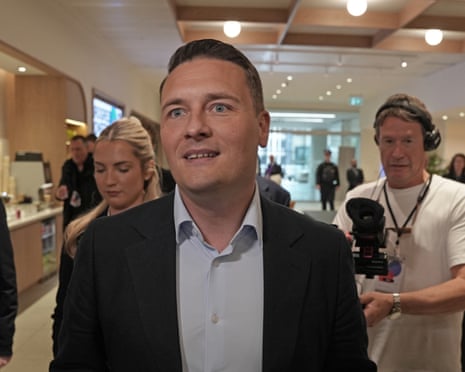
The former health secretary's attack on Starmer's leadership style specifically targeted what he characterized as an overly controlling and heavy-handed approach to decision-making. According to Streeting's assessment, this rigid governance model has actively hindered the government's ability to develop creative and forward-thinking policies that could address the nation's pressing challenges. His comments suggest that talented officials and advisors within government may be self-censoring or avoiding bold policy proposals due to fear of repercussional feedback from the center.
Among his most contentious proposals, Streeting called for the UK to rejoin the European Union, a position that starkly contrasts with the government's official stance on post-Brexit relations. This advocacy for EU membership represents a significant break from the prevailing consensus within the Labour leadership and signals Streeting's willingness to adopt positions independent of the party hierarchy. His call for rejoining carries considerable political weight, given his seniority within the party and his track record as a key government figure.
The timing of these remarks appears strategically positioned ahead of what political observers anticipate will be Streeting's announcement of a formal leadership bid in the near future. Such a move would place him in direct competition with other potential successors within the party, fundamentally reshaping the internal political landscape. His willingness to criticize the current leadership so publicly suggests he believes there is sufficient dissatisfaction within Labour ranks to warrant a challenge to the existing power structure.
Political analysts have noted that Streeting's intervention reflects broader concerns within the Labour Party about the government's effectiveness and public perception. The party, which entered office with substantial goodwill and a significant parliamentary majority, has faced numerous challenges in translating electoral success into tangible policy achievements. Questions about strategic direction and policy implementation have reportedly circulated among Labour MPs and party activists throughout the government's tenure.
The European Union question has become increasingly contentious within British politics, with growing numbers of Labour figures openly questioning the wisdom of Brexit. Streeting's call for EU rejoin aligns with sentiment among younger voters and cosmopolitan urban constituencies that form a significant portion of Labour's electoral coalition. However, such positions remain controversial in traditional Labour constituencies, particularly those in post-industrial regions that voted heavily for Leave in the 2016 referendum.
Streeting's critique of government preparedness carries particular resonance given his experience as health secretary, a portfolio that encompasses some of the most complex and consequential policy areas. His assessment that Labour arrived "underprepared in too many areas" suggests systemic issues with how the government approached the transition from opposition to governing. This lack of preparedness has reportedly manifested in delayed policy implementation, departmental inefficiencies, and difficulty articulating a coherent vision across government.
The ex-minister's remarks about lacking "clarity of vision and direction" strike at the heart of criticisms that have dogged the Starmer administration from various quarters. Without a clear overarching narrative or strategic framework, individual government departments may pursue disconnected objectives without contributing to a unified national purpose. This fragmentation, according to Streeting's implicit argument, has limited the government's ability to communicate effectively with the public about its agenda and achievements.
Within the context of potential future leadership elections, Streeting's challenge to Starmer positions himself as a candidate willing to break with orthodoxy and offer a different vision for the party's future. His attacks on the current administration's governance style suggest he would bring a fundamentally different approach to leadership, potentially emphasizing greater autonomy for policy makers and a more consultative decision-making process. Such positioning could resonate with party members frustrated by the constraints of the current regime.
The broader implications of Streeting's intervention extend beyond immediate party politics to questions about Labour's fundamental direction and identity. As the party navigates challenges ranging from economic management to social policy, internal debates about strategy and vision have become increasingly urgent. Streeting's contribution to these discussions, backed by his cabinet experience and media profile, carries weight that extends well beyond typical backbench criticism.
Looking forward, observers anticipate that Streeting's leadership announcement could catalyze a broader reassessment of Labour's government strategy and priorities. His willingness to challenge the prime minister publicly on matters of governance and vision suggests that party members may have an alternative leadership option that emphasizes different values and approaches. The coming weeks are likely to see intensified internal party debate about the government's trajectory and the best path forward for Labour.
Source: The Guardian


