
States Rush to Limit Black Voter Power After Court Ruling

Southern states swiftly redraw voting maps following Supreme Court decision, alarming civil rights advocates who say the moves undermine democratic representation.
The pace at which southern states have mobilized following the US Supreme Court's landmark decision in Louisiana v Callais has left voting rights advocates scrambling to understand the implications. Within days of the ruling, multiple states including Alabama, Mississippi, Tennessee, and Louisiana have announced plans to rapidly redraw their congressional district maps. For civil rights organizations and democracy advocates, the speed and coordinated nature of these actions suggest a deliberate effort to suppress the electoral power of Black voters across the region.
Louisiana's Governor moved with particular swiftness in the wake of the Supreme Court ruling, ordering the state's ongoing congressional election to be suspended indefinitely. This extraordinary action was taken to allow state lawmakers to pursue a comprehensive redrawing of electoral maps. The explicit goal, according to government statements and legislative discussions, is to eliminate a Democratic-majority district—which voting rights activists note is effectively a Black-majority seat—that encompasses Baton Rouge and surrounding areas. This district has long been a source of political representation for the state's African American community.
The voting rights community has expressed alarm at what they characterize as an unprecedented assault on democratic principles. Activists and legal experts point out that the coordinated response across multiple states suggests a broader strategy to capitalize on the Supreme Court's decision. Rather than viewing the ruling as a narrow legal clarification, southern state legislatures appear to be using it as a template for aggressive voter suppression efforts that could fundamentally alter the political landscape of the region.

Dr. Maya Chen, a constitutional law professor specializing in voting rights, observed that this moment represents a critical juncture for American democracy. "The speed with which these states are acting suggests this has been planned for some time," Chen noted in an interview. "They were waiting for legal cover from the courts, and now they're moving forward with what appears to be a coordinated campaign to dilute Black voting power across the South." Her assessment reflects broader concerns within the civil rights legal community about the long-term implications of the Callais decision.
Mississippi and Tennessee have announced their own redistricting efforts with similar objectives, prompting concerns that a wave of map-redrawing could sweep through the region in coming weeks. State lawmakers in these jurisdictions have cited the Supreme Court decision as justification for their actions, though voting rights organizations argue that the ruling does not explicitly authorize the aggressive dismantling of majority-minority districts. Instead, they contend that states are overreaching in their interpretation of the decision to pursue partisan and racial gerrymandering.
The timing of these announcements has raised eyebrows among political analysts and civil rights observers. Many voting rights advocates had anticipated that states might eventually attempt such moves, but the coordinated and rapid nature of the response suggests either extraordinary legislative coordination or pre-existing plans awaiting judicial approval. Either interpretation raises troubling questions about the current state of electoral integrity in American democracy.
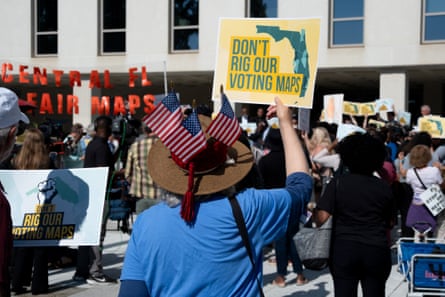
Historical context adds weight to the concerns of voting rights activists. The southern states now moving to redraw their maps have a documented history of voting rights violations dating back to the post-Reconstruction era. Throughout the twentieth century, these states employed various tactics—from poll taxes to literacy tests to outright intimidation—to prevent Black Americans from exercising their fundamental right to vote. While the mechanisms have evolved, voting rights advocates argue that the underlying intent remains unchanged: to minimize the political power of Black communities.
The relationship between the Supreme Court's Callais decision and these state actions has become a focal point of intense debate. Legal scholars are divided on whether the decision explicitly authorizes or merely permits the maps being proposed. Some argue that the court's reasoning can be stretched to justify aggressive redistricting, while others contend that the decision should not be interpreted as a green light for partisan gerrymandering or racial vote dilution. Regardless of the correct legal interpretation, the states appear confident in their legal standing and are moving forward with their plans.
Civil rights organizations have already begun mobilizing legal responses to challenge the redistricting efforts. Groups including the NAACP Legal Defense Fund and the Voting Rights Alliance have indicated they will file suit to block or overturn the new maps. These organizations argue that the proposed changes violate the remaining protections of the Voting Rights Act, as well as constitutional guarantees of equal protection and due process. The coming months are likely to see intense litigation battles over these maps in both federal and state courts.
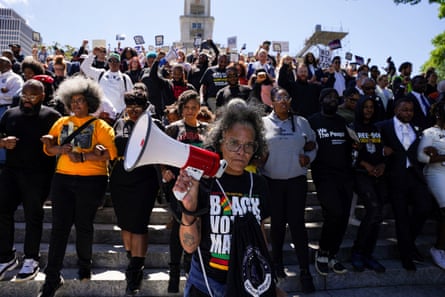
The political implications of these redistricting efforts extend beyond the immediate question of Black voter representation. Analysts predict that eliminating majority-minority districts could shift control of several congressional seats from Democratic to Republican hands, potentially altering the balance of power in the House of Representatives. However, some political scientists argue that the relationship between district composition and electoral outcomes is more complex than simple race-based assumptions would suggest.
For many voting rights activists, the fundamental concern transcends partisan calculations. They view the current moment as a test of whether American democracy can withstand coordinated efforts to undermine the rights of minority voters. The language used by activists—"this is not democracy," "an assault on representation," "a return to Jim Crow tactics"—reflects the depth of their conviction that something profound and troubling is occurring.
Looking forward, the outcome of the legal challenges to these new maps could have far-reaching consequences for voting rights protection in America. If courts uphold the redistricting efforts, it could signal that post-Callais interpretation permits aggressive map-drawing in the name of partisan advantage. Conversely, if courts strike down the maps, it could establish important precedent protecting minority voting rights and constraining state redistricting authority.
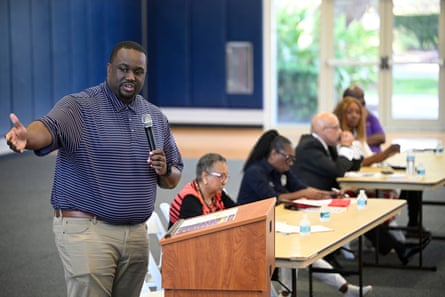
The broader question of whether the Supreme Court has fundamentally shifted the balance in voting rights disputes remains unanswered. The Callais decision was celebrated by some as a necessary correction to what they viewed as judicial overreach in voting rights enforcement, while condemned by others as a devastating blow to civil rights protection. Only time and subsequent court decisions will fully reveal the scope and impact of the ruling.
State officials defending their redistricting efforts argue they are simply exercising legitimate political prerogatives in drawing district lines. They contend that the new maps reflect legitimate policy objectives and do not constitute racial discrimination. However, voting rights advocates point to demographic data showing that the proposed changes would dramatically reduce Black representation in ways that defy rational explanation based on anything other than race.
The stakes of this moment extend beyond state and local politics. The ability of majority-minority communities to elect representatives of their choice is viewed by civil rights advocates as fundamental to American democracy. When that ability is systematically undermined through redistricting, they argue, the legitimacy of democratic representation itself is called into question. This is the core of their assertion that "this is not democracy"—that a system which actively suppresses the voting power of racial minorities contradicts basic democratic principles.
Source: The Guardian


