
Starmer's Leadership in Crisis as 40 MPs Demand Resignation

Keir Starmer faces mounting pressure with 40 Labour MPs calling for his resignation. Health Secretary Wes Streeting reportedly preparing leadership bid amid electoral collapse.
Keir Starmer's position as Prime Minister has become increasingly precarious as internal party dissent reaches critical levels, with approximately 40 Labour MPs openly calling for his immediate resignation. The Labour leadership crisis has intensified following disappointing local election results that saw the party hemorrhage support to both Reform UK and the Green Party. Sources close to Health Secretary Wes Streeting have indicated that the senior minister is actively preparing a potential leadership bid should the Prime Minister's tenure unravel during what promises to be a consequential week for British politics.
Starmer faces an extraordinarily challenging 24-hour period in which he must attempt to stabilize his premiership and demonstrate to wavering party members that he retains the capability to lead the nation forward. The Prime Minister had planned to deliver a significant speech on Monday that would articulate his vision for national recovery and economic revitalization, a carefully choreographed attempt to reassert authority and command over his increasingly fractious parliamentary party. However, the local election results have severely undermined his position, revealing substantial electoral weakening and suggesting that voters have lost confidence in his administration's direction and competence.
The scale of Labour's electoral underperformance in the local contests cannot be understated, as the party's traditional heartland constituencies witnessed notable swings toward protest vote alternatives. Reform UK's populist messaging has proven particularly resonant with working-class voters who feel abandoned by mainstream politics, while the Green Party has made inroads among younger, more environmentally conscious demographics. This dual hemorrhaging of support has created a perfect storm for Starmer, who now faces the twin challenges of retaining his position while simultaneously developing a credible strategy for winning back lost voters before the next general election.

The internal Labour revolt represents an unprecedented challenge to Starmer's authority, with the cohort of 40 dissenting MPs spanning various factions within the party and representing constituencies across different regions of the country. These MPs argue that Starmer's leadership has fundamentally failed to inspire the electorate or articulate a compelling vision for the future, instead presiding over a period of perceived drift and policy incoherence. The scale of this rebellion suggests that significant portions of the parliamentary party have lost faith in the Prime Minister's ability to deliver electoral victory or effectively govern the nation, representing a fundamental erosion of support among his own colleagues.
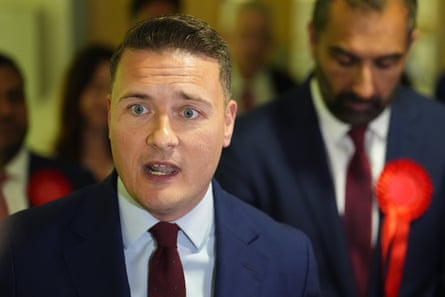
Wes Streeting's reported preparation for a leadership challenge indicates that senior figures within the Labour Party are actively contemplating a post-Starmer future and positioning themselves for potential advancement. As Health Secretary, Streeting represents a more centrist wing of the Labour Party and has cultivated a reputation as an effective communicator and administrator. The fact that allies close to Streeting are already discussing potential leadership scenarios suggests that senior Labour figures believe Starmer's days in office may be numbered, and they are preparing contingency plans for rapid succession management should the Prime Minister's position become untenable.
The timing of these developments creates particular urgency for Starmer, as he attempts to utilize Monday's speech to reverse the negative momentum and convince wavering MPs and party members that he retains sufficient political capital to salvage his premiership. The speech is being positioned as a crucial moment in which the Prime Minister will outline his long-term economic strategy, address public concerns about living standards and public services, and demonstrate renewed vigor in his leadership. Political observers suggest that Starmer's performance during these critical 24 hours will largely determine whether he can stabilize his position or whether the current institutional pressure will become insurmountable.
The broader context of Labour's electoral difficulties extends beyond immediate local election results, reflecting deeper structural challenges within the party and the British political landscape more generally. The rise of Reform UK has fragmented the anti-Conservative vote in ways that traditional Labour strategists did not anticipate, while the Green Party's expansion has particularly impacted younger constituencies where Labour once held commanding advantages. Economic dissatisfaction among voters, stemming from persistent inflation concerns, energy prices, and public sector challenges, has created an electoral environment that has proven hostile to the governing party regardless of its specific policy proposals.
The Prime Minister's political survival now depends on his ability to demonstrate that he possesses the strategic capability and personal resilience necessary to navigate this turbulent period and emerge with his authority fundamentally restored. MPs who have called for his resignation argue that continuity under Starmer would perpetuate the party's current difficulties, while potential leadership candidates sense that repositioning the party's direction and messaging might offer a viable pathway toward restoring electoral competitiveness. The coming 24 hours will prove determinative in establishing whether Starmer can retain sufficient support among his parliamentary colleagues to weather this latest crisis or whether the institutional momentum toward change has become irreversible.

Observers of British politics have noted that Labour Party leadership stability has historically been a significant vulnerability for the party, with frequent changes in direction and command potentially undermining long-term strategic coherence. The current crisis mirrors previous occasions when Labour has experienced internal upheaval following electoral disappointments, though the speed with which dissent has mobilized around Starmer suggests that his coalition of support within the party has been more fragile than previously understood. Political analysts suggest that the party's handling of this leadership question will significantly impact Labour's ability to present itself as a credible and stable alternative government to the electorate in future electoral contests.
The underlying policy disagreements and strategic differences that have contributed to the current crisis reflect fundamental tensions within the Labour Party regarding its electoral coalition, its policy priorities, and the appropriate ideological direction for a social democratic party in contemporary Britain. Some MPs believe that Starmer has been insufficiently ambitious in his economic proposals and too cautious in challenging establishment orthodoxy, while others argue that he has failed to effectively communicate the government's achievements and future vision. These competing perspectives on strategy and direction will likely continue to shape Labour's internal dynamics regardless of whether Starmer survives the current leadership challenge.
The election results that precipitated this crisis revealed that the British electorate has become increasingly fragmented and volatile in its voting patterns, challenging traditional assumptions about party loyalty and voter alignment. The simultaneous strengthening of both Reform UK and the Green Party at Labour's expense suggests a fundamentally realigned political landscape in which established parties can no longer rely on traditional bases of support. Starmer's challenge extends beyond simply surviving the immediate leadership challenge; he must develop a compelling strategic response to this transformation in electoral dynamics that can win back disillusioned voters and prevent further hemorrhaging of support to insurgent parties. The next 24 hours will provide crucial evidence regarding whether he possesses the political capability to meet this formidable challenge.
Source: The Guardian


