
Sagrada Familia Reaches Final Height After 144 Years

Barcelona's iconic Sagrada Familia completes its central tower, becoming the world's tallest church at 172.5 meters after 144 years of construction.
In a momentous milestone that marks the culmination of nearly a century and a half of construction, Barcelona's iconic Sagrada Familia has reached its maximum final height with the installation of the last piece of its central tower. The completion of the towering glass cross brings Antoni Gaudí's architectural masterpiece to an impressive 172.5 meters, officially making it the world's tallest church and Barcelona's highest structure.
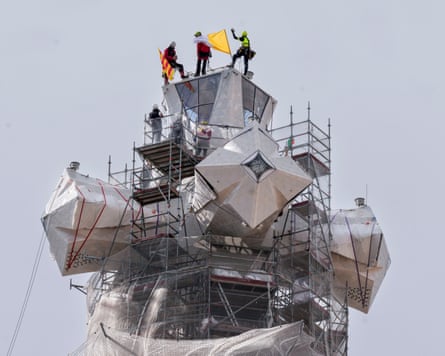
After several days of delays due to challenging wind conditions that made the delicate operation impossible, construction crews successfully positioned the upper section of the magnificent four-sided steel and glass cross at precisely 11:00 AM on Friday morning. The intricate 17-meter-high glass cross was carefully winched into position using specialized equipment, marking the completion of the tower dedicated to Jesus Christ. The installation required perfect weather conditions and meticulous precision, as any miscalculation could have compromised the structural integrity of the entire edifice.
This historic achievement represents the realization of a vision that began 144 years ago, when construction first commenced on what would become one of the world's most recognizable architectural wonders. The Antoni Gaudí masterpiece has weathered world wars, political upheaval, and countless technical challenges throughout its extended construction period. The Catalan architect, who devoted the latter portion of his life entirely to this ambitious project, could hardly have imagined that his creation would take nearly a century and a half to reach completion.
The significance of this moment extends far beyond mere architectural achievement. For the people of Barcelona and Catalans worldwide, the Sagrada Familia represents not just a place of worship, but a symbol of cultural identity, artistic excellence, and unwavering determination. The church has become synonymous with the city itself, drawing millions of visitors annually who come to marvel at its unique blend of Gothic and Art Nouveau forms.
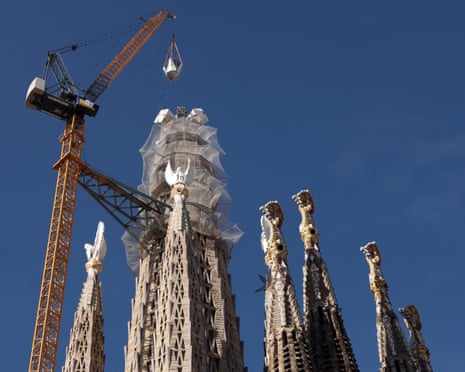
The construction team faced numerous technical challenges in positioning the final element of the central tower. Weather conditions had to be perfect, with wind speeds remaining below critical thresholds to ensure the safety of both workers and the structural components. The steel and glass construction of the cross required specialized handling techniques, as the materials are both heavy and fragile. Engineers spent months planning the exact sequence of operations needed to successfully complete this final installation.
The tower dedicated to Jesus Christ stands as the centerpiece of Gaudí's original design, surrounded by four additional towers representing the Evangelists. The architect's vision included a total of 18 towers, each with specific religious significance and varying heights that create a unique skyline profile. The completion of the central tower marks a crucial step toward the eventual completion of the entire basilica, though several other elements of the original design remain unfinished.
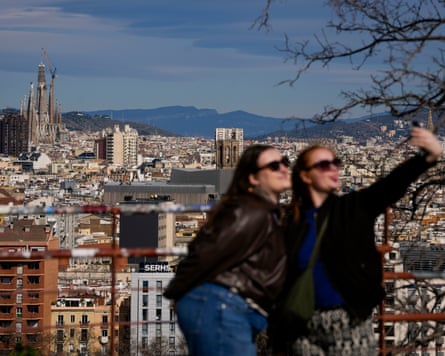
At 172.5 meters tall, the Sagrada Familia now surpasses all other religious buildings worldwide in height, claiming the title of the world's tallest church. This achievement places it among Barcelona's most prominent landmarks, visible from virtually any elevated vantage point throughout the city. The structure's height was carefully calculated to respect local building regulations while maximizing the visual impact of Gaudí's architectural vision.
The glass cross itself represents a marvel of modern engineering combined with traditional craftsmanship. The four-sided design incorporates intricate details that reflect light in different ways throughout the day, creating a constantly changing visual spectacle for observers both near and far. The cross serves not only as a religious symbol but as a beacon that can be seen from great distances, particularly when illuminated during evening hours.
Antoni Gaudí's dedication to this project became legendary during his lifetime, as he gradually abandoned all other architectural commitments to focus exclusively on the Sagrada Familia. The architect lived in a workshop on the construction site during his final years, completely immersed in every detail of the building's progress. His untimely death in 1926, when he was struck by a tram, left the project in the hands of successive generations of architects who have attempted to honor his original vision.
The construction process has evolved dramatically over the decades, incorporating modern construction techniques and materials while striving to maintain the integrity of Gaudí's original design. Computer modeling and advanced engineering have enabled the completion of elements that would have been nearly impossible to achieve using the technology available during the architect's lifetime. The project has become a unique collaboration between historical vision and contemporary innovation.
Funding for the Sagrada Familia construction has come entirely from private donations and entrance fees from the millions of tourists who visit annually. This financial model has allowed the project to continue without interruption, even during periods of economic uncertainty. The steady stream of visitors has provided the necessary resources to employ skilled craftsmen and purchase the specialized materials required for such an ambitious undertaking.
The completion of the central tower represents more than just an architectural milestone; it symbolizes the persistence of human creativity and determination across multiple generations. Families in Barcelona have watched the church grow throughout their entire lifetimes, with construction becoming an integral part of the city's daily rhythm. The sight of cranes and scaffolding around the Sagrada Familia has been a constant feature of the Barcelona skyline for over a century.
The religious significance of this achievement cannot be understated for the Catholic community in Barcelona and beyond. The church serves as an active place of worship, hosting regular masses and special ceremonies despite ongoing construction. The completion of the central tower, dedicated to Jesus Christ, holds particular importance for the faithful who have waited generations to see this aspect of Gaudí's vision realized.
Tourism officials expect the completion of the central tower to generate renewed international interest in visiting Barcelona and the Sagrada Familia. The church already ranks among the most visited tourist attractions in Europe, but achieving its maximum height is likely to attract additional visitors eager to witness this architectural achievement firsthand. The economic impact of increased tourism will benefit not only the church itself but the broader Barcelona community.
Looking ahead, construction teams will now focus on completing the remaining elements of Gaudí's original design. While the central tower has reached its final height, significant work remains on other aspects of the basilica, including the completion of additional towers, facade details, and interior elements. Project managers estimate that the entire church could be completed within the next decade, finally fulfilling the architect's comprehensive vision after nearly 150 years of construction.
The installation of the final piece of the central tower marks what many observers are calling "a joyful day" in the long history of this remarkable project. The achievement represents not just the completion of a single architectural element, but a testament to the enduring power of artistic vision and human perseverance across multiple generations of builders, craftsmen, and believers.
Source: The Guardian


