
Rubio Labels Cuba as US National Security Threat

Secretary of State Marco Rubio escalates rhetoric against Cuba, calling it a national security concern. Cuba's foreign minister fires back with accusations of military aggression incitement.
In a significant escalation of diplomatic tensions, U.S. Secretary of State Marco Rubio has publicly characterized Cuba as a national security threat to the United States, reigniting longstanding geopolitical tensions between the two nations. The statement represents a hardening of the Trump administration's stance toward the Caribbean island nation and signals a potential shift away from the diplomatic normalization efforts that characterized previous administrations' approaches to U.S.-Cuba relations.
Rubio's assertion comes amid broader concerns about Cuban activities in the Western Hemisphere and what American officials characterize as destabilizing behaviors in the region. The Secretary of State's remarks underscore the administration's determination to take a more aggressive posture toward the communist-led government in Havana, marking a departure from the Obama-era thaw in relations that saw the reopening of diplomatic channels and the restoration of formal embassy operations in both countries.
The declaration has prompted swift and forceful pushback from Havana's diplomatic establishment. Cuba's Foreign Minister categorically rejected Rubio's characterization, accusing the U.S. official of attempting to instigate military aggression against the island nation. The foreign minister's response reflects the intensifying rhetorical warfare between Washington and Havana, with each side leveraging diplomatic channels to amplify their respective grievances and consolidate support from international allies.
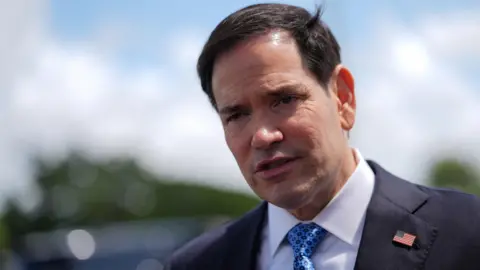
The escalating rhetoric represents a critical moment in U.S.-Cuba relations, with the Trump administration taking direct aim at what it perceives as threats emanating from the island. Cuban officials have consistently denied charges of regional destabilization, instead pointing to what they characterize as decades of American economic sanctions and hostile policies as the root cause of tensions. This fundamental disagreement over causation and responsibility continues to poison diplomatic relations between the neighboring nations.
Rubio's comments must be understood within the broader context of American foreign policy toward Cuba, which has historically been driven by a combination of strategic concerns and domestic political considerations. Florida's significant Cuban-American population, many of whom fled the communist revolution, continues to exert considerable influence over American political responses to Cuban affairs. The Secretary of State's aggressive rhetoric appeals to this influential constituency while simultaneously signaling the administration's willingness to challenge the island's government more directly.
Cuban officials have characterized American accusations as part of a longstanding campaign to delegitimize the Cuban government and justify continued hostilities. The Foreign Ministry's response specifically accused Rubio of leveraging inflammatory language as a pretext for military intervention, drawing parallels to historical American interventions throughout Latin America. This accusation carries particular weight given the historical context of U.S. military adventures in the region, from the Bay of Pigs invasion to the Cuban Missile Crisis.
The deterioration in diplomatic relations between the two nations raises important questions about the future trajectory of engagement in the Western Hemisphere. Regional observers worry that continued escalation could trigger further deterioration in bilateral relations and complicate efforts to address shared regional challenges, including migration, drug trafficking, and maritime security concerns. The warming of relations that occurred during the Obama administration had created modest openings for cooperation on these transnational issues.
American policymakers have specifically cited Cuban military support for various Latin American governments and movements as evidence of destabilizing regional activities. The administration has pointed to Cuban advisors and personnel stationed in other countries as examples of threatening behavior, though Cuban officials maintain that such assistance represents legitimate cooperation between allied nations operating within international law. This fundamental disagreement over what constitutes acceptable regional involvement continues to fuel bilateral tensions.
Rubio's designation of Cuba as a security threat carries practical implications for American policy moving forward. The characterization potentially opens the door for more stringent sanctions, enhanced military presence in the region, and reduced diplomatic engagement. Critics of this hardline approach argue that such measures are counterproductive and fail to address underlying causes of instability in the region, instead generating further resentment and pushing Cuba closer to other international adversaries.
International observers have noted that the resurgence of U.S.-Cuba tensions occurs against a backdrop of broader great power competition in the Western Hemisphere. China and Russia have both expanded their diplomatic and economic engagement with Cuba in recent years, viewing the island as an important strategic position in the region. American policymakers may be concerned that continued isolation of Cuba could drive the island further into the arms of these competing powers, creating a self-fulfilling prophecy regarding Cuban alignment and regional influence.
The foreign minister's response to Rubio's accusations represents more than mere rhetorical posturing; it reflects a genuine Cuban fear that American rhetoric could precede concrete military action. Historical precedent for such concerns is not difficult to find, given the numerous American military interventions throughout Latin American history. Cuban leaders remain acutely aware of their geographic proximity to the United States and the asymmetrical power dynamic that characterizes their bilateral relationship.
Looking ahead, the trajectory of Cuba-U.S. relations will likely depend on broader developments in American foreign policy and domestic politics. The influence of hardline voices on Cuban policy within the Trump administration suggests that further escalation remains possible in coming months. Meanwhile, Cuban officials appear determined to resist what they view as American pressure and maintain their independent foreign policy course, setting the stage for continued confrontation between the neighboring nations.
The standoff between Washington and Havana underscores the persistent challenges in Latin American geopolitics and the difficulty of moving past historical grievances. Both sides will need to demonstrate political will and flexibility if they are to chart a more constructive course forward, but current rhetoric suggests that such a development remains distant. The coming months will be critical in determining whether these tensions continue to escalate or whether cooler heads prevail in both capitals.
Source: BBC News


