
Putin Denounces NATO at Scaled-Back Victory Day

Russian President Vladimir Putin delivers controversial speech at scaled-down Victory Day parade, defending military operations in Ukraine and criticizing Western alliance.
Russian President Vladimir Putin took to the podium at a notably reduced Victory Day parade to deliver a combative address targeting the Western military alliance, using the occasion to reaffirm Moscow's commitment to its military campaign in Ukraine. The annual commemoration, traditionally one of Russia's most significant national celebrations, served as a platform for the Russian leader to justify his government's controversial military actions while launching sharp criticism at NATO and Western nations.
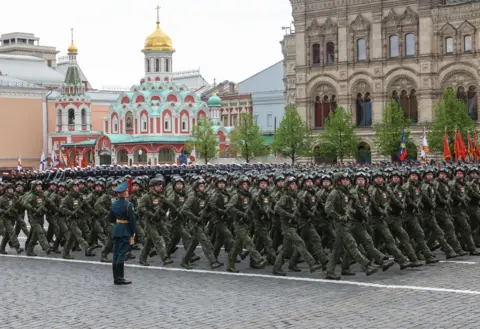
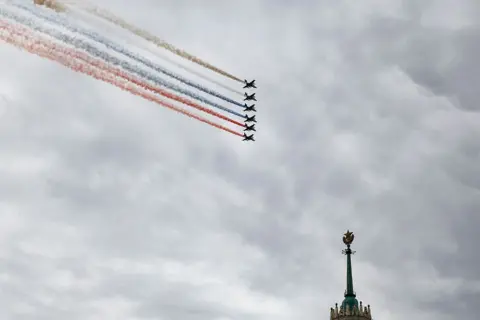
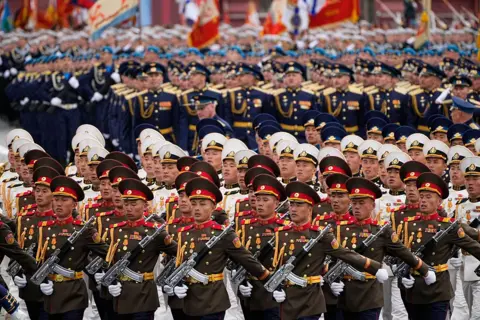
The Victory Day parade held in Moscow displayed considerably fewer military assets and personnel compared to previous years, reflecting the strain on Russia's military resources following over a year of sustained conflict in Ukraine. Fewer tanks, armored vehicles, and military units paraded through Red Square than in commemorations of past years, a visible reminder of the substantial costs the conflict has imposed on Russian military capabilities. This scaled-back presentation stood in stark contrast to the more elaborate displays that have historically characterized this important national holiday.
During his speech, Putin doubled down on the Kremlin's official framing of the Ukraine invasion as a special military operation, rejecting international condemnation and asserting that Russia had no choice but to pursue its military objectives. He argued that Western nations, particularly those aligned with NATO, had forced Russia's hand through provocative actions and threatening military expansion toward Russian borders. The president characterized Russia's military campaign as a defensive measure necessary to protect Russian sovereignty and security interests in its near abroad.
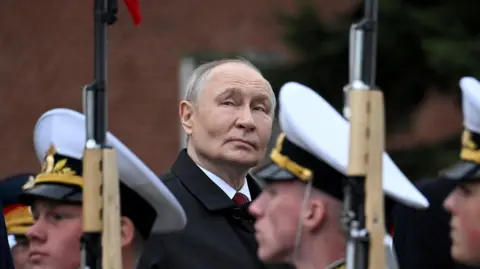
The NATO criticism formed a central pillar of Putin's address, with the Russian president accusing the military alliance of pursuing aggressive policies designed to encircle and threaten Russia. He alleged that NATO's expansion into Eastern Europe violated previous agreements and represented an existential threat to Russian security. Putin specifically condemned what he characterized as Western arms shipments to Ukraine, arguing these actions prolonged the conflict and demonstrated direct Western involvement in the war.
Victory Day itself commemorates the Soviet Union's victory over Nazi Germany during World War II, making May 9 one of the most emotionally resonant dates in the Russian calendar. The holiday typically features elaborate military parades, veteran tributes, and nationalist celebrations that underscore Russia's historical role in defeating fascism. By using this symbolically important occasion to justify current military operations, Putin attempted to draw historical parallels between Russia's fight against Nazism and its current military campaign in Ukraine.
International observers noted that the smaller scale of this year's parade reflected both logistical constraints and military resource allocation decisions. With significant numbers of troops deployed to Ukraine, Russia had fewer forces available for the traditional Moscow demonstration. Additionally, security concerns following several attacks on military and infrastructure targets throughout Russian territory may have influenced the decision to reduce the parade's scope and scale.
The Ukraine conflict has dramatically reshaped Russia's domestic and international position since February 2022, when the full-scale invasion commenced. Thousands of Russian military personnel have been killed or wounded, while Ukraine has mounted a determined resistance that has surprised many Western analysts. The conflict has resulted in significant economic sanctions against Russia, international isolation, and a severe drain on military resources and equipment.
Putin's rhetorical strategy during the Victory Day address demonstrated the Kremlin's continued commitment to its official narrative regarding the war, even as military realities on the ground have become increasingly challenging. The Russian president sought to frame the military operation as justified, necessary, and ultimately victorious, despite accumulating evidence of military setbacks and tactical difficulties. This messaging represents an effort to maintain domestic support for the war effort among the Russian population.
Western leaders and Ukrainian officials have consistently rejected Putin's characterization of the invasion as defensive, instead viewing it as an unprovoked act of aggression aimed at territorial conquest and subjugating Ukraine under Russian control. NATO members have responded to Russian criticism by reaffirming their commitment to collective defense and their right to accept new members without external interference. The geopolitical tensions between Russia and the West have reached their highest levels since the Cold War era.
The scaled-back nature of this year's Victory Day parade served as an unintended indicator of the human and material costs Russia has sustained in its military campaign. Defense analysts pointed to the reduced military hardware on display as evidence of significant losses of tanks, vehicles, and equipment in Ukrainian combat operations. The visible difference from previous years' parades provided a stark visual representation of the war's impact on Russian military capabilities.
Putin's continued justification of the special military operation reflects the Russian government's reliance on propaganda and selective information to maintain public support for the unpopular war. Domestic opposition to the conflict exists within Russia, though independent media outlets face severe restrictions and censorship. The government has implemented strict laws against criticizing the military campaign, effectively limiting public debate on the war's justification and conduct.
The international response to Putin's Victory Day address highlighted the fundamental divide between Russia's perspective on the conflict and that of Western nations and Ukraine. Condemnation came from NATO allies, the United States, European Union officials, and Ukraine's leadership, all rejecting the Russian president's characterization of events and his justifications for military action. These divergent narratives continue to fuel the conflict and complicate any potential diplomatic resolution.
Looking forward, Putin's continued emphasis on military justifications suggests the Russian government intends to maintain its military campaign indefinitely, despite mounting costs and international opposition. The Kremlin appears committed to pursuing its stated objectives in Ukraine, though the feasibility of achieving these goals remains contested among military strategists and analysts. The Victory Day speech reaffirmed the Russian leadership's defiant stance toward Western pressure and international isolation.
The geopolitical implications of this year's Victory Day parade extended beyond Russia's borders, signaling to NATO allies and Ukraine that the Russian government shows no signs of modifying its strategic objectives. The display of reduced military capacity, combined with Putin's aggressive rhetoric, presented a complex picture of a nation committed to its military campaign despite evident resource constraints and operational challenges. The speech and parade served as reminders that the conflict between Russia and Ukraine remains far from resolution, with fundamental disagreements about its cause, conduct, and potential conclusion.
Source: BBC News


