
Philippine Senate Building Locked Down After Shots Fired

Philippine Senate enters lockdown as police commandos storm building searching for ICC-wanted senator. Security incident unfolds in Manila.
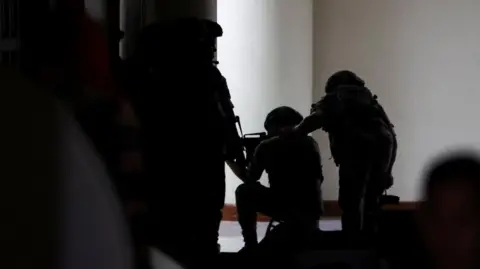
The Philippine Senate building was placed under strict lockdown on Tuesday following reports of gunshots fired within the premises, triggering an intense security response from authorities. Police commandos swiftly mobilized to the legislative complex in Manila's business district after a senator wanted by the International Criminal Court sought refuge inside the building, escalating tensions and prompting immediate evacuation procedures for staff and visitors.
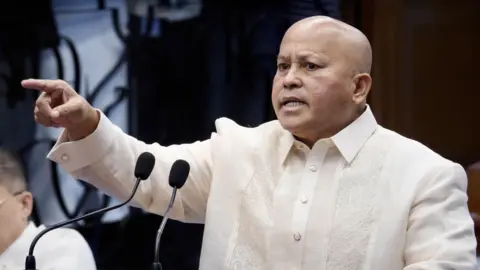
The identity of the senator in question has been at the center of international scrutiny due to alleged involvement in extrajudicial killings during the government's controversial war on drugs campaign. This individual's presence in the Senate building created an extraordinary security situation, as law enforcement officials faced the delicate task of apprehending someone within one of the nation's most protected government institutions. The gravity of the situation was underscored by the deployment of specialized tactical units to handle the potentially volatile scenario.
Witnesses reported hearing multiple gunshots echoing through the corridors of the Senate building, creating panic among personnel working in various offices throughout the facility. Security personnel immediately initiated emergency protocols, directing staff members to secure areas and restricting movement within the building's multiple wings. The sudden eruption of violence transformed what had been an ordinary legislative day into a high-stakes law enforcement operation.
The ICC warrant issued against the senator relates to ongoing investigations into alleged crimes against humanity connected to the aggressive anti-narcotics campaign that claimed thousands of lives during the previous administration. The international legal body has been pursuing the matter with determination, and local authorities faced mounting pressure to cooperate with the international institution. This development marked a significant escalation in a case that has drawn criticism from human rights organizations worldwide.
Responding to the emergency, police commandos established a perimeter around the Senate building and began systematic procedures to locate and apprehend the target. Their approach balanced the need for swift law enforcement action with the necessity of protecting other individuals present in the facility. The tactical teams were equipped to handle potential armed resistance while minimizing risks to civilians and fellow government workers.
Senate leadership swiftly convened emergency meetings to coordinate with law enforcement agencies and determine the best course of action. Officials condemned the incident and pledged full cooperation with police operations, emphasizing the sanctity of legislative processes and the rule of law. The Senate leadership's response reflected the institution's commitment to maintaining order while respecting the jurisdiction of law enforcement authorities.
The lockdown affected hundreds of staff members, security personnel, and administrative workers who suddenly found themselves confined to secure areas within the sprawling complex. Communication systems were activated to provide regular updates to those sheltering in place, though detailed information about the situation's progression remained limited due to the sensitive nature of the ongoing operation. The psychological impact on those present was significant, as individuals waited anxiously for the all-clear signal from authorities.
International observers closely monitored the situation, given its implications for Philippine judicial independence and the nation's relationship with international legal mechanisms. The development represented a critical test of the country's commitment to international law and human rights standards. Diplomatic circles discussed the matter extensively, with various nations expressing their interest in how the situation would be resolved.
Media outlets had difficulty obtaining detailed information during the incident, as security restrictions prevented journalists from approaching the Senate building and interviewing officials. However, various sources confirmed that the operation proceeded methodically, with law enforcement taking every precaution to ensure the safety of individuals within the facility. The lack of transparency during the operation raised questions about information management and media access to significant public events.
The incident underscores ongoing tensions in the Philippines regarding accountability for alleged human rights violations and the tension between national sovereignty and international legal obligations. The war on drugs campaign, which resulted in thousands of deaths, remains a deeply controversial aspect of recent Philippine history. Various stakeholders, including victims' families and human rights advocates, have long sought accountability through both domestic and international mechanisms.
Officials eventually confirmed that the situation was brought under control, though specific details about the senator's status and the exact circumstances of the gunfire remained unclear in immediate aftermath reports. The Senate building was gradually reopened to personnel as security protocols were relaxed following the resolution of the immediate emergency. Investigations into the incident commenced promptly to determine the sequence of events and responsibility for the gunshots.
This dramatic episode at the Philippines' legislative center serves as a reminder of the complex challenges facing the nation as it navigates issues of governance, accountability, and international relations. The incident's resolution and subsequent legal proceedings will likely influence broader discussions about the rule of law and justice in the country. Stakeholders across the political and social spectrum watched intently to understand how authorities would proceed with the case and what implications it might have for future governance and international cooperation.
Source: BBC News


