
One Nation Poised for Historic Lower House Win

Early Farrer byelection results show One Nation candidate David Farley leading as Coalition support crumbles and independent Michelle Milthorpe trails.
One Nation's ambitious bid for its first lower house seat appears to be succeeding, with early counting from the Farrer byelection indicating a commanding lead for the insurgent party's candidate. The results, emerging on Saturday night, represent a watershed moment for Pauline Hanson's political movement, which has surged in public support since the previous federal election cycle. This potential victory signals a significant realignment in Australian politics, with Coalition support collapsing in what was once considered a traditionally safe seat.
Irrigator and One Nation candidate David Farley has established a substantial margin over his nearest rival, independent challenger Michelle Milthorpe, according to preliminary ballot counts. The race between these two candidates has captured national attention as a bellwether for shifting voter sentiment across regional Australia. Farley's strong performance demonstrates the party's ability to translate increased poll numbers into actual electoral victories, marking a turning point for the organization's parliamentary representation and political influence.
The implications for the broader political landscape are substantial, particularly for the Liberal Party's position under Angus Taylor's leadership. Taylor, the sitting member whose resignation triggered the byelection, has presided over a period of declining electoral fortunes for the Coalition in this region. The weakening support for the traditional conservative party reflects deeper changes in the concerns and priorities of rural and regional voters who have increasingly turned toward One Nation's policy platform.
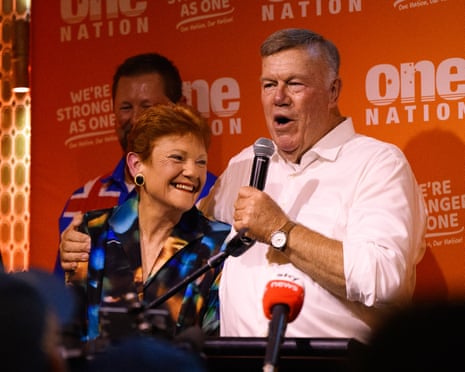
Pauline Hanson's insurgent party has experienced remarkable growth in recent years, capitalizing on dissatisfaction with established political parties and their approach to key policy areas affecting rural communities. One Nation's emphasis on agricultural issues, trade protections, and regional development has resonated strongly with voters in farming communities like Farrer. The party's ability to mobilize its base and convert supporter enthusiasm into actual votes represents a significant achievement in contemporary Australian politics.
The Farrer byelection results carry deeper significance beyond the immediate parliamentary arithmetic. This victory, if confirmed, would provide One Nation with a foothold in the lower house and amplify its voice in parliamentary debates and legislative processes. The party has long sought to break through the electoral ceiling that has limited its representation to the Senate, and success in Farrer would demonstrate that its appeal extends beyond upper house contests where preference voting patterns have traditionally favored the party.
Michelle Milthorpe's campaign as an independent challenger represented an alternative vision to both the established parties and One Nation. The independent candidate attempted to offer voters a middle-ground option that could represent local interests without alignment to a national party structure. However, the apparent failure of her candidacy to gain traction suggests that voters in Farrer were more motivated by fundamental shifts in their political allegiances than by the independent option.
The Coalition's declining support in Farrer reflects broader challenges facing the Liberal Party in rural and regional Australia. Traditional Coalition strongholds have become increasingly competitive as farming communities grapple with drought, water management issues, and agricultural trade concerns. One Nation has positioned itself as more responsive to these specific regional challenges than the major parties, effectively capturing the electoral space that had previously seemed secure for the Liberals.
Electoral analysts have noted that early counting patterns in byelections can sometimes shift as more remote and postal votes are counted, though the margins suggested by initial results in Farrer appear substantial enough to withstand such variations. The trajectory evident in the early results has prompted political commentators to declare One Nation's first lower house victory increasingly likely, barring unexpected developments in the remaining counting process.
The byelection was triggered by Angus Taylor's resignation, creating an opportunity for voters to reassess their electoral choices in light of changing political circumstances. Rather than maintaining support for the Coalition candidate, significant numbers of voters in this district chose to embrace One Nation's alternative political platform. This represents a meaningful shift in the political calculus of rural electoral districts that have historically formed the backbone of Coalition support in regional areas.
For One Nation's political strategy, a lower house victory would validate the party's efforts to expand beyond its Senate base and demonstrate viability as a party capable of winning electorate-based representation. This success could embolden the organization to contest additional seats in future elections and establish itself as a more permanent fixture in Australian parliamentary politics. The party has long argued that it represents genuine grassroots sentiment among sections of the population, and Farrer would provide tangible evidence supporting that claim.
The broader implications for Australian politics extend beyond One Nation's parliamentary representation. The result suggests a fragmentation of the traditional two-party system and indicates that voters are increasingly willing to support alternatives to Labor and Coalition governments. This trend has significant consequences for coalition-building, parliamentary stability, and the negotiation of legislation in a parliament with reduced major-party dominance.
Looking ahead, political observers will analyze the Farrer byelection results to understand which specific policy concerns and demographic shifts drove the One Nation surge. Understanding these patterns will be crucial for all political parties seeking to maintain or recapture support in regional Australia. The result may prompt significant reassessment of campaign strategies and policy priorities among major parties seeking to address the concerns that have propelled One Nation's rise.
The Farrer byelection serves as a significant data point in ongoing discussions about the future direction of Australian politics and the changing alignment of voter preferences. Whether this result represents the beginning of sustained One Nation growth or a more localized phenomenon specific to Farrer will become clearer as subsequent elections unfold. Regardless, the early results confirming David Farley's lead mark a historic moment for Pauline Hanson's political movement and signal substantial shifts in regional political sentiment that established parties cannot ignore.
Source: The Guardian


