
New Father Deported to Bhutan Watches Baby via Phone

Mohan Karki, deported by ICE to a country that exiled his family, connects with his seven-month-old daughter through video calls while hiding in south Asia.
The modern tragedy of immigration enforcement unfolds in countless homes across America, but few stories capture the human cost as powerfully as that of Mohan Karki. This new father represents a growing population of individuals caught in the complex web of U.S. deportation policies – people removed to countries where they have minimal connections, leaving behind families and lives they've built over decades.
In a dimly lit room thousands of miles away, Tika Basnet cradles her seven-month-old daughter Briana while staring at the illuminated screen of her iPhone. The traditional red tika adorning her forehead serves as a cultural bridge between her current reality in America and the heritage that has now become both a blessing and a curse for her family. The soft, irregular breathing of her infant daughter provides the only sound in an otherwise silent home that echoes with absence.
On the opposite side of the digital divide, nearly 9,000 miles away in south Asia, Mohan Karki begins another day in exile. The man who should be changing diapers and experiencing sleepless nights as a new parent instead finds himself in hiding, his exact whereabouts kept secret for his own protection. The ICE deportation that separated him from his family has forced him into a shadow existence, where pixelated video calls represent his only connection to the daughter he has never been able to hold in his arms.
Karki's situation exemplifies a troubling trend in American immigration policy – the deportation of individuals to countries with which they have little meaningful connection. His family's history with Bhutan is one of persecution and exile, making his forced return there not just a separation from his American family, but a cruel irony that places him in the very nation that originally rejected his people.
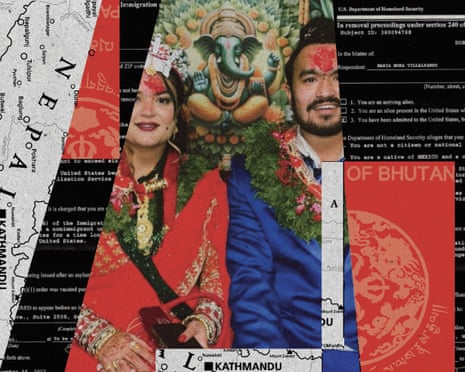
The Bhutanese refugee crisis that originally displaced Karki and countless others began decades ago when the Bhutanese government implemented policies that effectively ethnically cleansed the country of its Nepali-speaking population. Families like Karki's were forced to flee to refugee camps in Nepal, where they lived in limbo for years before being resettled in countries like the United States through international humanitarian programs.
For Basnet, the daily reality of single parenthood was never part of her American dream. She navigates the challenges of caring for an infant while simultaneously trying to maintain hope that her family will someday be reunited. The video calls that connect her to her husband serve as both a lifeline and a painful reminder of what has been lost. Every milestone in their daughter's development – her first smile, her attempts to crawl, her growing recognition of faces – becomes a bittersweet moment shared through a screen rather than experienced together.
The psychological toll of such separations extends far beyond the immediate family members. Deportation impacts ripple through entire communities, creating fear and uncertainty among immigrant populations who may have similar vulnerabilities. Children grow up without parents, spouses become single caregivers overnight, and extended family networks are fractured by policies that often fail to consider the human consequences of enforcement actions.
Immigration advocates argue that cases like Karki's highlight fundamental flaws in the current system. The practice of deporting individuals to countries where they face potential persecution or have no meaningful ties violates basic principles of human rights and family unity. These separations often occur without adequate consideration of the best interests of U.S. citizen children, like baby Briana, who are left without one or both parents.
The legal complexities surrounding such cases often leave families with few options for appeal or reunion. Immigration attorneys working on similar cases describe a system that has become increasingly rigid and unforgiving, where individual circumstances and humanitarian concerns are often overshadowed by broad enforcement priorities. The bureaucratic machinery of deportation moves forward regardless of the personal tragedies it creates.
For Karki, each day in hiding brings new challenges and uncertainties. The country to which he was deported offers little in terms of opportunity or safety for someone in his situation. He exists in a legal and social limbo, unable to fully integrate into a society that his family was originally forced to leave, yet equally unable to return to the life and family he built in America.
The technology that enables these long-distance family connections, while a blessing, also serves as a constant reminder of the physical separation. Time zone differences mean that moments of family connection must be carefully coordinated. The quality of internet connections can make or break precious minutes of face-to-face interaction. Technical difficulties become emotional crises when they interrupt the limited time families have to maintain their bonds.
Child development experts express concern about the long-term impacts of such separations on both infants and parents. The bonding process between fathers and children, already complicated by traditional gender roles and work demands, becomes nearly impossible when an ocean separates them. Children may grow up with confusion about parental relationships and experience developmental challenges related to attachment and security.
The broader implications of such family separations extend to American society as a whole. Communities lose productive members, children require additional support services, and the social fabric that binds neighborhoods together becomes frayed. The economic costs of such policies, while difficult to quantify, include lost tax revenue, increased social service needs, and the intangible costs of broken communities.
Support networks within immigrant communities often step up to help families like Basnet's cope with their new reality. Religious organizations, cultural associations, and informal support groups provide practical assistance with childcare, emotional support, and advocacy efforts. These community responses demonstrate both the resilience of immigrant populations and the inadequacy of official systems to address the human needs created by enforcement policies.
As Karki continues to navigate his uncertain existence in hiding, his wife faces the daily challenges of explaining to their growing daughter why daddy only exists on a phone screen. The simple act of a father holding his child – a moment that most families take for granted – remains an impossible dream for this family torn apart by the machinery of immigration enforcement.
The haunting reality of feeling "like a ghost" – present in digital form but absent in physical reality – captures the existential crisis faced by thousands of deported parents. They exist in the lives of their children as voices and images transmitted across vast distances, unable to provide the comfort, protection, and presence that define meaningful parenthood. This technological limbo creates a new category of family separation that previous generations never had to endure.
Source: The Guardian


