
Mothers Leading the Fight Against US Policy Crises

American mothers are becoming powerful voices in resistance movements against gun violence, immigration enforcement, and inadequate childcare policies affecting families nationwide.
Across America, mothers are increasingly stepping into the frontlines of some of the nation's most contentious political battles. Their motivations are deeply personal, rooted in the experiences of raising children in an environment they view as increasingly hostile and unsafe. These women are not traditional activists with decades of organizing experience, yet they are becoming formidable forces in resistance movements that challenge federal policies on gun violence, immigration enforcement, and childcare access. Their collective voice represents a unique intersection of maternal concern and political activism that has begun to reshape American discourse on these critical issues.
In the Twin Cities, a woman named Sarah dedicated the early months of the year to a relentless documentation project that would have been unthinkable just years ago. She followed immigration agents throughout the metropolitan area, meticulously recording arrests and what she believed to be violations of constitutional rights. Her work became even more urgent and emotionally charged on the day that Renee Good was killed by a federal agent in circumstances that shocked the community. Good had been simply dropping her son at school when she was surrounded by agents who, in the chaos of the moment, declared themselves to be the good guys. The tragedy galvanized Sarah's commitment to her documentation efforts and inspired countless other mothers to examine the human cost of aggressive immigration enforcement policies.
The personal stakes for these mothers cannot be overstated. Each day brings new concerns about the safety and welfare of their children, concerns that are no longer abstract but deeply rooted in the lived experiences of their communities. Sarah's documentation work emerged from witnessing these enforcement actions firsthand and recognizing that the narratives being told by authorities often conflicted dramatically with what actually occurred during these encounters. For mothers like Sarah, the work became a moral imperative, a way to ensure that their children and others in their community understood the truth about what was happening in their neighborhoods.

On the opposite side of the Twin Cities metropolitan area, another mother named Linsey Rippy was engaged in her own form of resistance work. Every day, Rippy showed up at a local church with a singular purpose: to assemble and distribute boxes of food and essentials to families in desperate need. These packages contained the basics of survival—produce, beans, rice, and cereal—items that represented the fundamental nutrition families required to maintain their health. But Rippy also included formula for babies, recognizing that infants at home with their parents faced particular vulnerability during periods when it was deemed unsafe for families to venture outside their homes.
The impetus for Rippy's work was the Trump administration's aggressive immigration enforcement initiative known as Operation Metro Surge. This widespread and violent enforcement crackdown sent shockwaves through immigrant communities throughout the country. Families lived in fear, afraid to leave their homes to go to work, school, medical appointments, or grocery stores. Parents kept their children home, disrupting their education and normal development, simply to avoid potential encounters with immigration enforcement agents. In this climate of terror, Rippy's work at the church became a lifeline for families who could not risk leaving their homes to secure basic necessities.

The intersection of motherhood and activism has created a powerful dynamic in American resistance movements. These women speak with an authority that comes from lived experience—they are not arguing in the abstract about policy but rather describing the concrete impacts of those policies on the children they love and the families in their communities. When a mother talks about immigration policy, she is often speaking from the perspective of having watched neighbors disappear, having comforted crying children separated from their parents, or having distributed emergency supplies to families in crisis. This perspective lends an emotional authenticity and moral weight to their activism that resonates deeply with audiences.
The experiences of mothers like Sarah and Linsey Rippy highlight how federal policy decisions ripple through communities in ways that are often invisible to policymakers but devastatingly real to families experiencing them directly. The documentation of immigration enforcement violations serves multiple purposes: it creates a historical record, it provides evidence for potential legal challenges, it bears witness to experiences that might otherwise be erased or denied, and it elevates the voices of those most affected by these policies. Similarly, the provision of emergency food assistance acknowledges both the immediate suffering of families and the systemic failures that have forced mothers to take on this work themselves.
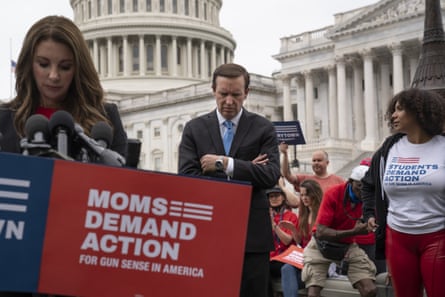
These maternal activists are also addressing the broader landscape of American policy failures. While immigration enforcement gets significant media attention, mothers are simultaneously fighting battles on multiple fronts. The lack of affordable, accessible childcare remains a persistent crisis for American families, forcing many mothers out of the workforce or into impossible financial situations. Meanwhile, the ongoing epidemic of gun violence continues to claim the lives of children and young people, forcing mothers to grapple with fears about their children's safety not just at home but at school, in public spaces, and in their communities.
What unites these seemingly disparate struggles is the recognition that current federal policies are failing American families. Mothers are stepping into the spaces created by these policy failures and attempting to address them through direct action, mutual aid, documentation, and political advocacy. Their resistance movements are not characterized by the traditional hierarchies or organizational structures of established activist groups. Instead, they operate through networks of mutual support, shared commitment to their communities, and the deep wells of motivation that come from a mother's desire to protect her children and ensure their safety and wellbeing.
The emergence of mothers as central figures in resistance movements also reflects a broader shift in how Americans are understanding and responding to policy crises. Rather than waiting for institutional change from above, these women are creating change from below, through direct action and community organizing. They are building networks of support, sharing information, and creating safe spaces for families to receive assistance and community. In doing so, they are not only addressing immediate needs but also building the foundations for longer-term political change.
The power of maternal activism lies partly in its ability to humanize abstract policy debates. When a mother describes the fear her child experiences, or the deprivation her family faces, policy discussions transform from technical debates about enforcement mechanisms or budget allocations into human stories about real children and real families. This rhetorical and political power helps explain why maternal activists have become increasingly prominent in American resistance movements and why their voices carry such weight in political conversations.
As these mothers continue their work on the frontlines of American resistance movements, they carry with them not just their own experiences but the accumulated suffering and resilience of their communities. Their commitment to documenting violations, providing emergency assistance, and advocating for policy change reflects a deep conviction that federal policies must be held accountable to the real human consequences of their implementation. In this sense, mothers like Sarah and Linsey Rippy are not just resisting harmful policies; they are articulating a vision of what American policy could and should be—one that prioritizes the safety, dignity, and wellbeing of all children and families.
Source: The Guardian


