
Mother's Heartbreak: Family Pleads Politicians Respect Daughter

The mother of five-year-old Kumanjayi Little Baby urges politicians not to exploit her daughter's death for political purposes. Parliament honors the Alice Springs case.
The tragic death of five-year-old Kumanjayi Little Baby has prompted deep reflection within Australian political circles about the appropriate ways to honor young victims and support grieving families. On Tuesday, Labor introduced condolence motions in parliament to acknowledge the loss of the child, who was allegedly murdered in Alice Springs last month, sparking widespread community concern and calls for justice.
In an emotionally powerful statement delivered during Senate proceedings, the mother of Kumanjayi Little Baby made a direct and heartfelt appeal to the nation's political leadership. Reading through Indigenous Affairs Minister Malarndirri McCarthy, the grieving parent expressed her profound sorrow while simultaneously cautioning against the politicization of her daughter's memory. The mother, whose identity has been carefully protected for her own safety and privacy, articulated her concerns about how her child's story might be weaponized for political purposes and partisan gain.
"My heart is broken into a million pieces," the statement conveyed, capturing the immeasurable pain of a parent who has lost a young child under circumstances involving alleged criminal violence. This raw expression of grief resonated throughout the chamber, reminding all present of the human tragedy at the center of parliamentary discussions and political maneuvering. The mother's words underscored the fundamental principle that some matters transcend political ideology and require genuine compassion above all else.

The request by the bereaved mother represents a significant moment in Australian public discourse, highlighting the tension between political accountability and family privacy in high-profile cases involving Indigenous communities. Politicians from various sides of parliament have grappled with how to appropriately respond to tragedies without exploiting the suffering of those directly affected. The mother's plea suggests that not all situations benefit from partisan debate, and that some circumstances demand a unified, respectful response focused entirely on the wellbeing of the victim and their loved ones.
Minister McCarthy, tasked with delivering these sensitive remarks, fulfilled a crucial role in ensuring the mother's voice reached the highest levels of government while maintaining appropriate protocols around victim protection and sensitivity. The reading of the statement in parliament served as an official acknowledgment of the family's position, creating a formal record that politicians and the broader Australian community cannot ignore when discussing this case. This approach demonstrated how institutional channels can respect family wishes while still allowing for parliamentary recognition of tragic deaths.
The case of Kumanjayi Little Baby has drawn particular attention to issues affecting Indigenous Australians, including child safety, community vulnerability, and access to justice. However, the mother's intervention suggests that while these systemic issues warrant serious examination, they must be addressed in ways that honor the specific life lost rather than simply serving broader political narratives. The five-year-old Warlpiri girl's death deserves recognition that prioritizes her dignity and her family's grief above all other considerations.
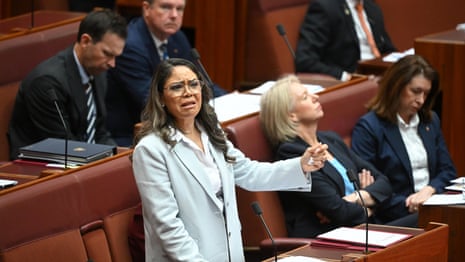
The parliamentary condolence motion procedure itself reflects Australia's institutional commitment to marking significant losses and expressing collective mourning through official channels. When such motions are called for a young child, the emotional weight intensifies considerably, as members confront the reality of preventable tragedy and systemic failures that may have contributed to the circumstances. By allowing the mother's statement to be read directly into the record, parliament created space for the family's voice to shape how the death is understood and remembered.
This incident raises important questions about the responsibility of politicians and media when covering cases involving deceased Indigenous Australians and vulnerable children. The mother's explicit request not to have her daughter's memory leveraged for "reasons that do not honour and respect my baby girl" sets a clear ethical boundary for how future discussions should proceed. Those engaging with this tragedy must constantly ask themselves whether their actions serve the interests of the deceased and their family, or whether they primarily serve political or media agendas.
The broader Alice Springs case and the alleged murder charge that resulted from it have prompted community members to reflect on child protection systems and how authorities respond to threats to vulnerable young people within Indigenous communities. The mother's statement does not reject this important examination; rather, it suggests that such discussions should be undertaken with genuine commitment to improvement rather than as opportunities for political point-scoring. This distinction matters profoundly to families who are living through unimaginable loss.
The role of Minister Malarndirri McCarthy in delivering this statement reflects the particular responsibility held by Indigenous Affairs representatives to serve as bridges between communities and broader Australian institutions. McCarthy's government position places her at the intersection of policy advocacy and family support, requiring sensitivity to the diverse needs and wishes of Indigenous Australians affected by tragedy. By faithfully conveying the mother's exact words and expressed wishes, McCarthy demonstrated the kind of representation that many believe should characterize political engagement with Indigenous matters.
As the nation processes this tragedy, the mother's plea serves as a powerful reminder that behind every news story, every parliamentary motion, and every political discussion are real people experiencing genuine pain. The challenge for Australian society moving forward is to ensure that child safety and justice are pursued with vigor and commitment while simultaneously respecting the expressed wishes of grieving families about how their loved ones are remembered. This balance requires maturity, empathy, and a willingness to prioritize human dignity over all other considerations.
The death of Kumanjayi Little Baby will undoubtedly continue to inspire discussions about community safety, institutional reform, and how Australia's legal system serves vulnerable populations. However, the mother's statement has established that any such discussions must be conducted with an unwavering focus on honoring the child's memory and supporting her family through their devastating loss. In this way, genuine respect for the deceased can coexist with the serious work of preventing future tragedies and creating more just and protective communities for all Australian children.
Warning: This article contains references to Indigenous Australians who have died. Please consider your wellbeing if this topic is sensitive for you. Support services are available through various organizations dedicated to assisting those affected by loss and trauma.


