
Mississippi Rallies Against Voting Rights Rollback

Thousands gather at historic Mississippi War Memorial to protest Supreme Court decision gutting Voting Rights Act protections against racial discrimination.
In a powerful demonstration of civic engagement and historical awareness, thousands of Mississippians and supporters from neighboring southern states converged at the state's War Memorial Building auditorium on Wednesday to voice their opposition to recent voting rights restrictions. The gathering represented a significant show of solidarity in defense of electoral protections, coming at a critical moment when multiple southern jurisdictions are advancing policies that voting rights advocates argue could substantially diminish Black voting power across the region.
The rally held particular symbolic weight due to its location at the War Memorial Building, a site steeped in Mississippi's complicated racial history. This venue was specifically chosen because it represents a geographical and historical connection to the enactment of the notorious "Mississippi Plan," a systematic approach to racial suppression that fundamentally shaped voting patterns and political representation for generations. By selecting this location, organizers deliberately linked contemporary voting rights concerns to historical patterns of disenfranchisement, drawing important parallels between past and present threats to democratic participation.
The demonstration emerged as a direct response to a groundbreaking Supreme Court decision that substantially weakened key provisions of the Voting Rights Act, a landmark piece of civil rights legislation. Specifically, the ruling has gutted protections that previously prevented states, counties, and municipalities from implementing redistricting maps and electoral policies designed to dilute or suppress the voting power of minority communities, particularly African American voters.
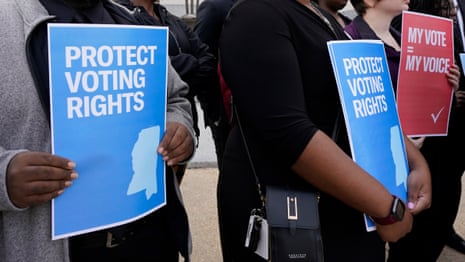
According to Amir Badat, the Southern States Director at Fair Fight Action, a prominent voting rights organization dedicated to eliminating voter suppression, the implications of the Supreme Court's decision are severe and far-reaching. "Section 2 of the Voting Rights Act stopped states, counties, and cities from passing redistricting maps that discriminate against Black voters, and it led to the biggest growth of Black political power since Reconstruction," Badat explained to the assembled crowd and media representatives.
The loss of this protective provision represents a significant setback for voting rights advocates who had worked tirelessly to maintain the federal oversight mechanisms that prevented discriminatory electoral practices. For decades, Section 2 served as a critical safeguard, requiring jurisdictions with histories of racial discrimination to prove that proposed electoral changes would not have a discriminatory effect on minority voters. This preclearance requirement had proven instrumental in blocking countless attempts to suppress minority voting power through gerrymandering, voter ID laws, and other restrictive measures.
The rally's timing is particularly significant as southern states have begun aggressively pursuing new voting restrictions and redistricting strategies that many civil rights organizations argue are specifically designed to counteract the demographic changes that have expanded the electorate and enhanced minority representation over the past several decades. Political analysts have noted that the region is experiencing a pivotal demographic shift, with minority populations growing substantially in key areas, potentially threatening traditional power structures in many jurisdictions.
The messaging from organizers at the rally emphasized continuity with the civil rights movement while articulating contemporary concerns about democratic backsliding. The phrase "We will not go back to Jim Crow" that dominated signage and speeches referenced the systematic segregation and voter suppression era that characterized the American South for nearly a century following Reconstruction. This historical reference underscored activists' conviction that recent policy changes represent an attempt to resurrect mechanisms of racial exclusion from voting that the country had supposedly dismantled through decades of struggle and legal reform.
Multiple speakers at the event detailed specific examples of how voting restrictions have affected their communities, providing personal testimonies that illustrated the practical consequences of reduced voting rights protections. These narratives helped connect abstract legal concepts to real-world impacts on citizens' ability to participate in democratic processes, including stories of voters encountering unexpected obstacles when attempting to register, difficulty in accessing polling locations, and confusion regarding new identification requirements.
Beyond Mississippi, similar demonstrations have erupted across the South and throughout the nation as the broader implications of the Supreme Court's decision become clearer. Voting rights organizations warn that without federal oversight, states will implement increasingly aggressive voter suppression tactics, potentially reversing decades of progress in expanding democratic participation. The coalition of supporters at the Mississippi rally reflected this nationwide concern, with participants traveling from neighboring states to show solidarity with Mississippi's voting rights advocates.
The role of organizations like Fair Fight Action has become increasingly crucial in this new landscape. With reduced federal protections, voting rights groups must now rely more heavily on litigation strategies, state-level advocacy, and grassroots mobilization to counter discriminatory practices. These organizations have significantly expanded their resources and personnel to address the anticipated surge in voter suppression attempts following the Supreme Court ruling.
Education and civic engagement emerged as central themes throughout the rally, with organizers emphasizing the importance of voter registration drives, community organizing, and political participation. Speakers stressed that despite reduced federal protections, citizens retain the power to defend their democratic rights through concerted action and sustained pressure on elected officials. This message resonated particularly strongly with younger attendees, who represent a demographically diverse generation more motivated by voting rights concerns than previous cohorts.
The Mississippi rally exemplifies the broader national conversation about the future of American democracy and the ongoing struggle for equitable voting access. As litigation continues and legislative battles play out in state capitols and Congress, events like Wednesday's gathering serve as crucial reminders of what advocates are fighting to preserve and what they fear losing. The determination expressed by thousands of Mississippians to defend voting rights suggests that despite legal setbacks, the movement to protect democratic participation remains vigorous and committed to confronting the historical and contemporary challenges to equal representation.
Source: The Guardian


