
Jesse Jackson's Legacy: How Love Transformed Civil Rights

Rev. William Barber reflects on mentor Jesse Jackson's death at 84, exploring how the civil rights icon's message of love remained a powerful force throughout his life.
In the predawn darkness of Tuesday morning, a phone call at 4:45 AM delivered news that would reverberate across generations of civil rights activism. Jesse Jackson Jr was on the line, his voice heavy with emotion as he shared that his father, the legendary Reverend Jesse Louis Jackson, had passed away peacefully at the age of 84. As we shared a prayer together, I listened as Jesse Jr recounted the profound final moments of his father's life, describing how he had witnessed the civil rights titan draw his last breath in the quiet hours before dawn. When Jesse Jr summoned his mother to the bedside, she approached with the dignity that had carried her through decades as the wife of a movement leader, reached toward her husband of more than half a century, and spoke words that captured the essence of the man we had lost: "A mighty lion has fallen."
The metaphor was more than poetic—it was prophetic. Across the vast expanses of Africa's golden savannas, the lion commands respect not merely through physical dominance, but through an intangible power that resonates with every creature in its domain. Even those who cannot comprehend the source of this authority recognize its presence and bow to its influence. In the hours and days following Jackson's passing, the flood of tributes and remembrances from across the political spectrum has confirmed that Jesse Jackson possessed this same rare quality—a power that transcended partisan boundaries and ideological divisions.
The breadth of recognition for Jackson's impact has been nothing short of remarkable. Political leaders who spent decades opposing his progressive agenda have nonetheless acknowledged his extraordinary influence on American public life. Even Donald Trump, whose political career has been built largely in opposition to the very policies and principles that Jackson championed throughout his six decades of activism, felt compelled to describe the civil rights leader as "a force of nature." This acknowledgment from an unlikely source underscores the universal recognition of Jackson's unique place in American history—a testament to a power that even his political adversaries could not deny, even if they struggled to understand its origins.
For those of us who seek to continue the work that Jackson dedicated his life to, who aspire to help reconstruct and reimagine the America he envisioned, it becomes essential to examine and understand the wellspring of this mighty lion's extraordinary strength. What was it that enabled a preacher's son from Greenville, South Carolina, to command attention on the world stage? What gave him the ability to speak truth to power across multiple generations of American leadership? The answers to these questions hold the key to carrying forward his transformative legacy.
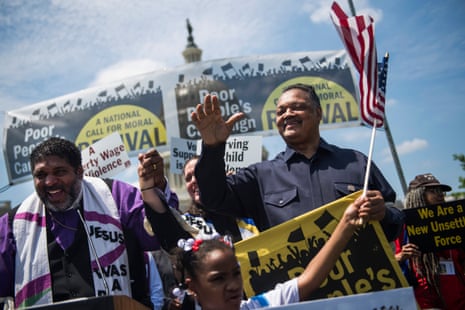
Jackson's power emanated from a philosophy that seemed almost revolutionary in its simplicity yet proved transformative in its application. Throughout his career, from his early days working alongside Martin Luther King Jr in the Southern Christian Leadership Conference to his groundbreaking presidential campaigns in the 1980s, Jackson demonstrated an unwavering commitment to the principle that love—not hatred, not vengeance, not even righteous anger—must serve as the driving force behind all meaningful social change. This wasn't the passive, sentimental love often dismissed by political pragmatists, but rather what he termed "tough love"—a fierce, demanding love that insisted on justice while refusing to dehumanize those who perpetrated injustice.
This philosophy of transformative love manifested itself in countless ways throughout Jackson's remarkable career. When he traveled to Syria in 1984 to secure the release of Navy pilot Robert Goodman, he didn't approach the mission as a confrontation between adversaries but as an opportunity to appeal to the humanity of those who held the captured serviceman. His success in that diplomatic effort, achieved without the backing of official government channels, demonstrated the practical power of his approach to human relations and international diplomacy.
Similarly, when Jackson launched his historic presidential campaigns in 1984 and 1988, he didn't merely seek to accumulate political power for its own sake. Instead, he used the platform to articulate a vision of America that embraced what he called the "Rainbow Coalition"—a diverse alliance of marginalized communities united not by shared grievances but by shared hopes for a more just and equitable society. His campaigns brought together African Americans, Latinos, Asian Americans, Native Americans, working-class whites, women, LGBTQ+ individuals, and others who had been relegated to the margins of American political discourse.
The Rainbow Coalition represented more than a political strategy; it embodied Jackson's fundamental belief that America's strength lay not in the dominance of any single group but in the harmonious collaboration of all its diverse communities. This vision challenged both the exclusionary practices of conservative politics and the sometimes narrow focus of single-issue progressive movements. Jackson understood that lasting social change required building bridges across the artificial divisions that had been constructed to keep oppressed communities from recognizing their common interests and shared struggles.
Throughout the turbulent decades of his activism, Jackson consistently chose the more difficult path of seeking to transform his opponents rather than simply defeat them. When he encountered racism, he responded not with reciprocal hatred but with a persistent invitation for racists to recognize their own humanity and the humanity of those they oppressed. This approach often frustrated more militant activists who preferred the clarity of confrontation to the ambiguity of reconciliation, but Jackson's method produced results that purely adversarial approaches could not achieve.
His work with Operation PUSH (People United to Save Humanity) exemplified this philosophy in action. Rather than simply protesting corporate discrimination, Jackson developed strategies that combined moral pressure with economic leverage, creating win-win scenarios where businesses could improve their practices while also improving their bottom lines. His "moral suasion" approach led to billions of dollars in increased opportunities for minority-owned businesses and helped integrate corporate boardrooms and executive suites across America.
Jackson's influence extended far beyond the borders of the United States, as he applied his philosophy of transformative diplomacy to international conflicts and crises. His interventions in Nicaragua, Iraq, and numerous African nations were motivated not by partisan political considerations but by a genuine belief that moral leadership could open doors that traditional diplomacy had failed to budge. Critics sometimes dismissed these efforts as grandstanding, but the concrete results—freed hostages, negotiated ceasefires, facilitated dialogues—spoke to the effectiveness of his approach.
The secret of Jackson's power lay in his ability to see beyond the immediate circumstances of any particular struggle to the larger moral framework that gave meaning to all human conflicts. He understood that every political battle was ultimately a spiritual battle between the forces that diminish human dignity and those that enhance it. This perspective enabled him to maintain hope even in the darkest moments and to inspire others to persist in their efforts for justice even when progress seemed impossible.
As we reflect on Jackson's extraordinary life and contemplate how to honor his memory, we must resist the temptation to treat him as a figure frozen in historical amber, relevant only to the particular struggles of his era. The principles he embodied—the commitment to inclusive coalition-building, the insistence on addressing root causes rather than symptoms, the belief in the transformative power of love-centered activism—remain as relevant today as they were during the height of the civil rights movement.
Contemporary movements for social justice would benefit enormously from embracing Jackson's model of leadership that combines prophetic vision with pragmatic strategy. Too often, modern activism becomes trapped in cycles of outrage that generate headlines but fail to produce lasting change. Jackson's approach offers an alternative—a way of pursuing justice that transforms both the pursued and the pursuer, creating sustainable progress rather than temporary victories.
The America that Jackson envisioned—an America where the content of one's character truly matters more than the color of one's skin, where economic opportunity is distributed based on merit rather than inherited privilege, where foreign policy is guided by moral principles rather than narrow self-interest—remains largely unrealized. But his life's work provides a roadmap for those who would continue the journey toward that promised land. The mighty lion may have fallen, but the roar of his vision continues to echo across the landscape of American possibility.
In this moment of national reflection on Jackson's legacy, we have an opportunity to recommit ourselves to the beloved community he spent his life trying to build. This means moving beyond the politics of division and resentment that have characterized recent years toward a new politics of inclusion and hope. It means recognizing that our individual liberation is inextricably connected to the liberation of all oppressed people, regardless of race, religion, nationality, or any other artificial distinction.
The true measure of how we honor Jackson's memory will not be found in the eloquence of our eulogies or the grandeur of our memorials, but in our willingness to embody the principles he lived by and died believing in. Can we find the courage to love our enemies as he did? Can we maintain hope in the face of seemingly insurmountable obstacles? Can we build coalitions that bridge the divides that separate us from one another? These are the questions that his life poses to ours, and our answers will determine whether his death marks the end of an era or the beginning of a new chapter in the ongoing struggle for justice.
The mighty lion has indeed fallen, but the pride he nurtured continues. Those of us who were blessed to learn from his example now bear the responsibility of carrying forward his legacy of transformative love and inclusive activism. In doing so, we honor not only his memory but also the highest aspirations of the American experiment itself. Jesse Jackson showed us that love can indeed be a potent force in public life. Now it is up to us to prove that his faith in that principle was not misplaced.
Source: The Guardian


