
Hungary's New PM Apologizes for Orbán Era Wrongs

Péter Magyar takes office as Hungary's prime minister and apologizes to victims of state persecution under Viktor Orbán's regime in his inaugural address.
In a momentous shift from years of political discord and institutional tension, Péter Magyar was officially sworn in as Hungary's new prime minister and immediately delivered an unprecedented apology to citizens who suffered persecution and marginalization during Viktor Orbán's lengthy tenure. The address marked a stark departure from the defiant rhetoric that had characterized the previous administration, signaling a potential turning point in Hungarian politics and governance. Magyar's words resonated deeply with those who had endured systematic challenges to their livelihoods, careers, and personal dignity under the previous regime's contested policies.
During his inaugural speech on Saturday, the newly minted prime minister took direct aim at the erosion of democratic values and human rights that had become hallmarks of Orbán's 12-year rule. Magyar acknowledged the institutional damage wrought by years of political consolidation and authoritarianism, extending heartfelt recognition to journalists, activists, and ordinary citizens whose voices had been suppressed or marginalized. This unprecedented act of state contrition represented a fundamental recalibration of Hungary's political narrative and offered a glimmer of hope to those who had fought tirelessly against democratic backsliding in Central Europe.
The apology specifically targeted the Fidesz party's legacy of state-sponsored retaliation against political opponents and dissidents. Magyar outlined how individuals and organizations critical of government policies had faced legal harassment, financial penalties, and professional ostracization under the previous administration. By acknowledging these systemic abuses from the prime ministerial podium, Magyar distinguished himself markedly from his predecessor and suggested a genuine commitment to democratic restoration and institutional reform.

The significance of Magyar's address cannot be understated in the context of Hungarian and broader Central European politics. Over the past dozen years, Hungary had become a focal point of international concern regarding democratic deterioration, with organizations like the European Union and various human rights groups consistently documenting violations and backsliding. The country had faced repeated scrutiny over judicial independence, media freedom, and minority protections. Magyar's inaugural apology suggested a potential reset in these fraught relationships and a commitment to international democratic standards.
However, despite the hopeful rhetoric and conciliatory tone of his first address, substantial questions linger about how Magyar will translate these symbolic gestures into concrete policy changes. The machinery of Hungarian government remains deeply influenced by years of Fidesz control, with institutional structures and personnel reflecting the previous administration's priorities and ideological orientation. Observers and analysts are watching closely to determine whether Magyar's words represent a genuine commitment to systemic reform or merely performative gestures designed to legitimize his government's transition to power.
The path forward for Hungary's new leadership involves navigating complex constitutional and legislative terrain while simultaneously addressing the grievances of those harmed under Orbán's regime. Restitution for wrongful prosecution, rehabilitation of damaged reputations, and institutional restructuring represent only the initial components of a potential reconciliation agenda. Magyar will need to balance demands for accountability with the practical necessities of governing a complex modern nation-state.
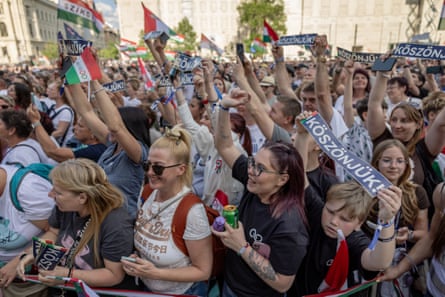
International observers have taken note of Magyar's markedly different approach compared to his predecessor's combative relationship with EU institutions and Western democratic norms. The new Hungarian prime minister has signaled willingness to engage constructively with Brussels on governance standards and judicial reform, potentially resolving longstanding disputes that had strained Hungary's position within the European Union. This diplomatic reorientation could facilitate the resumption of EU funding and improved relations with Western allies who had grown increasingly concerned about democratic backsliding in Budapest.
The apology delivered in Magyar's maiden speech also carries symbolic weight for victims and their families who had sought acknowledgment and validation for years. Many had sacrificed professionally and personally for their principled opposition to Orbán's policies, facing unemployment, legal persecution, and social ostracization as consequences. Magyar's public recognition of their suffering represents a form of official validation that their struggles were not in vain and that future governance will prioritize protection of fundamental rights and freedoms.
Questions about implementation remain central to evaluating the sincerity and efficacy of Magyar's conciliatory opening. Will there be mechanisms for investigating and prosecuting those responsible for documented abuses? Will victim compensation programs be established? How will the government address the institutional capture and corruption that allegedly flourished under Orbán's administration? These practical questions will ultimately determine whether Magyar's apology constitutes a genuine turning point or merely a rhetorical repositioning.
The contrast between Magyar's approach and Orbán's defensive posture underscores broader ideological and strategic differences between the administrations. Where Orbán had doubled down on nationalist rhetoric and institutional consolidation, Magyar appears intent on embracing democratic renewal and international reintegration. This fundamental realignment reflects changing domestic political realities and shifts in Hungarian public opinion regarding the direction and character of national governance.
Looking ahead, Magyar faces the substantial challenge of translating symbolic gestures into substantive institutional transformation. The government reform agenda must address judicial independence, media pluralism, and protection of minority rights while simultaneously managing economic challenges and security concerns. Success will require skillful political navigation, international cooperation, and sustained commitment to democratic principles in the face of inevitable resistance from entrenched interests.
The international community will be watching closely as Hungary's new government unfolds its concrete policies and institutional changes. European Union officials have expressed cautious optimism about the possibility of improved relations and renewed commitment to shared democratic values. However, optimism must be tempered with realistic assessment of the challenges involved in institutional reform and the potential for political reversals as domestic pressures and competing interests influence policy implementation.
Magyar's inaugural apology represents a watershed moment for Hungarian politics, offering a potential pathway toward reconciliation and democratic restoration. Whether this symbolic opening translates into meaningful change will depend on the government's willingness to undertake difficult reforms and confront powerful interests invested in maintaining the status quo. The coming months and years will prove decisive in determining whether Hungary's new era represents genuine democratic renewal or merely a temporary interlude before the resumption of authoritarian consolidation.
Source: The Guardian


