
Hezbollah's Advanced Drone Tactics Exposed

BBC Verify analyzes dozens of fibre-optic drone attack videos revealing Hezbollah's evolving military strategies against Israel in ongoing conflict.
A comprehensive investigation by BBC Verify has scrutinized an extensive collection of video footage documenting drone strike operations executed by Hezbollah, the Lebanese military organization. The analysis reveals sophisticated tactical patterns and technological advancements that illustrate how the group's combat approach has evolved significantly over recent years. Researchers examined dozens of detailed videos showing various stages of unmanned aerial vehicle deployment, providing unprecedented insight into operational methodologies previously obscured from public understanding.
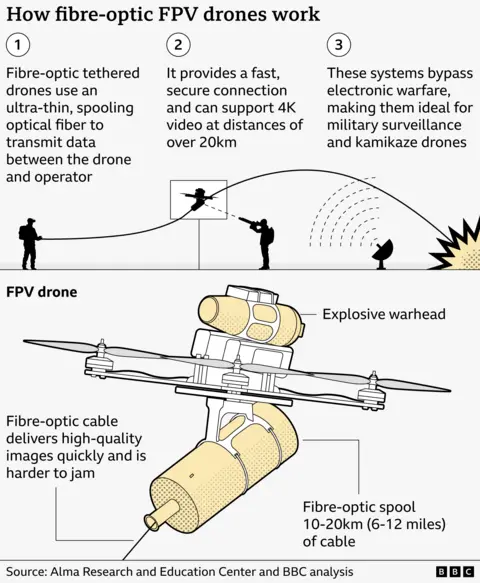
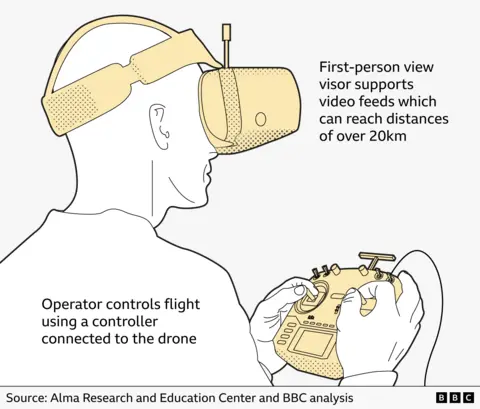
The fibre-optic drone attacks documented in the videos demonstrate a level of precision and coordination that indicates substantial investment in military technology and training infrastructure. These unmanned systems represent a considerable upgrade from conventional weaponry traditionally associated with the organization. The video evidence suggests that operators maintain real-time visual feedback during missions, enabling them to adjust targeting parameters and make critical decisions throughout the engagement process.
Expert analysts working with BBC Verify identified multiple distinct attack patterns across the collected footage, indicating that Hezbollah tactical operations have become increasingly standardized and systematic. This professionalization of drone warfare suggests the organization has invested considerable resources into developing doctrine and training protocols for unmanned systems deployment. The consistency observed across different operational scenarios implies that these tactics represent established procedures rather than ad-hoc improvisation.
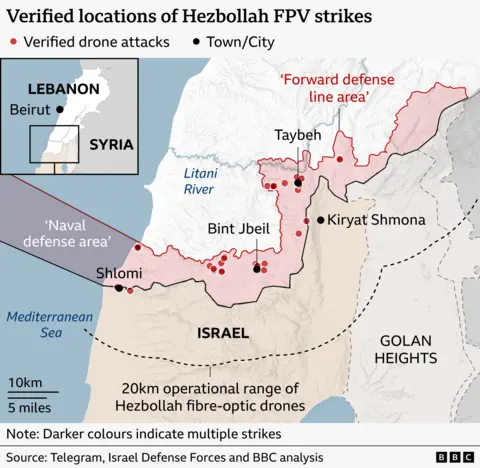
The technology underlying these attacks reflects broader trends in modern military drone technology adoption across the Middle East and beyond. Fibre-optic guidance systems provide several advantages over conventional control methods, including enhanced resistance to electronic countermeasures and jamming attempts. The ability to maintain a physical connection to the aerial platform allows operators to transmit high-definition video feed and receive real-time targeting intelligence throughout the mission duration.
Israeli military response strategies have evolved in parallel with these advancing threats, prompting development of new defensive systems and tactical adjustments. The Israeli defense establishment has publicly acknowledged the challenge posed by increasingly sophisticated drone capabilities in enemy arsenals. This escalating technological arms race illustrates how innovations in unmanned systems are fundamentally reshaping Middle Eastern conflict dynamics.
The video analysis conducted by BBC Verify included detailed examination of launch procedures, target acquisition methodologies, and engagement patterns visible in the recorded footage. Researchers cross-referenced visual markers, geographical landmarks, and temporal data to establish authenticity and context for each incident documented. This meticulous verification process ensures that conclusions drawn from the analysis represent verified fact rather than speculation or propaganda.
The implications of Hezbollah's drone capabilities extend beyond immediate military considerations, affecting regional security calculations and diplomatic negotiations. International observers have noted that the proliferation of advanced unmanned systems among non-state actors and regional military forces represents a significant departure from previous conflict patterns. The ability to conduct precision strikes from considerable distances introduces new vulnerabilities for civilian and military infrastructure across the region.
Technical specifications visible in the video evidence suggest that these drones possess endurance characteristics exceeding many comparable systems in wider circulation. The control mechanisms documented indicate operators can maintain command authority over extended ranges, potentially enabling strikes against targets previously beyond effective reach. This expanded operational radius fundamentally alters the threat assessment landscape for potential targets across the region.
Conflict escalation patterns observed through drone strike video analysis suggest that each side continues developing counter-measures and tactical innovations in response to opponent advances. The cyclical nature of military-technological development ensures that any advantage gained through innovative drone deployment becomes temporary as defensive countermeasures are developed and deployed. This perpetual innovation cycle drives continuous investment in advanced systems and training.
The broader context of Middle Eastern security challenges includes multiple actors acquiring and deploying sophisticated drone technology simultaneously. Iran, Saudi Arabia, the United Arab Emirates, and other regional powers have all invested substantially in unmanned aerial systems development and procurement. This widespread proliferation of advanced technology across the region creates complex security dynamics requiring diplomatic engagement and military deterrence in combination.
BBC Verify's investigation methodology included consultation with military experts, technology specialists, and regional analysts familiar with tactical innovations and equipment specifications. The multi-disciplinary approach to verification ensures that conclusions account for technical accuracy, contextual understanding, and historical precedent. Expert commentary provides additional perspective on implications and future developments that may emerge as technology continues advancing.
The evidence documented through video analysis demonstrates that unmanned warfare tactics have matured considerably from earlier iterations of drone technology employed in regional conflicts. Operators now execute coordinated attack sequences with apparent training and proficiency suggesting extensive preparation and practice. The professionalism evident in recorded operations indicates systematic institutional development rather than isolated incidents conducted by ad-hoc actors.

Questions regarding the sourcing and development of drone technology utilized by Hezbollah remain subjects of active investigation and diplomatic discussion. Intelligence agencies across multiple nations have indicated that advanced drone components may originate from external suppliers, potentially including state actors providing support to the organization. The international dimensions of technology transfer complicate efforts to restrict proliferation of advanced unmanned systems.
The strategic implications of these tactical developments extend to deterrence calculations and military planning conducted by Israeli defense officials and political leadership. The demonstrated capability to conduct precision strikes against military targets creates pressures for development of effective defensive responses and offensive countermeasures. Military strategists recognize that drone warfare evolution requires continuous reassessment of defensive postures and force deployment methodologies.
Future developments in aerial conflict technology will likely continue emphasizing enhanced autonomy, improved targeting systems, and increased resilience against countermeasures. The competitive dynamics driving innovation ensure that each tactical innovation by one party stimulates development of counter-technologies by opponents. This ongoing cycle of military innovation reflects broader patterns observed throughout technological history where advantages prove temporary.
Source: BBC News


