
From Citizens to Warriors: Ukraine's Transformation

Seven Ukrainian civilians share their remarkable journey from ordinary life to military service after Russia's 2022 invasion transformed their nation.
The quiet morning of February 24, 2022, marked not just the beginning of Russia's invasion of Ukraine, but the start of an unprecedented transformation for millions of ordinary Ukrainian citizens. What began as a typical day for teachers, engineers, students, and shop owners quickly evolved into a fight for national survival. Today, four years later, the faces behind Ukraine's defense tell stories of remarkable personal transformation—from civilians who never imagined holding a weapon to seasoned soldiers who have witnessed the brutal realities of modern warfare.
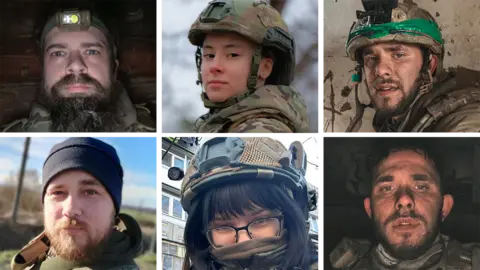
Among these transformed lives are seven Ukrainian men and women whose journeys from civilian life to military service illustrate the profound impact of war on individual identity and national character. Their stories reveal not just the external changes—the uniforms, the weapons training, the tactical knowledge—but the deeper psychological and emotional shifts that occur when ordinary people are thrust into extraordinary circumstances. These Ukrainian civilians turned soldiers represent millions of others who have undergone similar metamorphoses across the country.
Oleksandr Petrov, a 34-year-old former high school mathematics teacher from Kharkiv, never expected to trade his classroom whiteboard for a military radio. Before the war, his biggest concerns involved lesson plans and helping students prepare for university entrance exams. Today, he serves as a communications specialist with the Ukrainian Armed Forces, coordinating between frontline units in the eastern regions. "The first time I put on this uniform, I didn't recognize myself in the mirror," Petrov reflects. "But war doesn't ask if you're ready—it demands that you become ready."
The transformation wasn't immediate for Petrov or his fellow service members. The early weeks of the invasion brought chaos, confusion, and a steep learning curve that challenged everything they thought they knew about themselves. "I remember my hands shaking the first time I held a rifle during training," he admits. "Now, four years later, handling military equipment feels as natural as grading papers once did. It's strange how adaptable human beings can be when survival is at stake."
Iryna Kovalenko, a 28-year-old former software developer from Kyiv, joined the Territorial Defense Forces within days of the invasion. Her transition from coding algorithms to military strategy represents the kind of rapid adaptation that has become commonplace among Ukrainian defenders. "In my previous life, the most stressful situation I faced was a system crash or a missed deadline," she explains. "Now I understand what real pressure feels like, and somehow, it's made me more confident in every aspect of life."
Kovalenko's technical background proved invaluable in her military role, where she now specializes in drone operations and digital reconnaissance. Her story illustrates how the modern Ukrainian military has successfully integrated civilian expertise into its operational framework. "We brought our skills from civilian life and learned to apply them in completely different contexts," she notes. "The precision required in programming translates surprisingly well to military operations, though the stakes are infinitely higher."
The psychological transformation extends beyond professional skills to fundamental changes in worldview and personal relationships. Dmytro Marchenko, a 41-year-old former construction worker who now serves in an artillery unit, describes how the war has altered his perspective on life's priorities. "Before 2022, I worried about small things—traffic jams, paying bills on time, what to watch on television," he says. "Now I understand what truly matters: freedom, family, the future of our children. Everything else is just noise."
Marchenko's transition from construction sites to military positions wasn't as dramatic as some might expect. "Building houses and defending positions both require careful planning, attention to detail, and the ability to work as part of a team," he observes. "The tools are different, but many of the principles remain the same." His practical approach to military service reflects a broader trend among Ukrainian volunteer soldiers who have brought pragmatic civilian experience to their military roles.
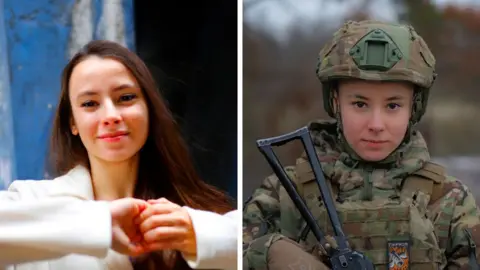
For Oksana Boyko, a 26-year-old former medical student who postponed her studies to serve as a combat medic, the war has accelerated her medical education in ways no classroom could have achieved. "I learned more about trauma medicine in my first six months of service than I would have in two years of traditional study," she explains. "The human body's resilience and fragility become very real when you're treating wounded soldiers under fire."
Boyko's experience highlights the intense practical education that war provides, though at a cost no one would willingly choose. "Every day brings situations I never imagined facing," she continues. "But it's also shown me capabilities I didn't know I possessed. War strips away illusions about yourself—both negative and positive ones." Her role as a combat medic has placed her at the intersection of healing and warfare, a position that has profoundly shaped her understanding of both life and death.
The social dynamics within military units have also created unexpected bonds among people who would never have met in civilian life. Vasyl Tkachuk, a 45-year-old former bank manager now serving in a reconnaissance unit, describes the unique camaraderie that develops among soldiers from diverse backgrounds. "In my unit, we have farmers, professors, mechanics, and artists all working together," he explains. "War has a way of erasing social barriers and revealing what people are truly made of."
Tkachuk's leadership experience in banking translated naturally to military command responsibilities, though the stakes and stress levels differ dramatically. "Managing risk in finance versus managing risk in combat operations—there's no real comparison," he admits. "But the fundamental skills of decision-making under pressure, coordinating team efforts, and maintaining morale have proven transferable, even if the context is completely different."
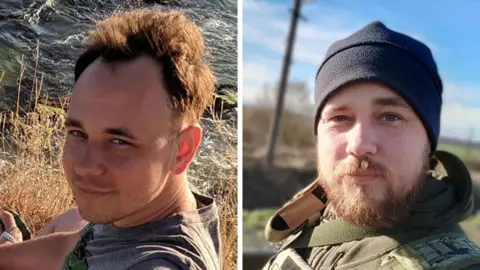
Mariya Shevchenko, a 23-year-old former university student who joined the military after her campus was bombed, represents the younger generation whose life plans were completely disrupted by the invasion. "I was studying international relations and dreaming about a career in diplomacy," she recalls. "Now I'm living international relations in the most direct way possible—defending my country against foreign aggression."
Shevchenko's youth and adaptability have made her particularly effective in roles requiring quick learning and technological proficiency. She now specializes in electronic warfare systems, a field that didn't exist in her academic curriculum but has become crucial to modern military operations. "The war taught me that education doesn't stop in classrooms," she reflects. "Some of the most important lessons come from necessity and urgency."
The final perspective comes from Roman Bondarenko, a 38-year-old former restaurant owner who lost his business in the early weeks of the war and subsequently joined the military as a logistics coordinator. His experience in managing supply chains and coordinating deliveries translated directly to military logistics, though the products and destinations changed dramatically. "Instead of ensuring restaurants receive fresh ingredients, I now make sure frontline units receive ammunition and supplies," he explains. "The organizational principles are similar, but the consequences of failure are life and death."
Bondarenko's story illustrates the economic sacrifice many Ukrainians have made in service of their country's defense. "I built that restaurant over ten years, and it was destroyed in ten minutes by a missile strike," he says. "But wearing this uniform, I feel like I'm building something much more important—our nation's future. That's worth more than any business."
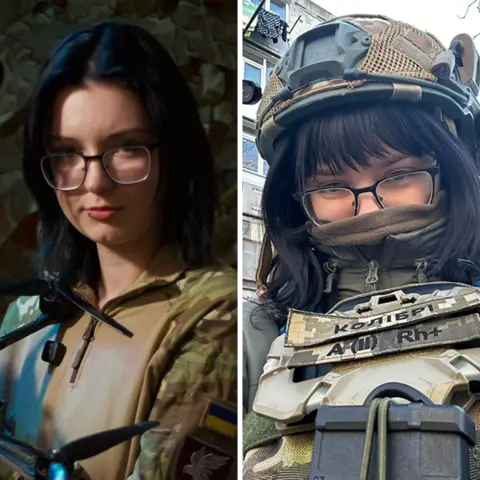
The collective experiences of these seven individuals reflect broader themes in Ukraine's wartime transformation. Their stories demonstrate how extreme circumstances can reveal hidden strengths, accelerate personal growth, and fundamentally alter life trajectories. Each has discovered capabilities they never knew they possessed while simultaneously losing innocence about the world's capacity for violence and destruction.
These transformations extend beyond individual stories to represent a national metamorphosis. Ukraine's civilian population has demonstrated remarkable adaptability, resilience, and determination in the face of existential threat. The integration of civilian expertise into military operations has created a uniquely capable defense force that combines professional military training with diverse practical experience from civilian life.
As the conflict continues, these Ukrainian military personnel acknowledge that they have been permanently changed by their experiences. Return to purely civilian life may be impossible, not because of trauma or inability to adapt, but because their perspectives on responsibility, service, and national identity have been fundamentally altered. They have become part of a generation defined by its response to crisis, shaped by sacrifice, and united by common purpose in defending their homeland's sovereignty and democratic future.
Source: BBC News


