
France's Presidential Race: Can Unity Stop Far-Right Surge?

With nearly 30 candidates running, French left seeks to replicate 1930s Popular Front strategy to block National Rally's rise to power.
France is facing an unprecedented political moment as approximately 30 prospective candidates—overwhelmingly male—have announced their ambitions to challenge the increasingly powerful far-right National Rally in the upcoming presidential election. This unusually crowded field reflects deep concerns within the French political establishment about the far-right National Rally's growing electoral strength and its potential to secure control of the highest office in the nation.
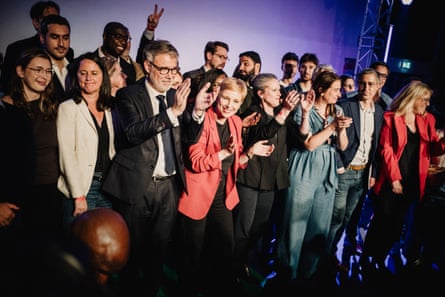
During a significant gathering at a Paris meeting hall this week, hundreds of left-wing voters assembled despite challenging weather conditions, marching through the streets while chanting calls for "Unity! Unity!" The energetic demonstration underscored the mounting anxiety among progressive forces about the political trajectory of the country. The timing of the rally carried particular symbolic weight, as participants commemorated the 90th anniversary of the Popular Front, a historic leftwing alliance that emerged during the tumultuous 1930s when France faced existential threats from fascist movements.
The Popular Front represents a powerful historical reference point for contemporary French progressives. During the interwar period, this coalition successfully mobilized diverse leftwing parties and labor movements to present a united front against the rising tide of far-right extremism that threatened to overwhelm French democracy. The alliance's success in that era came from recognizing that despite ideological differences, the survival of democratic institutions required compromise and coordination among disparate progressive forces.

Today's French political landscape bears troubling similarities to the conditions of the 1930s, though the specific challenges have evolved. The National Rally, which has significantly broadened its appeal beyond its traditional base, now represents a more mainstream political force than ever before. What was once considered a fringe movement has gradually normalized itself through strategic messaging, generational leadership changes, and the party's ability to capitalize on voter frustrations regarding economic inequality, immigration, and what many perceive as the failures of centrist governance.
The crowded field of nearly 30 presidential hopefuls presents both opportunities and complications for those seeking to block the far-right's path to the presidency. On one hand, the abundance of candidates demonstrates the determination of various political factions to prevent a National Rally victory. On the other hand, this fragmentation of the left and center-left raises serious questions about whether these candidates can coordinate effectively or whether they risk splitting the anti-far-right vote in ways that could inadvertently benefit their common adversary.
The gender composition of the candidate pool is notably striking, with nearly all of the 30 hopefuls being men. This demographic reality reflects persistent structural inequalities within French political institutions and raises important questions about representation and women's participation in shaping the nation's political future during this critical juncture. Advocates for greater political inclusivity have criticized the lack of female candidates as a missed opportunity to present voters with diverse perspectives and leadership styles.
The experiences of the Popular Front era offer valuable lessons for contemporary political strategists. During the 1930s, the alliance successfully mobilized voters who might have otherwise supported different parties by emphasizing the existential threat posed by fascism. The coalition understood that incremental policy disagreements among democratic forces paled in comparison to the fundamental danger represented by authoritarian movements seeking to dismantle democratic institutions entirely. This framework of defensive coalition-building remains relevant today as French politicians contemplate how to structure their campaigns and coordinate their messaging.
The National Rally's trajectory over recent decades represents a significant shift in French politics. Through deliberate rebranding efforts and the adoption of more socially acceptable policy positions on certain issues, the party has managed to shed some of its historical baggage while maintaining core nationalist and restrictionist principles. The party's electoral performance has improved dramatically, particularly among working-class voters who feel abandoned by traditional left and center-left parties. This shift in voting patterns has fundamentally altered the calculus of French electoral competition.
Economic anxieties have played a crucial role in energizing the National Rally's support base. Many French voters, particularly those in economically struggling regions, blame their difficulties on immigration and the policies of European integration. The National Rally has successfully channeled these frustrations into electoral support, presenting itself as the champion of ordinary French citizens against what it characterizes as an out-of-touch political elite. Whether or not this analysis accurately reflects the causes of economic distress, its political salience has proven undeniable.
The question of whether the current cohort of presidential candidates will successfully unite against the far-right remains deeply uncertain. Historical precedent suggests that such coalitions are possible when the threat is perceived as sufficiently grave, but they require sustained commitment to compromise and subordination of individual electoral ambitions to collective goals. Some of the 30 hopefuls will inevitably harbor genuine presidential aspirations rather than viewing their candidacy as a strategic component of a larger blocking coalition.
Strategic coordination among anti-far-right forces will likely involve painful negotiations about which candidates should step aside in various regional contexts and which should remain in the race to maximize the blocking vote. These conversations touch on fundamental issues of party identity, ideological purity, and personal political ambition. The willingness of candidates and their supporters to accept disappointing compromises in service of the larger goal of preventing a National Rally presidency will determine the effectiveness of any unity effort.
The international implications of a potential National Rally presidency extend far beyond France's borders. The party's skepticism toward European Union integration, its contentious relationship with NATO, and its opposition to current immigration frameworks would have significant consequences for European stability and transatlantic relations. Many observers across the continent view the outcome of the French presidential election as having ramifications for the entire European project and the liberal democratic order more broadly.

As the election approaches, French political figures and civil society organizations are intensely focused on mobilizing voters around the theme of democratic defense. The rhetoric and symbolism surrounding the Popular Front's 90th anniversary represent deliberate attempts to frame the contemporary political struggle in historical terms—as a battle for the very survival of democratic institutions against authoritarian threats. This framing seeks to elevate the election beyond routine political competition and appeal to voters' fundamental commitments to democratic principles.
The coming months will reveal whether the left's unity efforts can successfully repeat the historical achievements of the Popular Front or whether contemporary political fragmentation will prove insurmountable. The stakes of this election could not be higher, and the unprecedented number of presidential candidates seeking to block the far-right reflects the gravity with which French progressives view the moment. Whether unity ultimately prevails over division will substantially shape not only France's political future but potentially the trajectory of European democracy itself.
Source: The Guardian


