
Figure AI's Viral Robot Livestream Captivates Tech World

Figure AI's humanoid robots handling packages in viral livestream sparks viral sensation. Discover what's driving the tech world wild.
Figure AI, a prominent robotics startup, has captivated the internet's attention by livestreaming its humanoid robots performing package-handling tasks continuously for nearly a week. The extended demonstration showcases the company's latest technology in action, with the robots methodically placing thousands of packages onto conveyor belts in a display that has mesmerized both industry professionals and casual observers. At one particularly memorable moment during the broadcast, one of the robots even competed directly against a human intern, adding an element of dramatic comparison that resonated deeply with viewers worldwide.
The promotional robot demo has transcended typical corporate marketing, becoming a genuine viral phenomenon across multiple online platforms. Tech enthusiasts and casual internet users alike have become deeply invested in the livestream, with YouTube comment sections filling up as viewers enthusiastically assign names and personalities to the mechanical workers. The response has been so overwhelmingly positive that Figure AI has capitalized on the momentum by rapidly launching robot-themed merchandise, transforming the demonstration into a comprehensive marketing campaign that extends beyond the livestream itself.
Social media reactions have been extraordinarily effusive, with users on platform X comparing the spectacle to some of the most iconic technology presentations in history. One particularly notable comment described the livestream as "the greatest product demo since Steve Jobs' 'one more thing'"—a reference to the legendary Apple co-founder's famous product unveiling moments. However, industry analysts emphasize an important caveat: even the most impressive and polished robot demonstrations represent carefully controlled showcases that may not fully reflect the practical capabilities and limitations these machines face in genuine real-world operational scenarios.
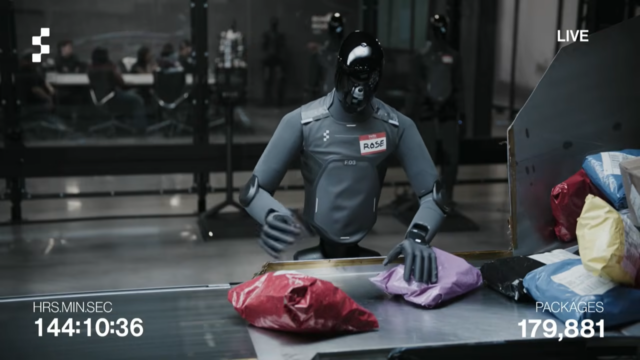
The livestream event commenced on May 13 as an initially planned eight-hour showcase featuring Figure AI's cutting-edge Figure 03 robots. The specific task assigned to these machines involved a multi-step process: inspecting barcodes on various categories of small packages—ranging from standard cardboard boxes to soft padded envelopes and protective bags—and then carefully positioning each package on a conveyor belt with the barcodes oriented facing downward. According to Figure CEO Brett Adcock, the demonstration would emphasize the robots' capacity to execute these tasks with complete autonomy, operating without any human intervention or guidance whatsoever.
The extended duration of the livestream extended far beyond the initial eight-hour window that organizers had planned, suggesting that the demonstration proved so successful and generated such compelling content that Figure AI decided to extend the broadcast. This extended timeline allowed viewers from different time zones to tune in and witness the autonomous robots at work, dramatically expanding the potential audience for the demonstration. The decision to keep the livestream running around the clock proved strategically brilliant, as it kept the demonstration trending across social media platforms and maintained sustained public interest.
The selection of package handling as the featured task was particularly clever from a marketing perspective, as it represents a task that most people can immediately understand and relate to. The rise of e-commerce has made package handling a ubiquitous part of modern life, making the demonstration immediately relevant to viewers. The robots' methodical approach to barcode inspection and careful package placement resonated with audiences who could instantly grasp the practical applications of such technology in real-world logistics operations.
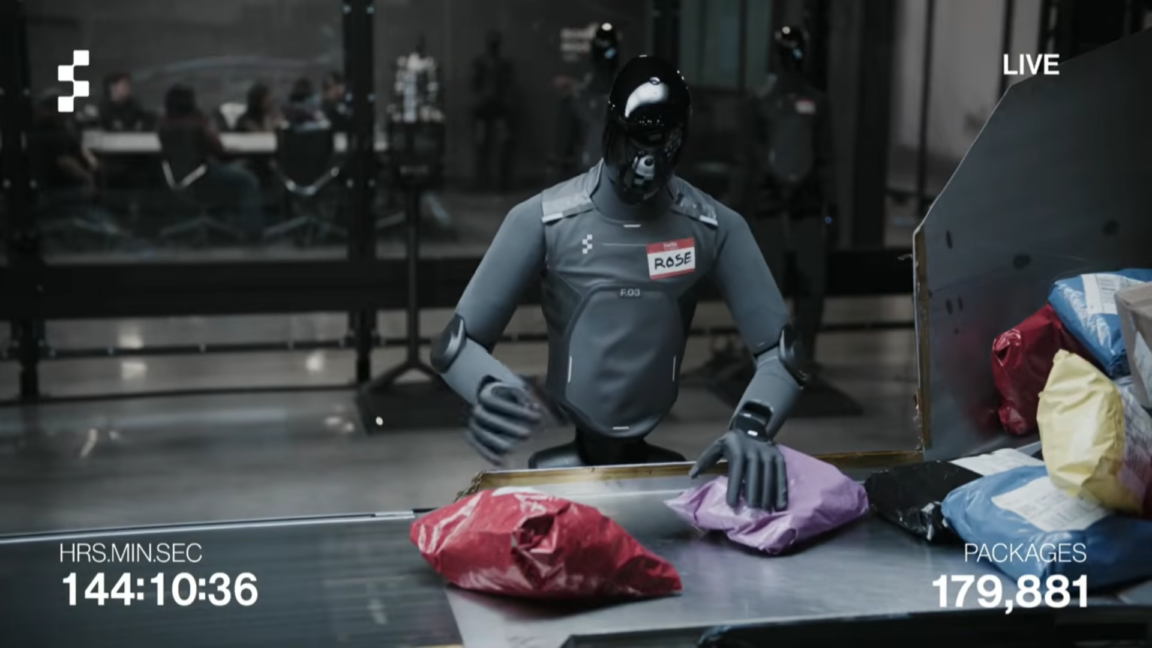
What distinguishes this demonstration from previous robot showcases is the emphasis on transparency and duration. Rather than presenting a brief, highlight-reel style video, Figure AI chose to broadcast the robots' work in real-time over an extended period. This approach allowed viewers to witness the robots' consistency, reliability, and ability to handle variations in package types and dimensions. The livestream format meant that viewers could observe the robots working continuously, without editorial cuts or selective editing, lending credibility to the display.
The human versus robot competition that occurred during the livestream added an engaging competitive element that captured viewers' imaginations. Watching a mechanical system compete directly against a human worker created an immediate and tangible way for audiences to assess the robots' relative speed and efficiency. This kind of direct comparison has historically proven to be a powerful way to communicate technological capabilities, as it provides a familiar reference point for understanding machine performance.
The viral nature of the livestream reveals something significant about contemporary internet culture and public fascination with robotics technology. In an era where technological advancement often feels abstract and removed from everyday life, watching robots perform concrete, observable tasks captures public imagination in a way that technical specifications or theoretical discussions simply cannot. The livestream format democratized access to the demonstration, allowing anyone with an internet connection to witness the technology firsthand.
Industry observers have noted that while the demonstration is impressive, it's crucial to maintain perspective about what such showcases actually demonstrate. Robot demonstrations, regardless of how polished or extended they may be, are typically conducted under carefully controlled conditions with optimized environments. The packages used in the livestream were presumably selected to be compatible with the robots' handling systems, the lighting conditions were designed for optimal camera performance, and the task itself was chosen because it plays to the robots' strengths.
This reality doesn't diminish the achievement of Figure AI or the capabilities on display. Rather, it underscores an important principle in evaluating technological progress: demonstrations show what machines can do under ideal conditions, but real-world deployment often presents unpredictable variables and edge cases that even the most impressive demos may not fully address. The robots' ability to handle variations in package sizes and types during the livestream does suggest meaningful advancement in adaptability, but deploying such systems in genuine logistics facilities with full production demands presents a different challenge entirely.
The merchandise rollout accompanying the livestream demonstrates Figure AI's sophisticated understanding of modern marketing dynamics. By recognizing and capitalizing on the viral enthusiasm generated by viewers naming the robots and discussing them enthusiastically online, the company transformed grassroots internet engagement into tangible products. This approach bridges the gap between niche tech enthusiasm and mainstream consumer interest, potentially expanding the company's brand recognition beyond traditional tech industry circles.
The competitive landscape of robotics development makes such public demonstrations increasingly important for companies seeking to establish market leadership and attract investment. Figure AI's willingness to put its technology on continuous display for public scrutiny represents a confidence in its products and a savvy recognition that genuine technological achievement benefits from public validation and enthusiasm. The livestream format also generates massive amounts of free media coverage and social media discussion, providing marketing value that would be extraordinarily expensive to purchase through traditional advertising channels.
As the robotics industry continues evolving toward real-world commercial deployment, public demonstrations like Figure AI's livestream serve an important function in shaping societal perceptions and expectations. They help audiences envision how robotic systems might integrate into existing industries and what practical benefits such technology might deliver. At the same time, maintaining realistic expectations about both the capabilities and limitations of such systems remains essential for informed public discourse about automation and its implications for labor, industry, and society.
Source: Ars Technica


