
Fighter Jet Crews Escape Safely After Dramatic Mid-Air Collision

Two fighter jet crews parachute to safety following a mid-air collision during a US air show demonstration. Both pilots reported in stable condition.
In a dramatic turn of events at a major United States air show, two fighter jet crews successfully ejected and parachuted to safety after their aircraft collided mid-air during a precision flying demonstration. The incident, which unfolded before hundreds of spectators, resulted in a harrowing but ultimately fortunate outcome, with all crew members landing safely and reporting stable medical conditions. Emergency responders quickly mobilized to assist the pilots, who were recovered from their landing zones and transported for immediate medical evaluation.
The mid-air collision occurred during what was intended to be a routine aerial demonstration showcasing advanced flying techniques and military capabilities. Witnesses reported seeing the two jets approaching each other in close formation before the unexpected impact. The precision required for such demonstrations demands exceptional pilot skill, but the inherent risks of flying high-performance aircraft at extreme altitudes and speeds became starkly apparent in this incident. Both crews demonstrated exceptional professionalism and training in responding to the emergency situation within seconds of the collision.
The immediate deployment of emergency procedures proved critical to the successful outcome of this potentially catastrophic event. Both pilots initiated ejection sequences without delay, allowing their parachutes to deploy at appropriate altitudes. The coordinated response of ground crews, medical personnel, and emergency services ensured that both crew members were located, assessed, and transported to medical facilities with minimal delay. Their prompt action and adherence to safety protocols transformed what could have been a tragedy into a demonstration of effective emergency preparedness.
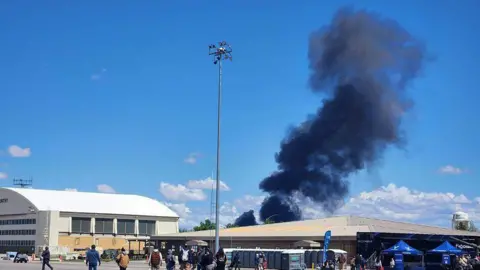
In the aftermath of the collision, medical teams conducted thorough evaluations of both pilots to assess their physical condition and determine the extent of any injuries sustained during the ejection and landing sequence. Both crew members were reported to be in stable condition, with vitals monitored continuously and detailed examinations performed to rule out serious complications. The psychological impact of such a traumatic event was also considered, with mental health professionals standing by to provide support services if needed. The swift and effective medical response reflected the comprehensive safety protocols established for such events.
The air show accident has immediately triggered an investigation into the circumstances that led to the collision. Military and civilian aviation safety authorities are collaborating to examine aircraft telemetry data, communication records, and pilot communications to determine the precise sequence of events. Witness statements from attendees and other flight crews present at the demonstration are being collected and documented. This thorough investigative approach aims to identify any contributing factors and implement corrective measures to prevent similar incidents in the future.
Air shows represent carefully orchestrated events that showcase military and civilian aviation capabilities while emphasizing safety protocols and emergency preparedness. The planning process for such demonstrations involves extensive coordination between pilots, ground crews, air traffic control, emergency services, and event organizers. Altitude buffers, spacing requirements, and communication protocols are meticulously established to minimize risks. Despite these comprehensive precautions, the inherent dangers of operating advanced military aircraft in close proximity remain a significant consideration for event planners and military commanders.
The successful rescue and recovery operation exemplified the effectiveness of coordinated emergency response procedures at major aviation events. Ground crews were equipped with specialized vehicles and equipment designed specifically for rapid deployment in such scenarios. Communication networks kept all personnel informed in real-time, enabling rapid coordination of medical transport and hospital readiness. The nearby medical facilities had been pre-positioned with additional staff and resources in anticipation of potential emergencies, demonstrating the proactive safety measures implemented at aviation events.
Public confidence in aviation safety practices, both military and civilian, remains a paramount concern for regulators and event organizers. The swift and successful recovery of both pilots in this incident serves as a reassuring validation of modern safety systems and pilot training standards. Advanced ejection seat technology, parachute systems, and survival equipment have evolved significantly over decades of military aviation experience. The training regimens that military pilots undergo ensure they can respond effectively to emergency situations with the muscle memory and decision-making skills necessary to execute lifesaving procedures under extreme stress.
The broader implications of this incident extend beyond the immediate situation to encompass discussions about aviation safety protocols at major public events. Air show organizers across the country may review and potentially revise their demonstration parameters and safety measures based on preliminary findings from this investigation. The Federal Aviation Administration and Department of Defense will likely examine current regulations governing formation flying and precision demonstrations to determine whether enhanced restrictions or additional training requirements are warranted. These proactive measures reflect the commitment to continuous improvement in aviation safety standards.
The families of the affected pilots have been notified and kept informed throughout the medical evaluation and recovery process. Military protocols ensure that crew members involved in such incidents receive comprehensive support services, including counseling, medical care, and logistical assistance. The pilot community and military aviation establishment continue to emphasize that incidents like these, while rare, underscore the critical importance of rigorous training, adherence to safety procedures, and continuous advancement of protective technologies. The professionalism displayed by the crews involved has been noted and commended by military leadership.
As investigations proceed into the specific causes of this fighter jet collision, the focus remains on identifying any technical, procedural, or environmental factors that may have contributed to the incident. Weather conditions at the time of the demonstration, aircraft systems performance, pilot workload, and communication clarity are all typical areas of examination in such investigations. The data collected from this incident will be analyzed and potentially shared with the broader aviation community to enhance safety practices industry-wide. The systematic approach to post-incident analysis reflects the aviation community's commitment to learning from every occurrence to improve future safety outcomes.
The successful conclusion of this incident, with all crew members safe and accounted for, represents a significant validation of decades of investment in aviation safety technology and training. From advanced ejection systems to sophisticated parachute designs, the integration of multiple redundant safety systems has proven effective in protecting aircrew during emergencies. The incident also highlights the exceptional professionalism and quick thinking of military personnel who execute their duties in inherently high-risk environments. As the investigation continues, the broader aviation community will remain attentive to findings and any recommendations that emerge from this thoroughly documented and analyzed event.
Source: BBC News


