
Ex-PM Philippe Emerges as Key Contender in French Presidential Race

Latest polling data indicates centre-right politician Édouard Philippe could be France's best bet to challenge populist candidates Marine Le Pen and Jean-Luc Mélenchon in the upcoming presidential election.
The French political landscape continues to shift as the nation prepares for its next presidential contest, with recent polling data suggesting that former Prime Minister Édouard Philippe has positioned himself as a formidable centre-right candidate capable of challenging the country's most prominent populist figures. The emerging consensus among political analysts indicates that Philippe represents perhaps the strongest viable alternative to the polarizing figures who have dominated French politics in recent years, offering voters a moderate option in an increasingly fragmented electoral environment.
Philippe's ascent as a potential frontrunner reflects broader shifts within France's political establishment. Having served as Prime Minister under Emmanuel Macron from 2017 to 2020, the politician brings substantial executive experience and a track record of governance to the table. His departure from Macron's administration came after a period marked by significant domestic challenges, including the Yellow Vest protests and, later, the initial waves of the global pandemic. Despite these turbulent circumstances during his tenure, Philippe has maintained considerable public visibility and political credibility, positioning himself as an independent force within the centre-right political spectrum.
The significance of Philippe's potential candidacy becomes particularly apparent when examining the electoral mathematics of contemporary French politics. Marine Le Pen, the National Rally leader who has contested multiple presidential elections, continues to command substantial support among voters dissatisfied with the established political order. Similarly, Jean-Luc Mélenchon, the firebrand leftist politician leading La France Insoumise, has mobilized considerable enthusiasm among younger voters and those seeking radical alternatives to centrist governance. The polling evidence suggests that neither mainstream left nor mainstream right candidates currently possess the capacity to unilaterally defeat these populist figures in head-to-head matchups.
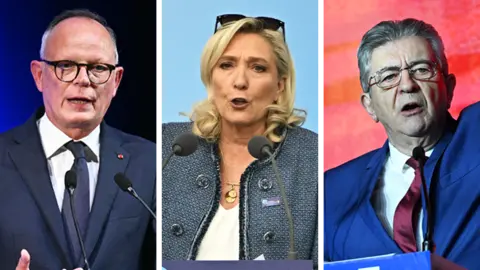
What distinguishes Philippe within this competitive landscape is his apparent ability to appeal across traditional political divides. His moderate positioning, combined with his executive experience, allows him to present himself as a stabilizing force capable of rallying centrist and centre-right voters who fear both the far-right and far-left alternatives. The polling data consistently demonstrates that Philippe performs better in second-round scenarios against both Le Pen and Mélenchon compared to other potential centre-right candidates, suggesting he possesses a unique electoral appeal in the current political moment.
The French electoral system's two-round format adds additional complexity to the race. In the first round, voters express their genuine preferences among numerous candidates, but the real decisive battle often occurs in the second round, where the top two candidates face off in a runoff election. This structure means that candidates seeking the presidency must not only appeal to their core supporters but also demonstrate broad appeal for potential coalition-building in subsequent electoral phases. Philippe's positioning as a moderate alternative to both left and right extremes positions him advantageously for potential second-round scenarios.
The political foundations supporting Philippe's candidacy extend beyond mere polling numbers. His tenure as Prime Minister provided him with significant accomplishments in administrative reform, economic policy, and crisis management. During his time in office, he navigated complex labor reforms, managed international relations, and worked on infrastructure projects that remain relevant to contemporary policy discussions. These concrete achievements provide substance to his campaign narrative and distinguish him from politicians without comparable executive track records in recent governance.
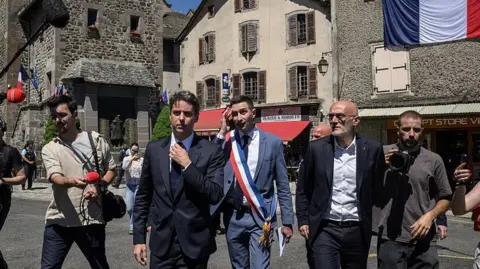
The strength of Philippe's position also reflects growing concerns among French voters about political extremism. Successive electoral cycles have demonstrated that significant portions of the electorate harbor deep anxieties about the policy directions proposed by both Le Pen's nationalist movement and Mélenchon's radical left agenda. These concerns create space for a centre-right political offering that emphasizes continuity, institutional stability, and moderate reform rather than revolutionary change or nationalist reorientation. Philippe's carefully cultivated image as a technocratic administrator appeals precisely to voters seeking reassurance during periods of economic and social uncertainty.
International dimensions further complicate the French presidential calculus. Europe's position on global trade, security arrangements, and responses to Russian actions under its former president creates significant implications for French foreign policy. Philippe's background suggests comfort with France's traditional pro-European orientation and transatlantic relationships, potentially resonating with voters concerned about France's international standing. In contrast, both Le Pen and Mélenchon have articulated positions on European integration and international engagement that diverge substantially from the post-war consensus that has structured French diplomatic strategy.
Economic considerations remain paramount in French electoral politics, and Philippe's record in this domain provides another significant advantage. During his premiership, he promoted business-friendly policies aimed at reducing unemployment and stimulating growth, initiatives that resonate with economically anxious middle-class voters. His approach to economic management, emphasizing structural reform rather than redistributive intervention, offers an alternative to the competing visions of the populist candidates while distinguishing him from Macron's increasingly contested centrist brand of governance.

The trajectory of Philippe's political career also deserves examination. His transition from longtime mayor of Le Havre to national prominence demonstrates considerable political skill and ability to build coalitions. His management of local governance responsibilities gave him practical experience addressing the concerns of ordinary citizens while maintaining sophisticated understanding of national-level policy questions. This combination of local credibility and national expertise positions him uniquely among potential candidates seeking to bridge apparent divides between Paris-based elites and provincial France.
Despite Philippe's apparent advantages in contemporary polling, significant challenges remain. The political landscape continues to evolve rapidly, and unforeseen events frequently reshape electoral dynamics in unpredictable ways. Additionally, the candidate field remains unsettled, with multiple potential competitors still evaluating their options and campaign strategies. The outcome of any French presidential election depends not merely on current polling snapshots but on broader developments in economic conditions, geopolitical circumstances, and the strategic decisions made by other political actors.
Observers of French politics note that Philippe's emergence as a frontrunner represents a potential consolidation of centre-right support that has remained fragmented in recent years. If he ultimately decides to contest the presidency, his campaign would likely emphasize themes of institutional stability, moderate economic reform, and France's continued integration within European structures. Such positioning could prove particularly attractive to voters exhausted by political polarization and concerned about the consequences of electing either a nationalist or radical-left president.
The broader significance of Philippe's potential candidacy extends beyond individual electoral mathematics. His emergence as a viable alternative reflects fundamental questions about how established democracies navigate periods of significant social fragmentation and political polarization. The apparent capacity of a moderate centre-right figure to attract substantial support suggests that voters in France, despite real frustrations with existing institutions and policies, retain appetite for evolutionary rather than revolutionary change. This dynamic may have important implications not only for France itself but for broader patterns of political competition across established democracies grappling with similar polarization challenges.
Source: BBC News


