
European Greens Call UK Return to EU After Brexit

European Green party urges UK to rejoin EU, declaring Brexit a 'political and economic failure' at annual leadership meeting in Brussels.
In a significant policy statement, the European Green party has formally advocated for the United Kingdom to reconsider its position outside the European Union, framing the current situation as a critical juncture for European politics and economic cooperation. The call comes as European political movements increasingly assess the long-term implications of Brexit on both British prosperity and continental stability. This development represents one of the most prominent institutional voices to openly champion a potential path toward UK-EU reconciliation.
During the movement's annual leadership gathering in Brussels, held on Friday ahead of Europe Day celebrations, Green party delegates overwhelmingly adopted a resolution declaring that "the United Kingdom's future lies in the European Union." The overwhelming majority vote reflects a consensus among European environmentalist movements that Brexit has fundamentally damaged both economic relationships and political cooperation across the continent. Vula Tsetsi, serving as co-chair of the European Greens, emphasized that the time has come to initiate serious dialogue about this issue among British and European policymakers.
The statement characterizes Brexit as a "political and economic failure," pointing to persistent economic headwinds, supply chain disruptions, and reduced diplomatic influence that have marked the post-referendum period. Green party representatives argue that these consequences demonstrate the interconnected nature of modern European economies and the difficulty of operating outside integrated institutional frameworks. The party's position reflects broader environmental and progressive concerns about fragmentation within Europe during a period when coordinated climate action and social policy are increasingly vital.

The European Greens have positioned their statement as an opening move in what they hope will become a broader debate about Britain's European future. Rather than presenting the resolution as a definitive ultimatum, party leadership frames it as an invitation for serious consideration among British stakeholders, European institutions, and civil society organizations. The timing of the announcement, coinciding with Europe Day—celebrated annually on May 9th—underscores the party's symbolic commitment to European unity and integration.
Tsetsi's remarks suggest that Brexit consequences have become impossible to ignore, particularly among progressive European political movements focused on environmental policy, social rights, and economic justice. The co-chair emphasized that triggering this debate represents a responsibility of European institutions to offer thoughtful analysis of geopolitical developments and their impacts on citizens' quality of life. This perspective reflects growing recognition that the consequences of Britain's departure extend far beyond bilateral trade relationships to encompass security, environmental cooperation, and cultural exchange.
The resolution also addresses concerns about regulatory divergence between the UK and EU, noting that separate environmental and social standards undermine coordinated efforts to combat climate change and protect workers' rights. Green parties across Europe have traditionally emphasized that fragmentation of regulatory frameworks weakens protections and creates opportunities for regulatory arbitrage that benefits corporate interests at the expense of citizens. The statement suggests that reunification would strengthen the EU's capacity to implement ambitious green transitions across member states.
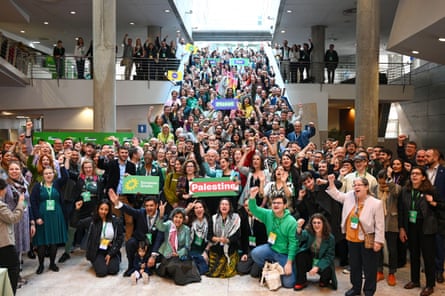
The European Greens' intervention adds to growing discussions within British politics about long-term European relationships and potential pathways for institutional reform. While mainstream British political parties have largely accepted Brexit as settled, grassroots movements and progressive organizations have continued exploring scenarios for closer integration or potential re-entry. The European Greens' statement provides international political legitimacy to these conversations, suggesting that Britain's European neighbors view the current arrangement as suboptimal.
Economic analysts cited by the party point to persistent trade friction, investment uncertainty, and reduced British influence in European policymaking as substantive costs of separation. These tangible consequences have prompted renewed attention to the long-term trajectory of UK-EU relationships and whether current arrangements represent a stable equilibrium or a transitional period. Green party economists argue that environmental policy coordination—essential for meeting climate targets—has become more difficult and less effective following Brexit.
The statement represents a notable position for the European Greens, who have consistently emphasized environmental protection, social justice, and progressive governance as core values. Party representatives argue that these commitments are best advanced through stronger European integration rather than fragmentation, allowing for pooled resources and coordinated policy responses to challenges that transcend borders. The resolution thus connects European unification not merely to economic efficiency but to substantive policy objectives that require institutional coordination.
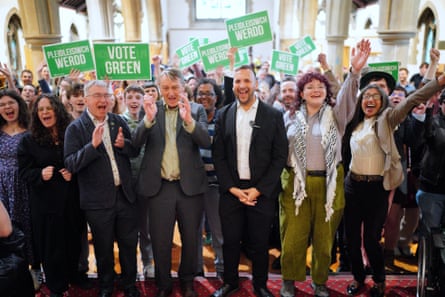
Within the British political landscape, the statement will likely generate considerable discussion and debate, particularly among constituencies that opposed Brexit or have become increasingly skeptical of its outcomes. Opposition Labour party figures have historically avoided explicit commitments to EU re-entry while acknowledging Brexit's economic costs, reflecting the complexity of the issue politically. The European Greens' statement may embolden discussions within British progressive movements about alternative European arrangements that could benefit the UK economy and citizen wellbeing.
The timing of this announcement reflects broader European political reassessment following the initial post-Brexit period, during which many observers expected rapid adjustments and eventual normalization of relationships. Instead, persistent friction and economic underperformance have prompted more ambitious reconsideration of whether the current arrangement serves either Britain or Europe well. The Green party perspective contributes to this reassessment by explicitly questioning whether Brexit remains beneficial or whether alternative arrangements merit serious consideration.
Looking forward, the European Greens' position suggests that discussions about UK-EU relationships may evolve from acceptance of Brexit's permanence toward exploration of deeper integration or readmission possibilities. While such scenarios remain politically distant in contemporary British politics, international pressure and progressive advocacy could gradually shift public and political opinion. The party's commitment to initiating these discussions represents an effort to ensure that long-term European questions remain on the policy agenda rather than being treated as permanently resolved.
The European Greens' declaration ultimately reflects conviction among progressive European movements that integration serves citizens' interests more effectively than fragmentation, particularly regarding shared challenges like climate change, economic development, and security cooperation. Whether this perspective gains broader political traction in Britain or across Europe remains uncertain, but the statement ensures that serious conversations about alternative European futures will continue among influential political constituencies. As the practical consequences of Brexit become clearer, such discussions may gain momentum and policy relevance.
Source: The Guardian


