
Eight Dead as Tourist Bus Plunges Through Lake Baikal Ice

Seven Chinese tourists and a Russian driver died when their minibus broke through ice on Lake Baikal. Rescue teams recover bodies from Siberia's frozen lake.
Rescue divers have successfully recovered the bodies of seven Chinese tourists and their Russian driver from the depths of Lake Baikal after their minibus broke through the ice surface and plunged into the frigid waters of the world's deepest freshwater lake. The tragic incident occurred in the Irkutsk region of Siberia, where winter tourism on the frozen lake has become increasingly popular among international visitors.
The Lake Baikal ice tragedy unfolded when the tourist vehicle was traveling across what appeared to be solid ice on the massive Siberian lake. According to local emergency services, the minibus suddenly broke through the ice surface and sank rapidly to the lake bottom, trapping all eight occupants inside. The incident highlights the inherent dangers of winter tourism activities on frozen water bodies, even those that appear safe to traverse.
Emergency response teams were immediately dispatched to the scene after reports of the accident reached local authorities. The rescue operation involved specialized diving equipment and personnel trained for underwater recoveries in extreme cold conditions. Lake Baikal's waters remain near-freezing temperatures year-round, even beneath the ice, creating challenging conditions for rescue operations.
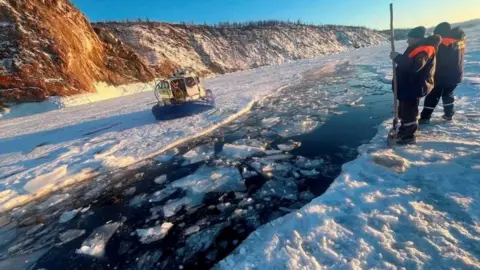
Lake Baikal, known as the 'Pearl of Siberia,' contains approximately 20% of the world's unfrozen fresh water and reaches depths of over 1,600 meters in some areas. The lake's ice typically forms in January and can reach thicknesses of up to two meters, creating what appears to be a solid surface suitable for vehicle travel. However, factors such as underwater currents, springs, and varying weather conditions can create weak spots in the ice that are not visible from the surface.
The Chinese tourist group was reportedly part of a growing trend of international visitors who travel to the Lake Baikal region specifically to experience winter activities on the frozen lake. These activities often include ice fishing, dog sledding, and scenic tours across the lake's frozen surface. The Russian driver was likely a local guide familiar with the area, though the exact circumstances that led to the ice breakthrough remain under investigation.
Local authorities have launched a comprehensive investigation into the circumstances surrounding the accident. Preliminary reports suggest that recent weather patterns may have affected ice stability in the area where the incident occurred. Siberian lake accidents involving vehicles breaking through ice are not uncommon during certain times of the winter season, particularly during periods of temperature fluctuation.
The recovery operation required significant coordination between multiple emergency services agencies. Specialized diving teams equipped with cold-water gear worked methodically to locate the submerged vehicle and recover the victims' bodies. The operation was complicated by the lake's depth and the challenging conditions created by the ice cover above the accident site.
Tourism officials in the Irkutsk region have expressed their condolences to the families of the victims while emphasizing the need for enhanced safety protocols for winter lake activities. The incident has prompted discussions about implementing stricter guidelines for tourist vehicles operating on the lake's frozen surface, including mandatory safety equipment and certified guide requirements.
The Lake Baikal tourism industry has experienced significant growth in recent years, particularly among Chinese visitors attracted to the region's unique winter landscapes and activities. The lake's crystal-clear ice formations and stunning winter scenery have made it a popular destination for photographers and adventure tourists seeking authentic Siberian experiences.
Weather conditions in the region have been variable this winter, with periods of warming followed by rapid refreezing that can create unstable ice conditions. Meteorological data indicates that temperature fluctuations in the weeks preceding the accident may have contributed to compromised ice integrity in certain areas of the lake.
Local rescue services emphasize that anyone planning to travel on frozen Lake Baikal should exercise extreme caution and utilize experienced local guides familiar with current ice conditions. The tragedy serves as a stark reminder of the unpredictable nature of natural ice formations and the importance of proper safety precautions when engaging in winter lake activities.
The bodies of all eight victims have been recovered and transported to local facilities for formal identification procedures. Chinese consular officials have been notified of the incident and are working with local authorities to coordinate the repatriation process for the deceased tourists. The families of the victims are being provided with support and assistance during this difficult time.
This tragic incident underscores the need for continued vigilance and improved safety measures for winter tourism activities on Lake Baikal. As the region continues to attract international visitors seeking unique cold-weather experiences, ensuring adequate safety protocols and emergency response capabilities remains a critical priority for local tourism authorities and emergency services.
Source: BBC News


