
Democrats Call for Kiggans' Resignation Over 'Cotton-Picking' Comment

Republican congresswoman Jen Kiggans faces resignation calls from Democrats after appearing to agree with a radio host's racially charged remark about House Democratic leader Hakeem Jeffries.
A significant political controversy has erupted on Capitol Hill involving Republican congresswoman Jen Kiggans, who is now facing mounting pressure from Democratic colleagues to step down from her position. The controversy centers around comments made during a radio broadcast in which a host used language widely perceived as racially insensitive when discussing House Democratic leadership and Virginia politics.
The incident began when a radio host made a remark suggesting that Hakeem Jeffries, the Democratic House leader and the first Black American to lead a party in Congress, should keep his "cotton-picking hands off of Virginia." The use of the phrase "cotton-picking" carries deeply troubling historical connotations, as it is rooted in language associated with slavery and racial discrimination in American history. The term has long been considered offensive and inappropriate in modern political discourse.
Kiggans, who represents Virginia's second congressional district, responded to the radio host's comments in a way that has now become the focal point of intense scrutiny and debate. According to her own account of the interaction, she was agreeing with the radio host's broader point that Jeffries and other national Democratic leaders should limit their involvement in Virginia state politics. However, her apparent agreement with the host's statement, regardless of her stated intent, has drawn sharp criticism from Democratic lawmakers and civil rights advocates.
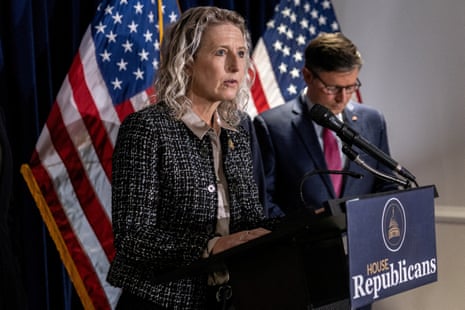
In response to the growing controversy, Kiggans issued a statement clarifying her position and attempting to address the backlash. The congresswoman has explicitly stated that she did not endorse or condone the specific language used by the radio host during the broadcast. She has emphasized that her agreement was limited to the substantive point about outside political interference, not the offensive terminology that accompanied it. Despite these clarifications, many Democratic leaders have argued that appearing to agree with the host at all, without immediately and clearly disavowing the language, represents a serious lapse in judgment.
The Democratic response has been swift and unforgiving. Party leaders have seized on the incident as emblematic of what they characterize as a broader pattern of racist rhetoric within Republican circles. Multiple Democratic representatives have issued statements calling for Kiggans to resign, arguing that her response was insufficient and that she should have immediately and forcefully rejected the radio host's language. These calls for resignation represent one of the more dramatic political consequences in recent weeks.
Hakeem Jeffries himself, as the target of the offensive remark, has responded to the situation with characteristic focus on the larger implications. As the first Black American to lead a major party in Congress, Jeffries has faced numerous instances of racial antagonism throughout his political career. His leadership position makes him a frequent target for those seeking to attack Democratic policies or personnel, and this incident is only the latest in a series of contentious interactions.
The controversy has sparked broader conversations about the state of political discourse in the United States and the responsibility that elected officials bear to maintain standards of civility and respect. Civil rights organizations have weighed in on the matter, with many expressing concern about the normalization of racially charged language in political contexts. These groups argue that the use of historically offensive terms, even in ostensibly political contexts, contributes to a climate of intolerance and discrimination.
From a political strategy perspective, the incident has handed Democratic leaders a potent messaging opportunity heading into upcoming electoral contests. They have used the situation to argue that Republican leadership has failed to adequately police its own members and that the party has become increasingly tolerant of offensive rhetoric. Republican leaders, meanwhile, have largely defended Kiggans or remained silent, suggesting internal disagreement about how seriously to take the matter.
The tension between Kiggans' clarification and the Democrats' demands for her resignation highlights fundamental disagreements about accountability and standards in modern politics. Kiggans has positioned herself as having been misunderstood or unfairly characterized, while Democrats argue that her initial response was inadequate and that meaningful consequences are necessary. This dynamic reflects broader polarization in Congress, where interpretations of controversial incidents often depend heavily on partisan affiliation.
Virginia's political landscape adds another layer of complexity to this situation. As a purple state with significant political competition between Democrats and Republicans, incidents involving its representatives carry additional weight. Kiggans' district has been closely contested in recent election cycles, and controversies like this one can significantly impact constituent opinion and electoral prospects. Virginia Democrats have been particularly vocal in their criticism, sensing an opportunity to damage a political rival.
The incident also raises questions about media responsibility and the role of radio hosts in promoting or normalizing offensive language. While the radio host bears primary responsibility for using the racially charged phrase, questions have been raised about whether platforms should maintain standards against such language. The interaction between Kiggans and the host has prompted some to examine whether radio stations and other media outlets have adequate safeguards in place.
As this controversy continues to develop, it remains to be seen whether Kiggans will face additional consequences beyond the immediate political fallout. Her constituents in Virginia's second district will ultimately determine whether this incident affects her political standing in meaningful ways. The broader implications for congressional politics and standards of acceptable discourse will likely extend beyond this single incident, influencing how future controversies of this nature are handled.
The situation underscores ongoing tensions within American politics regarding race, language, and accountability. As the nation continues to grapple with questions of racial justice and equity, incidents like this one force a reckoning with how elected officials respond to offensive rhetoric and what standards should govern political discourse at the highest levels. The demands for Kiggans' resignation represent a significant moment in these broader conversations about the kind of political culture Americans want to maintain and promote going forward.


