
Deer Rescued From M&S Escalator in Norwich

A muntjac deer was rescued after becoming trapped upside down in an escalator at a Norwich M&S store. The animal, nicknamed 'Lucky' Lucy, escaped with only minor injuries.
In an extraordinary turn of events that surprised even seasoned animal rescue professionals, staff at Hillside Animal Sanctuary in Norfolk received an unusual emergency call last Tuesday afternoon. The message was simple yet startling: a deer had become trapped inside an escalator at a Marks & Spencer department store located in the heart of central Norwich. This unexpected incident would test the sanctuary's rescue expertise in ways they had never experienced before.
The sanctuary's founder, Wendy Valentine, recalled the shocking nature of the call with a mixture of disbelief and professional concern. "In Norfolk, deers often get themselves in trouble," Valentine explained when reflecting on the incident. "They get stuck between walls and sheds, and in gates. It's quite common for deer to get trapped in various locations throughout the region. However, 'trapped in an escalator' was absolutely a first for us." Her experience with wildlife rescue spanning many years had prepared her team for numerous challenging scenarios, but this particular situation represented uncharted territory.
The muntjac deer, a small species native to Southeast Asia that has become established in parts of the United Kingdom, found itself in an incredibly precarious position within the mechanical confines of the shopping center. The animal had become wedged upside down within the escalator mechanism, a situation that posed immediate risks of injury and escalating panic. The store's staff had responded quickly and appropriately by contacting local animal rescue services rather than attempting to handle the situation themselves, a decision that likely prevented further harm to the distressed animal.

The rescue operation required careful planning and coordination between the animal sanctuary team and the M&S management. Escalators present unique challenges in rescue scenarios due to their moving parts, electrical components, and confined spaces. The team had to ensure the escalator was immediately shut down and secured to prevent any accidental movement that could injure the trapped animal further. Additionally, they needed to work swiftly but carefully to avoid causing additional stress or physical harm to the frightened muntjac during the extraction process.
Emergency responders arrived at the Norwich store with specialized equipment and expertise in handling wildlife rescue situations. The trapped deer's position—wedged upside down—presented complications that required innovative thinking and gentle handling. The team worked methodically to create space and carefully maneuver the animal out of the mechanical escalator while minimizing its exposure to sharp edges and mechanical components. Throughout the process, they monitored the deer's stress levels and physical condition, ensuring they could respond immediately if the animal's health became compromised.
The outcome of this dramatic rescue was nothing short of miraculous. Against the odds, the muntjac emerged from its mechanical prison with only minimal injuries. The animal, which rescue staff affectionately nicknamed "Lucky" Lucy in recognition of her remarkable escape, sustained only a superficial cut on one of her feet. For an animal that had been trapped in such a dangerous and unnatural environment, this outcome represented an extraordinary stroke of fortune. The minor wound was treated, and the deer appeared to be in otherwise good health following the ordeal.
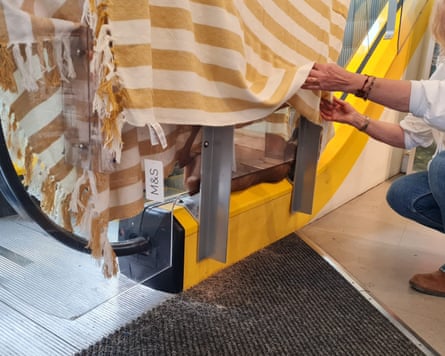
The deer rescue at the Norwich M&S quickly became a talking point among both animal welfare professionals and the general public. Many people were amazed to learn that such an incident could occur in the middle of a busy shopping center. The story highlighted the increasingly complex relationship between urban development and wildlife in the United Kingdom. As more natural habitats are developed into commercial and residential spaces, wild animals are more frequently encountered in unexpected locations, including shopping centers, residential neighborhoods, and industrial areas.
Hillside Animal Sanctuary's handling of the situation demonstrated the importance of having trained professionals available for urban wildlife incidents. The sanctuary has become a vital resource for the Norfolk community and surrounding regions, responding to calls involving various species in distress. Their quick response time and expert handling of this unprecedented situation prevented what could have been a tragic outcome. The team's experience with common local wildlife challenges, combined with their ability to adapt to novel situations, proved invaluable.
The incident also raised questions about how shopping centers and public buildings could better prevent wildlife trapped incidents from occurring in the first place. M&S management, along with other retailers, may need to consider enhanced security measures, such as improved entryway monitoring or structural modifications to prevent animals from accessing escalators and other potentially dangerous equipment. Building management teams across the retail sector took note of the incident as a reminder to review their emergency protocols for handling unexpected animal encounters.
Lucky Lucy's story serves as a powerful reminder of the resilience of wildlife and the importance of professional animal rescue services. Following her release, the muntjac was given time to recover at the sanctuary before being released back into the wild, where she could resume her normal life. Her survival and minimal injuries defied the odds and spoke to both the successful rescue operation and her own remarkable fortitude in such a frightening situation.
The rescue operation conducted by Hillside Animal Sanctuary exemplifies the dedication of wildlife professionals who work tirelessly to help animals in distress. Whether dealing with common entrapment scenarios or unprecedented situations like a deer stuck in an escalator, these organizations provide essential services to both wildlife and the communities in which they operate. For the staff at Hillside, Lucky Lucy's rescue added another remarkable chapter to their already impressive history of helping Norfolk's wildlife navigate the challenges posed by an increasingly urbanized landscape.
Source: The Guardian


