
Dancer with ALS Controls Virtual Avatar Through Brainwaves

Groundbreaking tech helps performer with ALS regain expression and connection through an avatar controlled by brainwaves.
Breanna Olson, a dancer living with amyotrophic lateral sclerosis (ALS), has found a revolutionary way to perform once again through the use of cutting-edge technology. Despite the debilitating effects of ALS, which has eroded her physical abilities, Olson has been able to re-establish her expressive connection to dance by controlling a virtual avatar with her brainwaves.
ALS, also known as Lou Gehrig's disease, is a progressive neurodegenerative disorder that affects the nerve cells responsible for controlling voluntary muscles. As the disease progresses, it can rob individuals of their ability to move, speak, and ultimately breathe. For Olson, a lifelong dancer, the prospect of losing her ability to perform was devastating. However, the introduction of this remarkable technology has given her a new lease on her artistic expression.
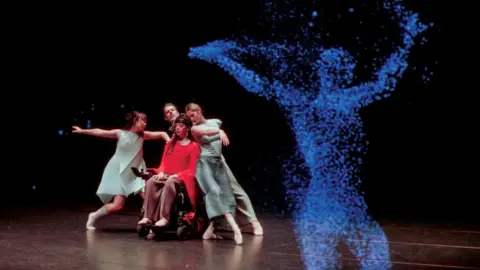
The technology that Olson is using is a collaboration between researchers at the University of Minnesota and the Israeli company Vibrant. By utilizing a brain-computer interface (BCI), Olson is able to control a virtual avatar with her thoughts, allowing her to move and dance in ways that her physical body can no longer manage.
"This technology has been a game-changer for me," said Olson. "It's allowed me to regain the expression and connection that ALS had taken away. I'm able to dance and perform in ways that I thought were no longer possible."
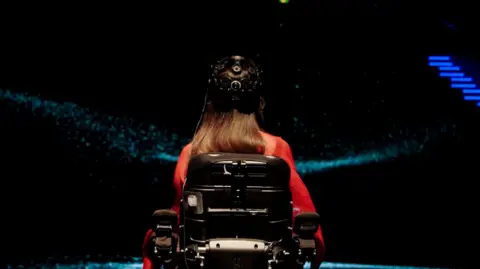
The BCI technology works by detecting the user's brainwaves, which are then translated into precise movements of the virtual avatar. This allows Olson to execute intricate dance routines, with her thoughts directly controlling the avatar's movements.
The researchers behind this innovation are excited about the potential of this technology to improve the quality of life for individuals living with debilitating neurological conditions. By giving them the ability to engage in activities they once enjoyed, such as dance, the technology can help restore a sense of purpose and independence.
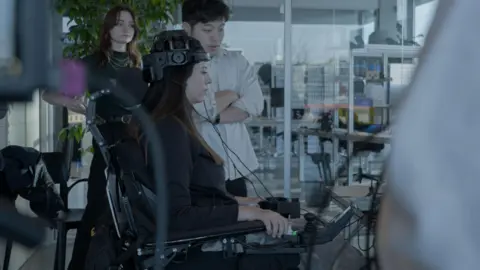
"Breanna's story is a testament to the power of this technology," said Dr. Jürgen Konczak, the lead researcher on the project. "We're thrilled to see how it has positively impacted her life and hope that it can do the same for others facing similar challenges."
As Olson continues to explore the possibilities of this innovative technology, she remains hopeful that it will pave the way for others living with ALS and other neurological disorders to regain a sense of agency and artistic expression. Her journey serves as a powerful reminder of the transformative potential of science and technology when applied with empathy and purpose.
Source: BBC News


