
Czech Leader Demands NATO Show Strength Against Russia

Czech President Petr Pavel calls for NATO to take decisive action against Russian provocations on alliance's eastern border, including cyber and financial measures.
In a forthright address that underscores mounting tensions between Western powers and Moscow, Czech President Petr Pavel has delivered a pointed message to the NATO alliance, insisting that the organization must demonstrate resolve and strength in confronting Russia's escalating provocative activities along its eastern boundaries. Speaking candidly during an exclusive interview in Prague, the former military general articulated serious concerns about the alliance's ability to deter further Russian aggression without implementing more robust countermeasures.
Pavel, whose background as a decorated general provides him with substantial military credibility, emphasized that Russia's repeated testing of NATO's commitment to its member states demands an immediate and unequivocal response. The Czech leader stressed that the current approach may be insufficient to prevent the Kremlin from escalating its provocative behavior, suggesting that without concrete demonstrations of NATO's strength, Moscow may interpret the alliance's restraint as weakness and continue pushing boundaries.
During his conversation with international media, Pavel outlined a comprehensive strategy that extends beyond traditional military responses. He advocated for what he termed "decisive enough, potentially even asymmetric responses" to counter Moscow's activities, recognizing that conventional deterrence alone may prove inadequate in the face of hybrid warfare tactics that Russia has increasingly employed throughout the region.
The Czech president's recommendations encompassed several unconventional measures designed to impose significant costs on Russian operations. Among these suggestions were cutting off Russia's access to global internet infrastructure, disconnecting Russian financial institutions from international banking systems, and establishing clear protocols for responding to aerial incursions into allied airspace through the use of defensive force when necessary.
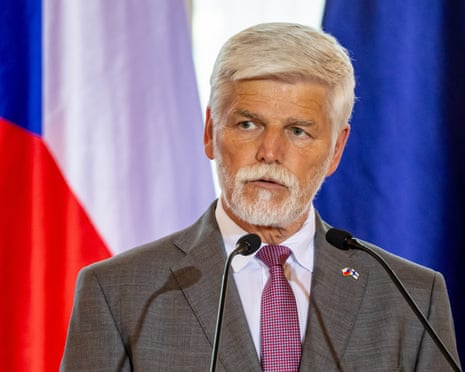
Pavel's position reflects growing frustration among Central and Eastern European NATO members regarding what they perceive as inadequate responses to Russian provocations. These nations, which share direct borders with Russia or Russian-aligned territories, have consistently expressed concerns that Western European allies may not fully appreciate the existential threat posed by Moscow's aggressive posture and its willingness to employ military, economic, and informational weapons against its neighbors.
The specific mention of internet disconnection as a potential response represents a notable escalation in the types of measures under consideration by allied leaders. This suggestion indicates the degree to which cyber warfare has become integrated into discussions of national security and alliance deterrence, particularly given Russia's demonstrated capabilities and willingness to conduct sophisticated digital attacks against NATO members and their infrastructure.
Financial sanctions and the potential disconnection of Russian banks from systems like SWIFT have long been discussed in Western policy circles, but Pavel's explicit endorsement of such measures during an on-the-record interview adds significant political weight to these proposals. The Czech leader's military background lends particular credibility to his assessment that economic and informational measures complement rather than replace military deterrence.
The question of airspace sovereignty has proven especially contentious along NATO's eastern border, where Russian military aircraft have repeatedly conducted provocative flights in close proximity to alliance territory. Pavel's suggestion to enforce airspace boundaries through active defensive measures, including the shooting down of aircraft that violate allied airspace without authorization, signals a willingness to accept higher risks of direct military confrontation if necessary to defend NATO's sovereignty and territorial integrity.
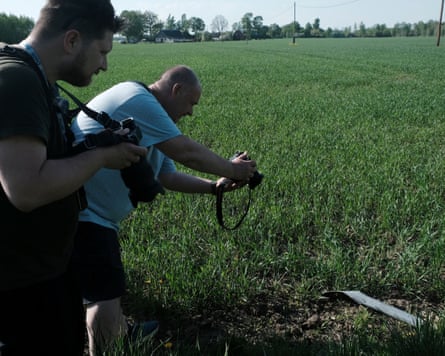
The Czech president's remarks come at a moment of heightened tension throughout Eastern Europe, where Russian military activities have intensified in recent months. Multiple NATO members have reported increased aerial incursions, naval maneuvers, and military exercises conducted by Russian forces in provocative proximity to alliance territory. These activities, which many analysts characterize as deliberate testing of NATO's response capabilities, have sparked concerns about the potential for escalation through miscalculation or accident.
Pavel's call for NATO's eastern flank to be treated with greater priority and resources reflects a persistent debate within the alliance regarding burden-sharing and commitment to collective defense. Central and Eastern European members argue that they represent the frontline of NATO's confrontation with Russian expansionism and therefore merit substantial investment in defensive capabilities and military infrastructure.
The Czech leader's emphasis on the need for "asymmetric" responses acknowledges the reality that NATO cannot match Russia's military power in all domains and must therefore employ creative strategies that leverage the alliance's strengths in technology, economic capacity, and institutional cohesion. This approach suggests deploying measures that impose disproportionate costs on Russian operations while minimizing risks of direct military escalation.
Throughout his interview, Pavel maintained that the alliance's fundamental objective should be preventing war through credible deterrence, not seeking military confrontation. However, he made clear that achieving effective deterrence requires that NATO demonstrate both capability and willingness to respond decisively to aggressive actions. This perspective reflects the classical understanding of deterrence theory, which holds that threats remain credible only when backed by demonstrated capacity and resolve.
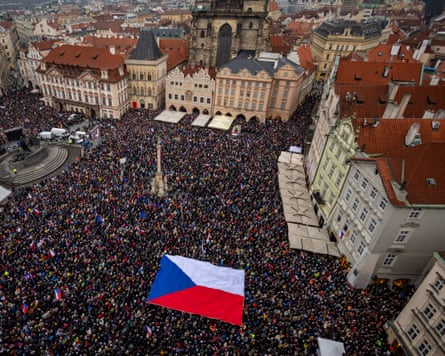
The Czech Republic's position as a frontline NATO state carries particular significance in these discussions. Having transitioned from Soviet domination to NATO membership, Czech leaders possess deep historical awareness of Russian strategic objectives in Central Europe and remain acutely sensitive to any signs of Moscow attempting to reassert influence over the region. Pavel's statements can be understood as reflecting both his nation's security concerns and its role as a voice for other vulnerable alliance members.
Other Central and Eastern European leaders have similarly expressed frustration with what they perceive as insufficient NATO responses to Russian provocation. The alliance has strengthened its eastern presence in recent years through enhanced forward deployment and increased military exercises, but many of these nations continue to argue for even more substantial commitments to their defense.
The broader context of Pavel's remarks includes not only Russian military provocations but also cyber attacks, disinformation campaigns, and economic coercion that Moscow has directed at NATO members. These hybrid warfare tactics, which operate below the threshold of conventional armed conflict, have proven particularly difficult to counter through traditional military means, making Pavel's suggestions regarding internet disconnection and financial measures particularly relevant.
Looking forward, the Czech president's statements are likely to influence discussions within NATO regarding future strategy toward Russia and the appropriate level of response to ongoing provocations. While not all alliance members may embrace every specific measure he proposed, his emphasis on demonstrating strength and resolve appears broadly consistent with the current trajectory of NATO policy in response to Russian assertiveness.
The interview also highlights the ongoing challenge of maintaining alliance cohesion while responding to Russian threats. Balancing the security concerns of frontline states like the Czech Republic with the preferences of other members, particularly those more geographically distant from Russian territory, requires skillful diplomacy and clear communication regarding shared security interests and collective commitments.
As tensions continue to simmer along Europe's eastern frontier, voices like Pavel's continue to press for a more muscular approach to alliance defense and deterrence. Whether NATO ultimately adopts the specific measures he proposed remains to be seen, but his articulation of the frustration felt by vulnerable member states will likely shape ongoing discussions regarding the alliance's strategic posture and its commitment to defending all members against Russian aggression.
Source: The Guardian


