
Cyclone Maila Looms as Trump Criticizes Australia's Role in Iran War

US president slams Australia, Japan and South Korea; BoM warns of increasing threat of Cyclone Maila hitting Queensland this weekend.
The Australian government is facing criticism from US President Donald Trump, who has accused the country of not doing enough to support the United States during the Iran war. This comes as the Bureau of Meteorology (BoM) warns of an increasing threat of Cyclone Maila hitting the coast of far north Queensland this weekend.
Tropical Cyclone Maila is currently tracking halfway between Solomon Islands and Papua New Guinea, according to the latest update from the BoM. The cyclone is expected to remain well away from the Queensland coast during the next few days, but confidence is increasing in Maila moving towards the far north Queensland coast later in the week, potentially crossing the coast on the weekend.
This comes just three weeks after the same area was smashed by Severe Tropical Cyclone Narelle. The BoM has said that the chance of Maila hitting Queensland at the weekend is rising.

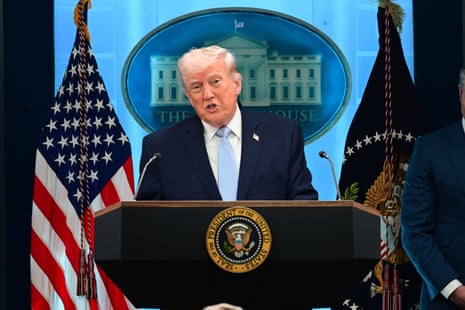
Meanwhile, President Trump has lashed out at Australia, Japan, and South Korea, claiming that they "didn't help" with the Iran war. The US president did not provide any specifics on how the countries failed to assist, but his comments reflect the growing tensions between the United States and its allies in the Asia-Pacific region.
The Australian government has not yet responded to Trump's criticism, but the remarks come at a delicate time for the country's foreign policy. Australia has long been a close ally of the United States, but the current administration's America First approach has put a strain on that relationship.
As the threat of Cyclone Maila looms and the diplomatic tensions with the US continue to simmer, the Australian government will be faced with the challenge of navigating these complex and pressing issues. The coming days and weeks will be crucial in determining the country's next steps and the impact on its international relationships.
Source: The Guardian


