
Cameroon Soldiers Sentenced for Civilian Killings

Three Cameroon soldiers receive rare prison sentences for killing 21 civilians in the troubled Anglophone region, marking unusual military accountability.
In an unprecedented move that has drawn international attention, Cameroon's military tribunal has handed down prison sentences to three soldiers convicted of killing 21 civilians in the country's troubled Anglophone regions. This rare instance of military accountability represents a significant departure from the typical handling of such cases in the Central African nation, where allegations of military misconduct have often gone unpunished. The sentences mark a potential turning point in how Cameroon addresses human rights violations committed by its armed forces during the ongoing Anglophone crisis.
The convicted soldiers were found guilty of their involvement in the systematic killing of civilians in the English-speaking regions of Cameroon, areas that have been engulfed in conflict since 2016. The military court proceedings revealed disturbing details about the circumstances surrounding the deaths of the 21 victims, who were reportedly targeted during military operations in the region. The case has been closely monitored by human rights organizations and international observers, who have long called for accountability in Cameroon's handling of the separatist crisis.
The Anglophone regions of Cameroon, comprising the Northwest and Southwest provinces, have been the epicenter of a brutal conflict that has claimed thousands of lives and displaced hundreds of thousands of residents. The crisis began as peaceful protests by English-speaking Cameroonians who felt marginalized by the French-speaking majority government, but it has since escalated into a full-blown armed conflict. Military operations in these regions have been marked by numerous allegations of human rights abuses, including extrajudicial killings, torture, and the destruction of civilian property.
Human rights organizations have documented extensive patterns of abuse by Cameroonian security forces in the Anglophone regions. These groups have repeatedly called for independent investigations into alleged war crimes and crimes against humanity committed during the conflict. The civilian casualties in the ongoing crisis have mounted steadily, with reports indicating that both government forces and separatist fighters have been responsible for targeting non-combatants. International bodies, including the United Nations and the African Union, have expressed grave concern about the deteriorating human rights situation in the affected regions.
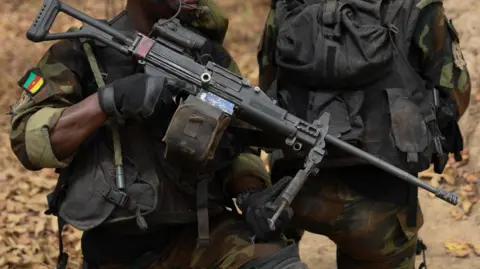
The rarity of these convictions cannot be overstated in the context of Cameroon's judicial system and military culture. Historically, members of the country's armed forces have enjoyed virtual impunity for actions taken during security operations, particularly in regions experiencing civil unrest. Military accountability has been a persistent challenge in Cameroon, where the security apparatus has traditionally operated with limited oversight or judicial scrutiny. Legal experts and human rights advocates have long argued that this culture of impunity has contributed to the escalation and perpetuation of violence in the Anglophone regions.
The international community has been closely watching Cameroon's handling of the Anglophone crisis, with many countries and organizations calling for respect for human rights and adherence to international humanitarian law. The European Union, United States, and various African nations have repeatedly urged the Cameroonian government to investigate allegations of abuses and hold perpetrators accountable. These prison sentences may be seen as a response to mounting international pressure, though critics argue that much more needs to be done to address the systemic issues underlying the conflict.
The families of the 21 victims have welcomed the convictions, though many express that no sentence can truly compensate for their losses. Community leaders in the affected areas have called for broader reforms to prevent future atrocities and ensure that such incidents do not recur. The Anglophone community has suffered tremendously during the ongoing crisis, with entire villages displaced, schools and hospitals destroyed, and economic activities severely disrupted. The psychological trauma inflicted on civilians, particularly children, has been profound and lasting.
Military experts note that these convictions could have significant implications for the conduct of security operations in Cameroon. The sentences may serve as a deterrent to other members of the armed forces, potentially leading to more restrained and legally compliant behavior during future operations. However, observers caution that isolated prosecutions are insufficient to address the broader institutional problems within Cameroon's security sector. Comprehensive military reform, including improved training on human rights and international humanitarian law, is considered essential for preventing future abuses.

The broader Anglophone separatist movement has been fueled in part by grievances over perceived injustices and human rights violations committed by government forces. The movement, led by various armed groups collectively known as "Amba Boys," has sought to establish an independent state called "Ambazonia" encompassing the two English-speaking regions. The government's military response to the separatist insurgency has been characterized by heavy-handed tactics that have often resulted in civilian casualties and further alienated the Anglophone population.
International legal scholars have noted that the convictions represent a small but potentially significant step toward establishing the rule of law in Cameroon's conflict zones. The precedent set by these prosecutions could encourage more victims to come forward and seek justice for abuses they have suffered. However, the effectiveness of the legal system in handling such cases remains questionable, given the limited resources and institutional capacity of Cameroon's judicial system. Many cases of alleged abuses have never been properly investigated or prosecuted, leaving victims without recourse to justice.
The role of international pressure in bringing about these convictions cannot be ignored. Cameroon's government has faced increasing scrutiny from the international community over its handling of the Anglophone crisis, including threats of sanctions and reduced international cooperation. The convictions may be part of a broader effort by the government to improve its international image and maintain diplomatic relationships with key partners. However, critics argue that genuine commitment to human rights and accountability requires more than symbolic prosecutions of a few individuals.
Moving forward, the sustainability of efforts to ensure military accountability in Cameroon will depend on several factors. These include the government's willingness to reform military institutions, improve training and oversight of security forces, and establish independent mechanisms for investigating allegations of abuse. The international community's continued engagement and support for judicial reform efforts will also be crucial. Civil society organizations in Cameroon have played a vital role in documenting abuses and advocating for victims' rights, but they face significant challenges including intimidation, harassment, and limited resources.
The sentencing of these three soldiers, while representing progress, also highlights the enormity of the challenges facing Cameroon in addressing the root causes of the Anglophone crisis. Political solutions to the conflict have remained elusive, with dialogue efforts yielding limited results. The government's approach has been largely military, focusing on combating separatist insurgents rather than addressing the underlying grievances that sparked the crisis. Many observers believe that lasting peace in the Anglophone regions will require comprehensive political reforms, including greater autonomy for the English-speaking regions and constitutional changes to address historical marginalization.
The impact of these convictions on ongoing peace efforts remains to be seen. Some analysts suggest that demonstrating accountability for past abuses could help build confidence in potential dialogue processes and encourage moderate voices on both sides of the conflict. However, others caution that isolated prosecutions, without broader systemic changes, may have limited impact on the overall trajectory of the crisis. The separatist movement has consistently called for international mediation and has shown little willingness to engage in dialogue with the government without significant preconditions.
As Cameroon grapples with the aftermath of these convictions, the international community continues to monitor the situation closely. The sentences have been welcomed by human rights organizations as a positive step, but they emphasize that sustained efforts are needed to prevent future violations and ensure comprehensive accountability for all perpetrators of abuses. The case serves as a reminder of the importance of upholding international humanitarian law and protecting civilians in conflict situations, principles that are fundamental to maintaining peace and stability in any society.
Source: BBC News


