
Brady Tkachuk Reveals 'Hatred' Before USA-Canada Hockey Final

US captain Brady Tkachuk admits to 'hatred' as tensions rise before the Olympic men's ice hockey gold medal game against Canada on Sunday.
The stage is set for one of the most anticipated showdowns in Olympic history as the United States and Canada prepare to battle for men's ice hockey gold on Sunday at the 2026 Milano-Cortina Winter Olympics. The rivalry between these two hockey powerhouses has reached a fever pitch, with US captain Brady Tkachuk making headlines by openly admitting to harboring "hatred" toward their northern neighbors ahead of the championship clash.
Tkachuk's candid remarks have sent shockwaves through the hockey community, highlighting the intense emotions that define this storied rivalry. "There's no hiding it – we have a deep-seated hatred for them," Tkachuk stated during a pre-game press conference. "It's not personal against the individuals, but everything they represent on that ice. We've been waiting for this moment, and we're going to leave everything out there."
The significance of this Olympic hockey final cannot be overstated, as it marks the first time NHL players have participated in the Winter Olympics since the 2014 Sochi Games. After years of negotiations between the NHL, NHLPA, and Olympic officials, the world's best hockey talent has finally returned to the Olympic stage, creating unprecedented excitement among fans and players alike.
Canada enters Sunday's final as the betting favorites, carrying the weight of history and expectation on their shoulders. The team boasts an impressive roster featuring some of the NHL's biggest stars, though questions remain about the availability of Sidney Crosby, whose status remains uncertain due to an upper-body injury sustained in the semifinal victory over Sweden.
The uncertainty surrounding Crosby's participation has become a major storyline heading into the gold medal game. The Pittsburgh Penguins captain, widely regarded as one of the greatest players of his generation, suffered the injury during a collision in the second period of Thursday's 4-1 semifinal win. Team Canada's medical staff has been tight-lipped about his condition, with head coach Jon Cooper only saying that Crosby is "day-to-day" and will be evaluated right up until game time.
For the United States, this represents a golden opportunity to claim their first Olympic gold medal in men's hockey since the "Miracle on Ice" at the 1980 Lake Placid Games. The American squad, led by Tkachuk's passionate leadership, has displayed remarkable chemistry and determination throughout the tournament, defeating powerhouse teams with a combination of skill, speed, and relentless forechecking.
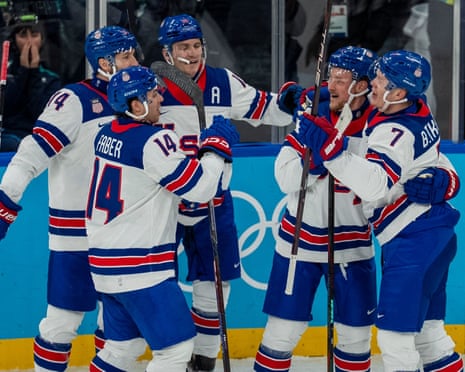
The path to Sunday's final has been nothing short of spectacular for both teams. Team USA advanced with a thrilling 3-2 overtime victory over Finland in their semifinal, with Tkachuk scoring the game-winning goal just 2:47 into the extra period. The goal celebration was intense and emotional, with Tkachuk pumping his fist and screaming toward the crowd, embodying the raw passion that has defined this American team.
Meanwhile, Canada's journey to the final has been marked by dominant performances and clutch scoring. Despite the concern over Crosby's injury, the team showcased its depth against Sweden, with goals from four different players. Connor McDavid has been particularly impressive throughout the tournament, leading the team in scoring and demonstrating why many consider him the best player in the world today.
The USA vs Canada hockey rivalry extends far beyond the Olympic arena, encompassing decades of memorable battles in various international competitions. From the 1987 Canada Cup to the annual World Championships, these two nations have consistently produced some of the most compelling and hard-fought games in hockey history. The intensity of their encounters is legendary, with players often describing games against each other as the most emotionally charged of their careers.
Sunday's final carries additional significance as it represents a changing of the guard in international hockey. While Canada has historically dominated Olympic competition, winning gold in 2002, 2010, and 2014, the United States has been steadily closing the gap. The development of American hockey talent has reached new heights, with more US-born players starring in the NHL than ever before.
Team USA's roster construction reflects this evolution, featuring a perfect blend of veteran leadership and youthful exuberance. Alongside Tkachuk, the Americans boast talent like Auston Matthews, who has been clinical in front of the net throughout the tournament, and defenseman Quinn Hughes, whose mobility and playmaking ability have been crucial to the team's transition game.
The coaching matchup adds another compelling layer to Sunday's showdown. Team USA is guided by Mike Sullivan, who has extensive experience coaching high-pressure games with the Pittsburgh Penguins. His calm demeanor and tactical acumen will be tested against Canada's Jon Cooper, the Tampa Bay Lightning coach known for his ability to manage star players and make crucial in-game adjustments.
The Winter Olympics hockey tournament has captivated audiences worldwide, with television ratings reaching levels not seen since NHL players last participated in 2014. The return of marquee names has elevated the competition's profile significantly, with casual sports fans tuning in to watch players they recognize from their favorite NHL teams competing for national pride.
Security and crowd control have become major concerns for Olympic officials, as the anticipated atmosphere for Sunday's final is expected to be electric and potentially volatile. The arena will be split between passionate American and Canadian supporters, each group known for their vocal and enthusiastic support of their respective teams. Additional security measures have been implemented to ensure the safety of all attendees while preserving the authentic Olympic atmosphere.
From a tactical standpoint, both teams bring contrasting styles that should create fascinating chess match on ice. The United States has relied heavily on their speed and forechecking pressure, forcing turnovers and creating scoring chances through relentless pursuit of the puck. Their power play has been particularly effective, converting at a tournament-leading rate of 31.2%.
Canada, conversely, has emphasized their traditional strengths of defensive structure and opportunistic offense. Their ability to control the pace of games through disciplined positional play has been evident throughout the tournament. The team's penalty kill has been nearly flawless, successfully defending against 94.7% of opponent power plays.
The goaltending battle promises to be pivotal in determining the outcome. Team USA will likely start Connor Hellebuyck, who has been outstanding throughout the tournament with a 1.84 goals-against average and .934 save percentage. The Winnipeg Jets netminder has shown particular strength in high-pressure situations, making several spectacular saves in crucial moments.
For Canada, the goaltending duties are expected to fall to Jordan Binnington, whose playoff experience and clutch gene have served the team well. Binnington's calm presence and ability to make key saves at critical junctures could prove decisive in what many expect to be a low-scoring, tightly contested affair.
The economic impact of Sunday's Olympic hockey final extends well beyond the arena walls. Sports betting handle for the game is projected to reach record levels, with early action showing surprisingly even money despite Canada's status as betting favorites. The global television audience is expected to exceed 100 million viewers, making it one of the most-watched hockey games in recent memory.
Marketing executives from both countries have capitalized on the renewed interest, with merchandise sales spiking dramatically throughout the tournament. Team USA and Team Canada jerseys have become hot commodities, with many retailers reporting sellouts of popular player names and sizes.
As Sunday approaches, both teams are managing the pressure and expectations that come with representing their nations on hockey's biggest stage. The players understand that this opportunity may not come again for several years, adding weight to every shift and every decision they make on the ice.
The legacy implications of Sunday's result cannot be understated for either nation. For the United States, victory would validate years of investment in youth hockey development and potentially inspire a new generation of American players. A gold medal would also provide redemption for past disappointments and establish the current generation as among the greatest in US hockey history.
For Canada, winning gold would maintain their status as the world's premier hockey nation and continue a proud Olympic tradition. However, a loss would raise difficult questions about the direction of Canadian hockey and potentially accelerate changes in how the sport is developed and promoted across the country. The pressure on Team Canada is immense, as hockey remains deeply embedded in the nation's cultural identity.
The final preparations are underway as both teams fine-tune their strategies and manage their personnel. Medical staffs are working around the clock to ensure players are as healthy as possible, while coaches are making final tactical adjustments based on extensive video analysis of their opponents.
Sunday's men's Olympic hockey final represents more than just a game – it's a culmination of decades of rivalry, preparation, and dreams. When the puck drops, Brady Tkachuk's admitted "hatred" and the passion of both teams will be on full display, promising hockey fans around the world an unforgettable battle for Olympic gold. The winner will etch their names in Olympic history, while the loser will face the difficult task of processing what might have been their best opportunity for gold in years to come.
Source: The Guardian


