
Artemis II Crew's Homecoming: NASA Outlines Splashdown Plan

NASA prepares for the safe return of Artemis II astronauts after their historic 10-day lunar flyby mission, as the Orion capsule prepares for a high-speed splashdown off the California coast.
The Artemis II crew is set to make their much-anticipated return to Earth on Friday, following their historic 10-day lunar flyby mission. NASA leaders have outlined the meticulous logistics required to ensure the safe extraction of the astronauts from the Orion capsule upon splashdown.
The return journey will see the Orion capsule traveling at a blistering speed of nearly 24,000 mph before making its final splashdown several miles off the coast of San Diego. This complex operation involves the coordination of multiple teams to safely retrieve the crew from the spacecraft.
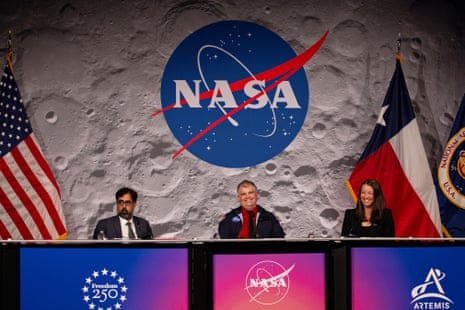
As the Artemis II crew prepares for re-entry, NASA has emphasized the importance of this mission in paving the way for future deep-space exploration. The successful completion of the lunar flyby marks a significant milestone in the agency's Artemis program, which aims to establish a sustainable human presence on the Moon.
The splashdown operation will involve a carefully choreographed series of steps, including the deployment of recovery vessels, the retrieval of the Orion capsule, and the medical evaluation of the crew members. NASA has assured the public that all necessary precautions have been taken to ensure the safety and well-being of the astronauts during this critical phase of the mission.
The return of the Artemis II crew will be a historic moment, not only for NASA but for the entire space exploration community. The successful completion of this mission will not only validate the agency's technological capabilities but also inspire a new generation of space enthusiasts and future astronauts.
As the world eagerly awaits the safe return of the Artemis II crew, NASA remains committed to pushing the boundaries of human exploration and continuing its pursuit of scientific discovery beyond our planet.
Source: The Guardian


