
Arab Nations Slam Huckabee's Biblical Land Claims

Arab and Islamic governments jointly condemn US Ambassador Mike Huckabee's controversial remarks about Israel's biblical territorial rights made on Tucker Carlson's podcast.
A coalition of Arab and Islamic governments has issued a scathing joint statement condemning controversial remarks made by United States Ambassador to Israel Mike Huckabee, who asserted that Israel possesses biblical rights to extensive territories across the Middle East. The diplomatic backlash represents a significant escalation in regional tensions following the ambassador's provocative comments.
The former Arkansas governor and Baptist minister made the inflammatory statements during a recent appearance on Tucker Carlson's podcast, where he outlined his theological justification for expanded Israeli territorial claims. Huckabee, known for his unwavering support of Israel throughout his political career, drew upon religious scripture to validate what many consider expansionist positions that could fundamentally reshape Middle Eastern geopolitics.
The joint statement from Arab nations characterized Huckabee's remarks as 'dangerous' and potentially destabilizing to an already volatile region. Diplomatic sources indicate that the unprecedented unity among Arab and Islamic countries in condemning the ambassador's comments reflects the gravity with which regional powers view these assertions about territorial rights based on religious texts.
During the Tucker Carlson podcast appearance, Huckabee elaborated on his interpretation of biblical prophecies and their application to contemporary Middle Eastern boundaries. The ambassador's comments went beyond traditional diplomatic language, venturing into theological territory that has historically been avoided by senior US officials when discussing the sensitive Israeli-Palestinian conflict and broader regional disputes.
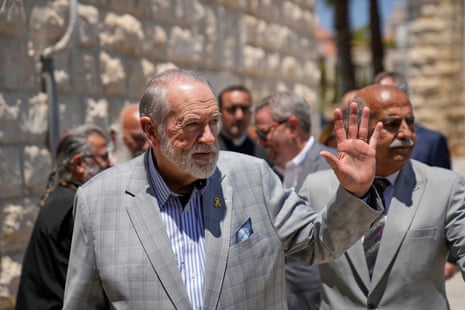
Regional analysts warn that such statements from a sitting US ambassador could undermine decades of diplomatic efforts aimed at achieving sustainable peace in the Middle East. The timing of these remarks is particularly sensitive, coming amid ongoing tensions and efforts to revive stalled peace negotiations between various regional stakeholders.
Huckabee's background as a fervent Israel supporter has been well-documented throughout his political career, spanning his tenure as Arkansas governor and subsequent presidential campaigns. His appointment as ambassador was seen by many as a signal of the administration's strong commitment to the US-Israel relationship, though critics argued his positions might complicate diplomatic initiatives.
The former Baptist minister has frequently invoked religious arguments in his political discourse, often blending theological interpretations with policy positions. His podcast appearance with Carlson represents the most explicit articulation of these views since assuming his diplomatic role, drawing sharp criticism from regional governments and international observers.
Islamic leaders across the Middle East have expressed particular concern about the implications of biblical territorial claims being endorsed by a senior US diplomatic official. The joint condemnation reflects fears that such rhetoric could legitimize expanded settlement activities and territorial annexations that violate international law and numerous UN resolutions.
The controversy surrounding Huckabee's remarks extends beyond immediate regional reactions, potentially affecting broader US diplomatic relationships across the Muslim world. Foreign policy experts suggest that such statements could complicate American efforts to maintain strategic partnerships with key Arab allies who play crucial roles in regional security and economic cooperation.
Tucker Carlson's platform has become increasingly influential in shaping political discourse, and his podcast featuring the ambassador has amplified the reach of these controversial positions. The interview format allowed Huckabee to elaborate extensively on his theological justifications without the typical constraints of formal diplomatic communications.
Critics argue that the ambassador's comments represent a departure from traditional US diplomatic protocol, which typically avoids explicit religious justifications for territorial claims. The State Department has yet to issue clarifying statements regarding whether Huckabee's views represent official US policy or personal theological interpretations.
The Middle East controversy has reignited debates about the appropriate role of religious beliefs in foreign policy formulation. Secular diplomats and religious freedom advocates have expressed concerns about the precedent set by using scriptural interpretations to justify contemporary territorial disputes.
Regional security experts warn that the ambassador's statements could provide ammunition for extremist groups seeking to portray the Israeli-Palestinian conflict in purely religious terms. Such framing potentially undermines efforts to find pragmatic, negotiated solutions based on international law and mutual recognition of legitimate rights.
The timing of this diplomatic crisis coincides with broader regional instability and ongoing conflicts that have already strained relationships between various Middle Eastern powers. Arab governments fear that endorsement of expansive territorial claims could encourage further destabilizing actions that threaten regional peace and security.
International law scholars have noted that biblical or religious justifications for territorial claims lack standing under contemporary international legal frameworks. The Geneva Conventions and various UN charter principles emphasize the inadmissibility of acquiring territory through force or unilateral declarations based on historical or religious claims.
As the controversy continues to develop, diplomatic observers are closely monitoring whether the Biden administration will distance itself from Huckabee's specific formulations while maintaining overall support for the US-Israel relationship. The challenge lies in balancing domestic political considerations with the need to preserve America's broader Middle Eastern diplomatic relationships and credibility as a potential peace broker in the region.
Source: The Guardian


