
AOC Deflects 2028 Presidential Bid Question

Alexandria Ocasio-Cortez addresses speculation about higher office ambitions, stating her focus is on changing the country at a Chicago political forum.
New York's prominent Democratic representative Alexandria Ocasio-Cortez has deflected mounting questions about her potential presidential ambitions in 2028, offering a carefully crafted response that underscores her commitment to broader political transformation. When directly asked about seeking higher office during a major political gathering, the congresswoman chose to emphasize her overarching vision rather than confirm or deny specific electoral plans.
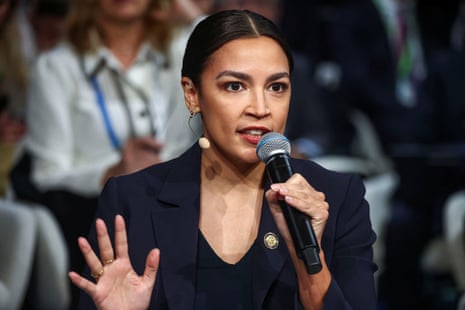
At a high-profile political forum held in Chicago on Friday, AOC responded to inquiries about her future political trajectory with the declaration: "My ambition is to change the country." The response strategically redirected the conversation away from personal political aspirations toward systemic and ideological goals, a rhetorical move that has become characteristic of her public statements regarding her political future.
The remarks come amid intense speculation within Democratic circles and among political analysts about AOC's 2028 prospects. Observers and political insiders have suggested that the New York congresswoman may be positioning herself for either a presidential run or a potentially transformative challenge to her party's Senate leadership. Such discussions have gained momentum as the political landscape shifts and questions about the Democratic Party's future direction intensify.
The speculation regarding AOC's ambitions has become increasingly prominent in political discourse, particularly given her substantial influence among younger voters and progressive constituencies. Her relatively young age, combined with her rising prominence within the Democratic Party and her ability to mobilize grassroots support, has made her a frequent subject of discussion regarding potential future leadership roles. Political observers have noted that her strategic positioning on key issues and her media presence suggest careful cultivation of national political relevance.
One potential pathway that has garnered significant attention is the possibility that AOC could challenge Chuck Schumer, the fellow New Yorker who currently holds the position of Senate Minority Leader. Schumer, a long-established figure in New York politics and the broader Democratic Party, represents an older generation of Democratic leadership that progressive activists have increasingly questioned. A potential Senate race between Schumer and Ocasio-Cortez would represent a significant generational clash within the party and could reshape the dynamics of Democratic leadership.
The alternative scenario involves AOC mounting a presidential campaign in 2028, which would align with the Democratic Party's expected timeline for selecting its next standard-bearer following the completion of the current presidential administration. Her response at the Chicago forum can be interpreted as keeping both options viable while avoiding premature political commitments that could constrain her flexibility in the coming years.
AOC's political positioning reflects a sophisticated understanding of contemporary Democratic politics and the various constituencies within the party. By emphasizing her commitment to changing the country rather than pursuing personal political advancement, she aligns herself with idealistic political messaging while maintaining strategic ambiguity about her specific plans. This approach allows her to continue building her national profile without being locked into particular electoral timelines or expectations.
Her influence extends across multiple dimensions of Democratic politics and policy discourse. AOC has become a leading voice on issues ranging from climate change and economic policy to healthcare and social justice. Her ability to communicate directly with younger voters through social media and her willingness to challenge party orthodoxy on certain issues have established her as a distinctive figure within the Democratic caucus.
The congresswoman's response at Friday's forum also reflects broader questions about the Democratic Party's direction and leadership priorities heading into the final years of the current decade. As the party grapples with internal debates about its platform, coalition-building strategies, and generational leadership transitions, figures like Ocasio-Cortez occupy increasingly prominent positions in these discussions.
Political analysts have noted that AOC's strategic ambiguity regarding higher office may serve her interests better than making early commitments. By maintaining flexibility, she preserves her ability to respond to evolving political circumstances, party dynamics, and public sentiment. Her careful navigation of these questions suggests a political operator who understands the long-term implications of early positioning in presidential or senatorial politics.
The New York congresswoman continues to maintain her focus on legislative work and constituent representation while her national political profile continues to expand. Her committees assignments, legislative initiatives, and public advocacy efforts all contribute to her development as a potential future leader. This dual approach—combining serious legislative engagement with visible national political presence—has become increasingly important for politicians aspiring to higher office.
As discussions about 2028 Democratic leadership intensify in coming months, AOC's name will likely continue to feature prominently in political speculation and analysis. Her response at the Chicago forum has done little to quiet such discussions but has provided insight into how she frames her political ambitions and priorities. Whether through continued congressional service, a Senate race against Schumer, or a presidential campaign, Ocasio-Cortez appears positioned to play a significant role in shaping Democratic Party politics in the coming years.
The broader context for these discussions includes significant generational shifts within the Democratic Party and broader questions about who will lead the party during the 2030s and beyond. AOC represents a different generation of Democratic leadership compared to established figures like Schumer and others who have long dominated party structures. As the party continues to evolve, the emergence of new leadership voices will likely shape Democratic strategy and messaging in meaningful ways.
Source: The Guardian


