
Ancient Chinese Skulls Reveal Homo erectus Spread Faster

New dating reveals 1.77-million-year-old Homo erectus skulls from China are oldest East Asian hominin fossils, showing rapid human ancestor migration.
Revolutionary new research has transformed our understanding of ancient human migration patterns after scientists discovered that two remarkable fossil skulls from Yunxian, located in northern China, represent far more than initially believed. These extraordinary specimens, previously thought to be connected to the enigmatic Denisovans, have now been identified as the oldest known Homo erectus fossils ever discovered in eastern Asia, fundamentally altering the timeline of human evolution in this region. The groundbreaking findings challenge long-held assumptions about the speed and scope of early human migration across continents.
The comprehensive study has successfully re-dated these ancient skulls to approximately 1.77 million years old, establishing them as the most ancient hominin remains uncovered anywhere in East Asia to date. This remarkable age determination carries profound implications for our understanding of human evolutionary history, demonstrating that Homo erectus, an extinct common ancestor shared by modern humans, Neanderthals, and Denisovans, managed to spread across the Asian continent far more rapidly and extensively than researchers had previously imagined possible. The discovery also provides crucial new insights into the identity of the toolmakers responsible for creating stone implements found at several even older archaeological sites scattered throughout China.
The implications of this discovery extend far beyond simple chronology, as it fundamentally reshapes our comprehension of early human adaptability and migration capabilities. The speed with which these early human ancestors traversed vast continental distances suggests sophisticated survival strategies and remarkable environmental adaptability that enabled them to successfully colonize diverse ecological niches across Asia. This rapid dispersal pattern indicates that early human migration was far more dynamic and extensive than previously documented in the archaeological record.
Furthermore, the research provides compelling evidence that challenges existing models of human dispersal from Africa, suggesting that the colonization of Asia occurred through multiple waves of migration rather than a single, gradual expansion. The presence of such ancient human remains in China indicates that the Asian continent served as a crucial corridor for human evolution and development, hosting diverse populations that would eventually give rise to various human lineages that populated the region for hundreds of thousands of years.
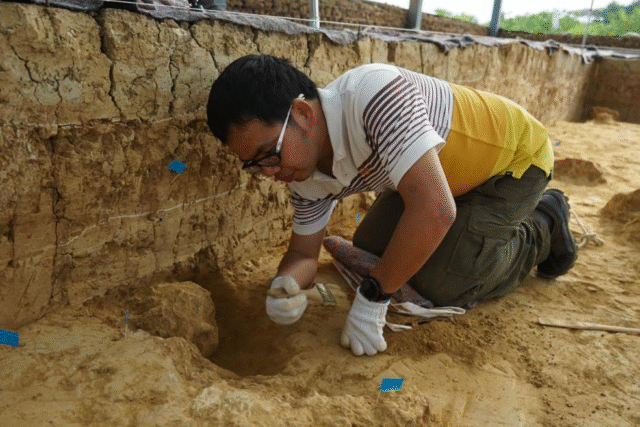
Yunxian archaeological site has long been recognized as one of the most important and occasionally contentious paleontological locations in central China, strategically positioned along the banks of the historic Han River. This remarkable site has yielded an extraordinary treasure trove of archaeological evidence spanning hundreds of thousands of years of human occupation and activity. Among the most significant discoveries are three nearly complete hominin skulls, though only two of these exceptional specimens have been thoroughly described and published in scientific literature to date, leaving researchers eager to examine the third skull in detail.
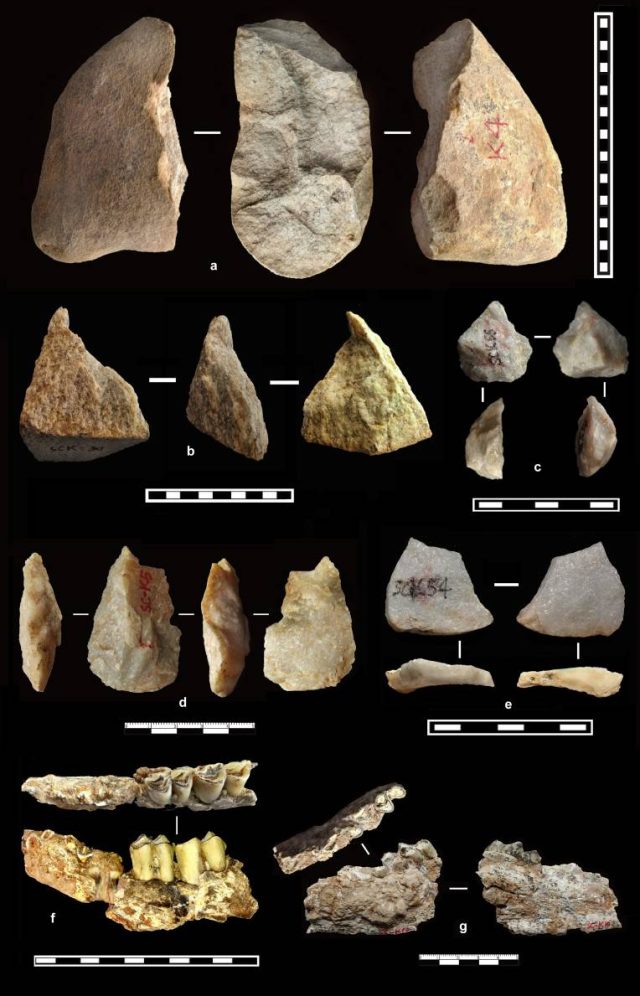
The site's rich archaeological deposits have produced not only these remarkable hominin fossils but also hundreds of carefully crafted stone tools and numerous animal bones that provide crucial insights into the daily lives, hunting practices, and environmental conditions experienced by these ancient human ancestors. The layers of river sediment at Yunxian have preserved this archaeological evidence with exceptional clarity, creating a detailed record of ancient life that spans multiple geological periods and provides researchers with unprecedented opportunities to study early human behavior and adaptation strategies.
The breakthrough in dating these ancient remains came through the innovative work of Shantou University paleoanthropologist Hua Tu and his international research team, who employed sophisticated isotopic analysis techniques to determine the true age of the fossils. The researchers meticulously measured the precise ratio of two specific isotopes, aluminum-26 and beryllium-10, found within individual grains of quartz extracted from the exact sediment layer that originally contained and preserved the ancient skulls for nearly two million years.
This cutting-edge dating methodology represents a significant advancement in paleontological research techniques, providing far more accurate and reliable age determinations than previously available methods. The isotopic analysis revealed that these Homo erectus individuals lived, thrived, and eventually died along the fertile banks of the Han River approximately 1.77 million years ago, a timeframe that places their existence just 130,000 years after the species first emerged and evolved in the African continent.
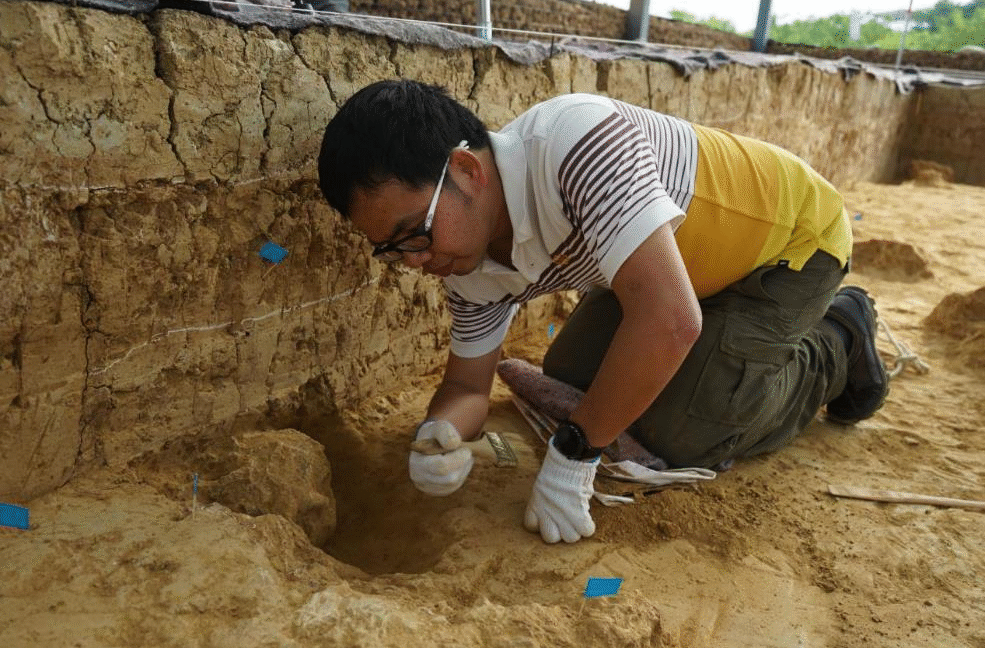
The remarkably short timespan between the initial appearance of Homo erectus in Africa and their establishment in eastern Asia demonstrates an unprecedented rate of continental migration that challenges conventional understanding of early human dispersal capabilities. This rapid expansion across thousands of miles of diverse terrain, including deserts, mountains, and various climate zones, suggests that these early human ancestors possessed sophisticated survival skills, advanced tool-making abilities, and remarkable adaptability that enabled them to successfully navigate and colonize previously uninhabited territories.
The discovery has significant implications for understanding the broader patterns of human evolution in Asia, as it provides concrete evidence that the continent was populated by human ancestors far earlier than previously documented. This extended timeline allows for much longer periods of evolutionary development and adaptation within Asian environments, potentially explaining the remarkable diversity of human populations that would later emerge throughout the region.
Additionally, the research sheds new light on the makers of ancient stone tools discovered at several other Chinese archaeological sites that predate the Yunxian skulls. Previously, the identity of these early toolmakers remained mysterious, but the new dating evidence strongly suggests that Homo erectus populations were responsible for creating these sophisticated implements, demonstrating advanced cognitive abilities and technological innovation that enabled their successful expansion across Asia.
The findings also contribute to ongoing debates about the number and timing of human migrations out of Africa, providing evidence that supports models proposing multiple waves of human dispersal rather than a single, gradual expansion. This research suggests that early human populations were far more mobile and adaptable than previously recognized, capable of rapid long-distance migrations that established human presence across vast geographical regions in relatively short geological timeframes.
The implications of this research extend well beyond the specific fossils found at Yunxian, as they provide crucial data points for understanding the broader narrative of human evolution and migration patterns across the Old World. The presence of such ancient human remains in China indicates that Asia played a far more significant role in early human evolution than previously recognized, serving as both a destination for migrating populations and a crucial staging ground for further expansion into other regions of the continent and beyond.
These discoveries also highlight the importance of continued archaeological research in Asia, as the continent clearly holds many more secrets about human evolutionary history that remain to be uncovered. The success of the Yunxian research demonstrates the value of applying new scientific techniques to previously studied fossils, as advanced dating methods can reveal information that fundamentally changes our understanding of human prehistory and the remarkable journey of our species across the globe.
The research represents a significant milestone in paleoanthropological studies, providing concrete evidence that early human ancestors were capable of remarkable feats of adaptation, migration, and survival that enabled them to successfully colonize diverse environments across multiple continents in surprisingly short periods of geological time. This enhanced understanding of early human capabilities provides valuable insights into the factors that contributed to the eventual success of our species in becoming the dominant global population it is today.
Source: Ars Technica


